
Home » Posts tagged 'graphite'
Tag Archives: graphite
#BRES Blencowe Resources PLC – Successful Hypersonic Rocket Testing
 Blencowe Resources Plc (LSE: BRES) is pleased to report further successful testing of Orom-Cross graphite products within advanced aerospace and defence applications.
On 18 August 2026 American Energy Technologies Co (“AETC”), Pluto Aerospace, Purdue University and US Government Agencies, together with Blencowe COO Iain Wearing, attended a rocket test programme in Las Cruces, New Mexico. The successful Pluto Aerospace solid-fuel rocket flight achieved a maximum speed of Mach 5.5 and acceleration approaching 150G, representing a substantial increase in speed and acceleration from the previous test programme undertaken in April.
Importantly, Orom-Cross graphite was incorporated across multiple critical components aboard the hypersonic vehicle, including an ablative rocket nozzle insert, performance-enhancing coatings applied to the rocket fins and natural graphite used within the lithium-ion battery powering the rocket’s altimeter.
The successful test further demonstrates the potential for Orom-Cross graphite to access specialist, high-value aerospace and defence markets, supporting Blencowe’s strategy to continually develop higher-value product pathways as Orom-Cross advances towards production.
Highlights
· Successful hypersonic rocket flight in the USA incorporating Orom-Cross graphite across multiple critical components
· Pluto Aerospace rocket achieved a maximum speed of Mach 5.5 and acceleration approaching 150G
· Orom-Cross graphite incorporated within an advanced ablative rocket nozzle insert manufactured by AETC
· Orom-Cross natural graphite used in performance-enhancing anti-friction and ice-phobic coatings applied to the rocket fins
· Lithium-ion battery powering the rocket’s altimeter used natural graphite supplied by Blencowe alongside recycled graphite, with zero synthetic graphite
· Successful testing further demonstrates the potential for Orom-Cross graphite within high-value aerospace and military applications
· High-end defence applications provide potential pathways to new strategic offtake relationships and funding opportunities
· Continued collaboration with US graphite technical specialist AETC is opening further value-added applications for Orom-Cross graphite
· Further orbital testing planned for Q4 2026
Blencowe provided graphite concentrates from Orom-Cross to technical partner AETC, which manufactured mouldings for rocket and missile exhaust nozzles replacing a proportion of the synthetic graphites normally used in these applications. The resultant nozzles underwent rigorous testing prior to installation on the rocket.
The initial testing programme is being undertaken with Pluto Aerospace for hypersonic sub-orbital rockets, with orbital testing planned for the final quarter of 2026.
The successful flight conducted on 18 August 2026 utilised a substantially larger motor than the previous test undertaken in April, achieving a maximum speed of Mach 5.5 and acceleration approaching 150G.
In addition to the highly innovative rocket motor, Orom-Cross graphite was incorporated into several important components aboard the hypersonic vehicle:
· an advanced ablative nozzle insert manufactured by AETC for enhanced thrust performance;
· performance-enhancing anti-friction and ice-phobic coatings applied to the rocket’s four aluminium fins; and
· natural graphite used within the lithium-ion battery powering the rocket’s altimeter.
Of special note is the application of 3.8 Ah pouch cells, manufactured by Navitas Systems incorporating manufactured natural graphite supplied by Blencowe together with recycled graphite produced through AETC’s direct recycling process. The battery incorporated up to 15 wt.% recycled and “healed” graphite produced through AETC’s direct recycling process and represents the first known example in the North American battery industry of a fully functional form-factored battery incorporating industrially manufactured recycled graphite as a significant component of both the active material and cathode conductivity additive.
Importantly, the battery, comprised of 100% natural flake graphite from raw and recycled materials, with no synthetic graphites, further demonstrating the potential for Orom-Cross graphite to be utilised within specialist, high-value military and aerospace applications.
With the launch of this rocket, Pluto Aerospace and AETC highlighted a group of trusted vendors and raw material suppliers involved in the programme, including Navitas Systems, an advanced U.S. battery manufacturer; Blencowe Resources plc, the supplier of Orom-Cross graphite used in rocket nozzles, battery and ice phobic coatings aboard the flight; and Cadoux Limited, a supplier of nanoscale alumina used as a critical safety component of lithium-ion batteries.
Executive Chairman Cameron Pearce commented:
“These results continue to highlight the emergence of Orom-Cross graphite as an important source of high-quality graphite products for use in military and aerospace applications. There are relatively few graphite projects worldwide capable of supplying the quality of products required for these specialist applications, which may open new offtake relationships and strategic opportunities and places Orom-Cross in a strong position moving forward as we advance towards first production.”
As we complete funding for P1 Production and move to building the first stage of operations, we are continuously testing new products and adding new offtakers, each of which builds further value within the Project. Our strategy is to differentiate Orom-Cross from other graphite projects by targeting the most lucrative markets available to us, through both our products and strategic relationships.”
For further information please contact:
|
Blencowe Resources Plc |
|
|
Sam Quinn (Director) |
Tel: +44 (0)1624 681 250
|
|
Sasha Sethi (Investor Relations) |
Tel: +44 (0) 7891 677 441
|
|
Tavira Financial (Joint Broker):
Jonathan Evans |
Tel: +44 (0)20 3192 1733 |
|
Oak Securities (Joint Broker): Mungo Sheehan / Jerry Keen |
Tel: +44 (0)20 3973 3678 |
|
Cavendish (Joint Broker):
Neil McDonald / Peter Lynch / Hanna Leijonmarck |
Tel: +44 (0) 20 7908 6000 |
|
|
|
|
|
Diagram 1 : Showing latest Pluto rocket tested using Orom-Cross graphite
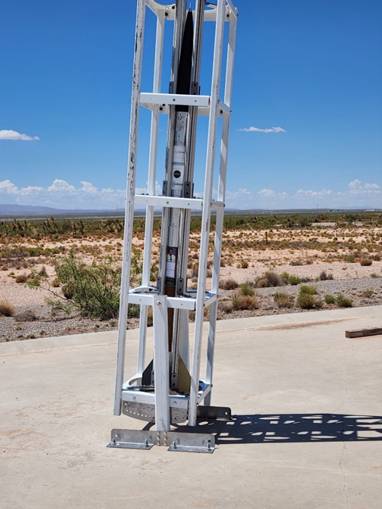
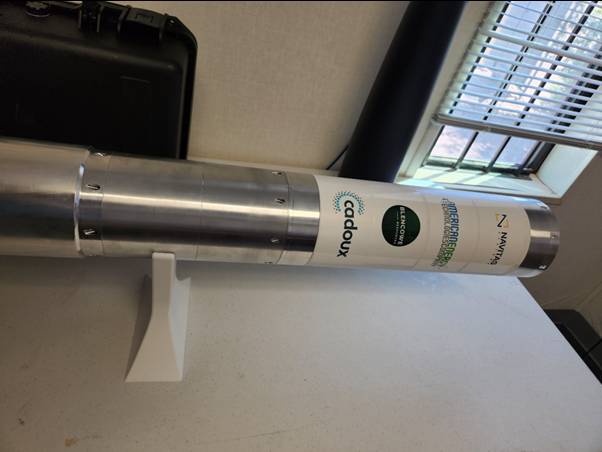
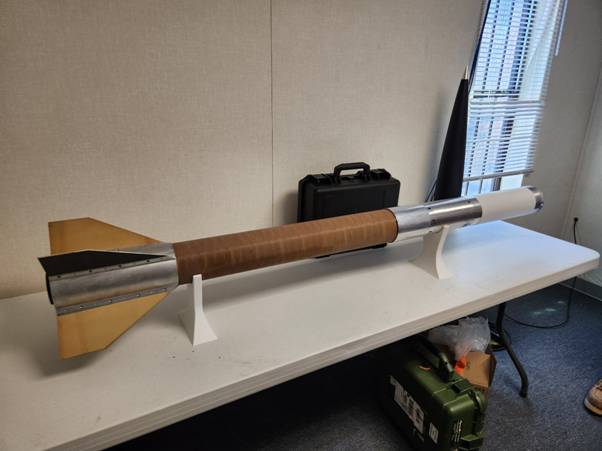
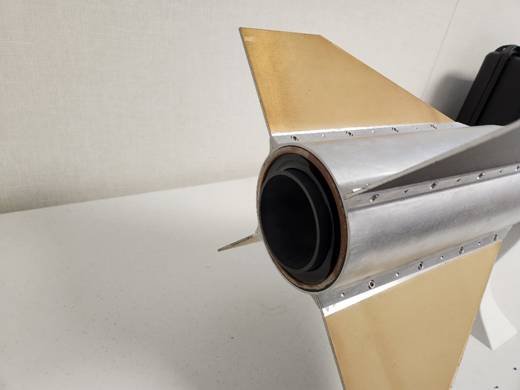
Diagram 2 : Rocket nozzle utilising Orom-Cross materials
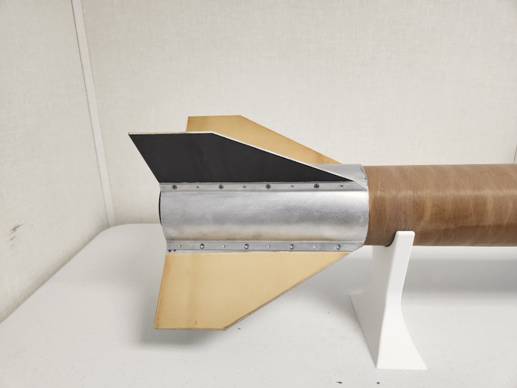
Diagram 3 : Rocket Fins with Orom-Cross Ico phobic coatings applied to four sides (different samples), plus control sample (beige side)
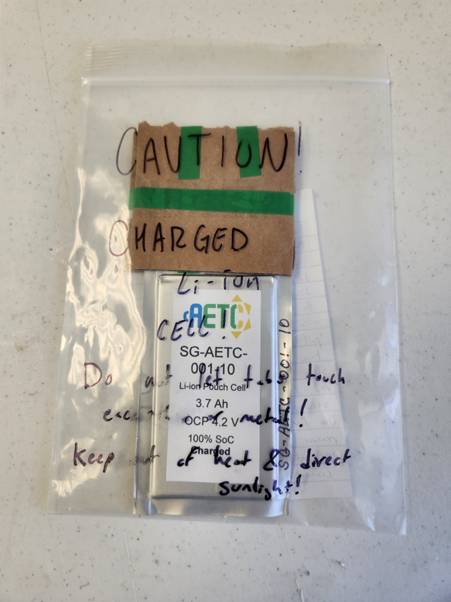
Diagram 4 : Battery cell composed of 85% natural graphite (Orom-Cross) and 15% recycled graphite
#BRES Blencowe Resources PLC – Further Battery Testing Success for Orom-Cross Graphite
 Blencowe Resources Plc (LSE: BRES), the natural resources company advancing the Orom-Cross graphite project in Uganda, is pleased to announce further test results using Orom-Cross graphite, demonstrating superior performance across multiple battery technologies. This follows the recent announcement of successful testing in advanced anti-radar coatings and other defence-related platforms which all open additional high value sales channels.
Two leading US graphite specialists, Apollo Energy Systems Inc. (“Apollo”) and American Energy Technologies (“AETC”), together with Blencowe, are also progressing a laboratory demonstration prototype designed to meet 4HN high-performance military battery specifications required by the US Defence Logistics Agency (“DLA”). Subject to successful completion of the prototype programme the parties plan to establish a US pilot production line to demonstrate future commercial prospects, targeting 100 lead-acid cells per month.
These latest results further demonstrate the versatility of Orom-Cross graphite across military, grid energy storage, data centre and other advanced battery applications.
They also provide a higher-value market for the waste product, being spheroidisation rejects generated through Blencowe’s planned uncoated spheronised purified graphite (“USPG”) beneficiation process in Uganda, supporting the Company’s strategy to maximise the value and utilisation of Orom-Cross graphite.
Highlights
· Apollo, AETC and Blencowe progressing a 4HN high-performance military battery prototype to US DLA specifications
· Subject to successful prototype development, the parties plan to establish a US pilot production line targeting 100 cells per month
· Opens additional potentially high-value markets across military, grid energy storage, data centres and other specialist applications
· Waste product produced within USPG beneficiation process using Orom-Cross graphite will be used as a performance enhancing additive within advanced lead-acid batteries manufactured by Apollo.
· Creates a substantially higher value sales pathway for approximately 30% of end product from the planned beneficiation facility, being the waste delivered from USPG production
· Supports Blencowe’s strategy to achieve maximum utilisation of Orom-Cross concentrates processed through its planned beneficiation facility
· Independent test work by leading graphite specialists continues to demonstrate Orom-Cross’s combination of high purity, superior conductivity and multi-market adaptability, which are all qualities sought by energy storage and defence-related agencies worldwide
These results follow testwork undertaken with Apollo and AETC on enhancing the performance of advanced lead-acid battery cells required for applications including grid energy storage, data centres and off-grid power. Testing has shown that Orom-Cross graphite can enhance key battery performance characteristics, with the detailed technical results set out in the Appendix to this announcement.
Military Battery Programme
Apollo’s batteries have multiple potential uses within military applications. Apollo, AETC and Blencowe are currently fabricating and testing a laboratory demonstration prototype to meet 4HN high-performance military specifications required by the DLA.
On successful completion of the prototype project, AETC, Apollo and Blencowe plan to set up a pilot line to produce 100 cells per month.
Apollo and AETC have also completed a Qualification Project for Blencowe, through which spheroidisation rejects from Orom-Cross graphite transformed into high surface area expanded delaminated (“HSAED”) graphite product processed by AETC have been successfully tested as a performance enhancing additive to the negative active material in valve regulated advanced lead-acid batteries.
Apollo/AETC have established that HSAED Orom-Cross graphite enhances the high-rate partial state of charge performance of advanced valve regulated lead-acid batteries in new applications including start-stop and grid energy storage. Over the past six months the partners have been constructing a demonstration prototype battery which exceeds military specifications for the 4HN battery, with plans to begin pilot scale production in the USA.
Blencowe is extremely encouraged by the results of the program and the potential for higher value niche offtakes for the spheroidisation rejects generated at its proposed beneficiation facility in Uganda. Developing higher value markets for this material would support the Company’s objective of achieving maximum utilisation of the Orom-Cross concentrates processed through the facility.
Market for Advanced Lead-Acid Batteries
AETC’s production flowsheet for the manufacture of graphite for lithium-ion battery anodes generates an ultra-high purity by-product stream suitable for supply chains of lead-acid, alkaline, hearing aid, reserve (thermal) lithium primary batteries, supercapacitors and fuel cells.
Advanced lead-acid technologies continue to serve critical applications across grid storage, telecommunications, military systems and data centres, providing an additional addressable market for Orom-Cross products.
• Lead-acid batteries consume very significant amounts of graphitic carbon
• An average lead acid battery can be assumed to have approximately 1,500 Wh capacity
• The global lead acid battery market generated approximately 450 GWh of energy in 2021, equivalent to approximately 300 million batteries. An average battery contains around 0.5 kg of expander, including approximately 0.25 kg of graphite and carbon. On this basis, the global lead-acid battery market represented approximately 75,000 tonnes per annum of graphite and carbon demand in 2021.
• Since the mid-2000’s, advanced forms of natural and expanded delaminated graphite have increasingly been incorporated into advanced lead-acid battery systems.
Executive Chairman Cameron Pearce commented:
“This latest test programme with AETC and Apollo Energy opens another significant potential market opportunity for Orom-Cross graphite within the large lead-acid battery sector, demonstrating enhanced performance, higher capacity, greater charge acceptance and longer battery life.
This sets Orom-Cross apart and it means our graphite can add real value in a market that already consumes tens of thousands of tonnes of graphite each year and operates outside the Chinese supply chain.
These findings build on earlier work by American Energy Technologies under the SAFELOOP programme, where Orom-Cross achieved 99.99 wt%C purity and recorded the highest performance score ever seen by AETC for a natural graphite project. Together, they reinforce Orom-Cross as a globally competitive, next-generation graphite source suited to multiple battery technologies.
As we move the project towards first production, we will keep adding further options to our broader marketing strategy, particularly in higher value western markets. These results also continue to validate the quality of our product and demonstrate how Orom-Cross can successfully differentiate from peers in what it sells and to whom.”
APPENDIX TO ANNOUNCEMENT
Positive Effects of High Surface Area Graphite
· High surface area graphite serves as a capacitive buffer to absorb current at higher rates, which increases as the graphite surface area increases. This improves the dynamic charge acceptance and charge efficiency under high-rate charging conditions such as in “stop-start” duty and micro-HEVs.
· Graphite extends the area of the electrode microstructure giving additional surface for lead to be deposited on charging, thereby improving cycling performance.
· Graphite obstructs the growth of lead sulphate crystals by maintaining channels to allow irrigation throughout the electrode thereby extending cycle life, also to prevent stratification of flooded-type cells.
· Graphite forms a conductive network to reduce polarization.
· Forms a smaller and more uniform mass transfer network promoting uniform progress of the electrochemical reaction.
· When a large number of conventional lead-acid cells are connected in series – such as in full hybrid and battery EVs – the divergence in state-of-charge resulting from normal driving is virtually eliminated when graphite is incorporated, thereby eliminating the need for an equalization charge
These independent studies by leading graphite technical experts continue to demonstrate Orom-Cross’s rare combination of high purity, superior conductivity, and multi-market adaptability, which are all qualities sought by energy storage and defence-related agencies worldwide.
Summary
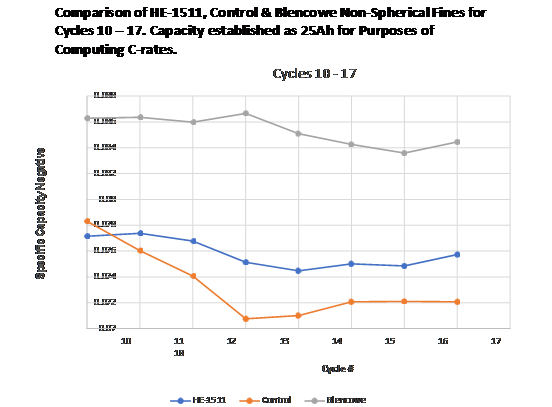
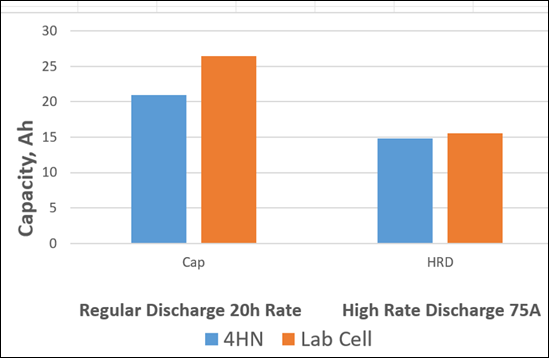
· 3-Plate Negative Limiting Cells fabricated and tested: C/25 Capacity established as approximately 25Ah.
· Preliminary Cycling Results show that for the Negative Active Material (NAM), the Blencowe Non-Spherical Fines (spheroidisation rejects) additive has a higher specific capacity compared to Control and the (non-graphite added) HE-1511.
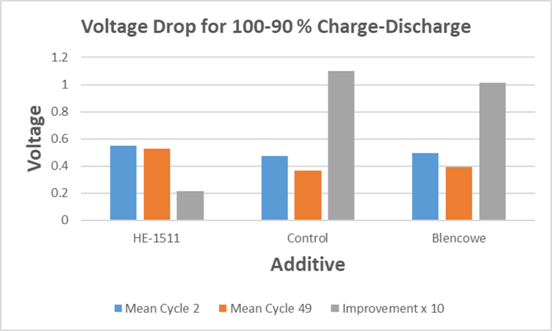
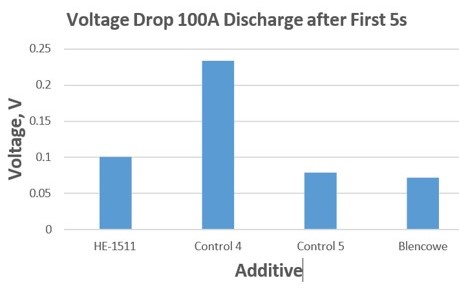
· High-Rate Full Charge (HRFC) Test 100-90% SOC @ 1C rate Blencowe similar to Control; both lower voltage drop than HE-1511
· High-Rate Partial State of Charge (HRPSoC) Test 60-50% SOC @ 1C Rate Blencowe superior to Control; both have a much lower voltage drop than Control.
· 100A Discharge (4C) Blencowe Lowest Voltage Drop.
· Typical Capacity Sequence for large number of Shallow Cycles.
Conclusion
During the testing, the Negative Active Material (NAM) – Blencowe Non-Spherical Graphite Fines performance was comparable and superior to the Control Samples and both were superior to the cells without the Graphite addition to the NAM.
Both Graphite Samples enhanced the HRFC, HRPSoC and High-Rate Discharge characteristics (better recovery and lower voltage drop).
This work demonstrates that the Blencowe Non-Spherical Graphite Fines (Spheriodization rejects) are suitable for addition to the Negative Active Material of Apollo Valve Regulated Lead-Acid Batteries for energy storage and Start-Stop Vehicular Applications where batteries are subject to large charge and discharge pulses.
Combined, these independent studies by leading graphite technical experts continue to demonstrate Orom-Cross has a rare combination of high purity, superior conductivity, and multi-market adaptability, which are all qualities sought by energy storage and defence-related agencies worldwide.
Test Results Summary
Comparison – Blencowe vs Control vs HE-1511
The chart below illustrates the clear and consistent performance advantage of Orom-Cross graphite over the control material across the discharge cycles, confirming stronger energy retention and reduced performance degradation over time.
For further information please contact:
|
Blencowe Resources Plc |
|
|
Sam Quinn (Director) |
Tel: +44 (0)1624 681 250
|
|
Sasha Sethi (Investor Relations) |
Tel: +44 (0) 7891 677 441 |
|
Tavira Financial (Joint Broker):
Jonathan Evans |
Tel: +44 (0)20 3192 1733 |
|
Oak Securities (Joint Broker):
Mungo Sheehan / Jerry Keen |
Tel: +44 (0)20 3973 3678 |
|
Cavendish (Joint Broker):
Neil McDonald / Peter Lynch / Hanna Leijonmarck |
Tel: +44 (0) 20 7908 6000 |
|
|
|
|
|
Cavendish note – Blencowe Resources #BRES Anti-radar coatings = high-value defence offtake potential
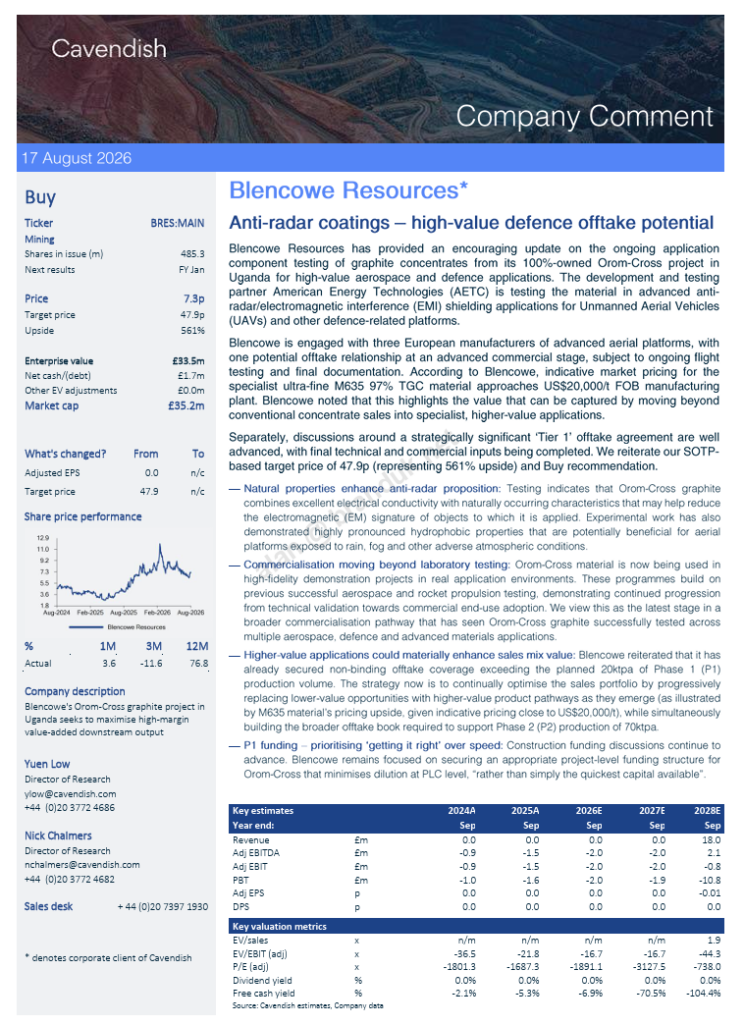
Blencowe Resources’ development and testing partner American Energy Technologies is testing the material in advanced antiradar/electromagnetic interference (EMI) shielding applications for Unmanned Aerial Vehicles (UAVs) and other defence-related platforms.
Blencowe is engaged with three European manufacturers of advanced aerial platforms, with one potential offtake relationship at an advanced commercial stage, subject to ongoing flight testing and final documentation. Indicative market pricing for the specialist ultra-fine M635 97% TGC material approaches US$20,000/t FOB manufacturing plant.
Separately, discussions around a strategic ally significant ‘Tier 1’ offtake agreement are well advanced, with final technical and commercial inputs being completed . We reiterate our SOTP based target price of 47.9p (representing 561% upside) and Buy recommendation.
Link here to view the full note
#BRES Blencowe Resources PLC – High-Value Defence Applications for Orom-Cross
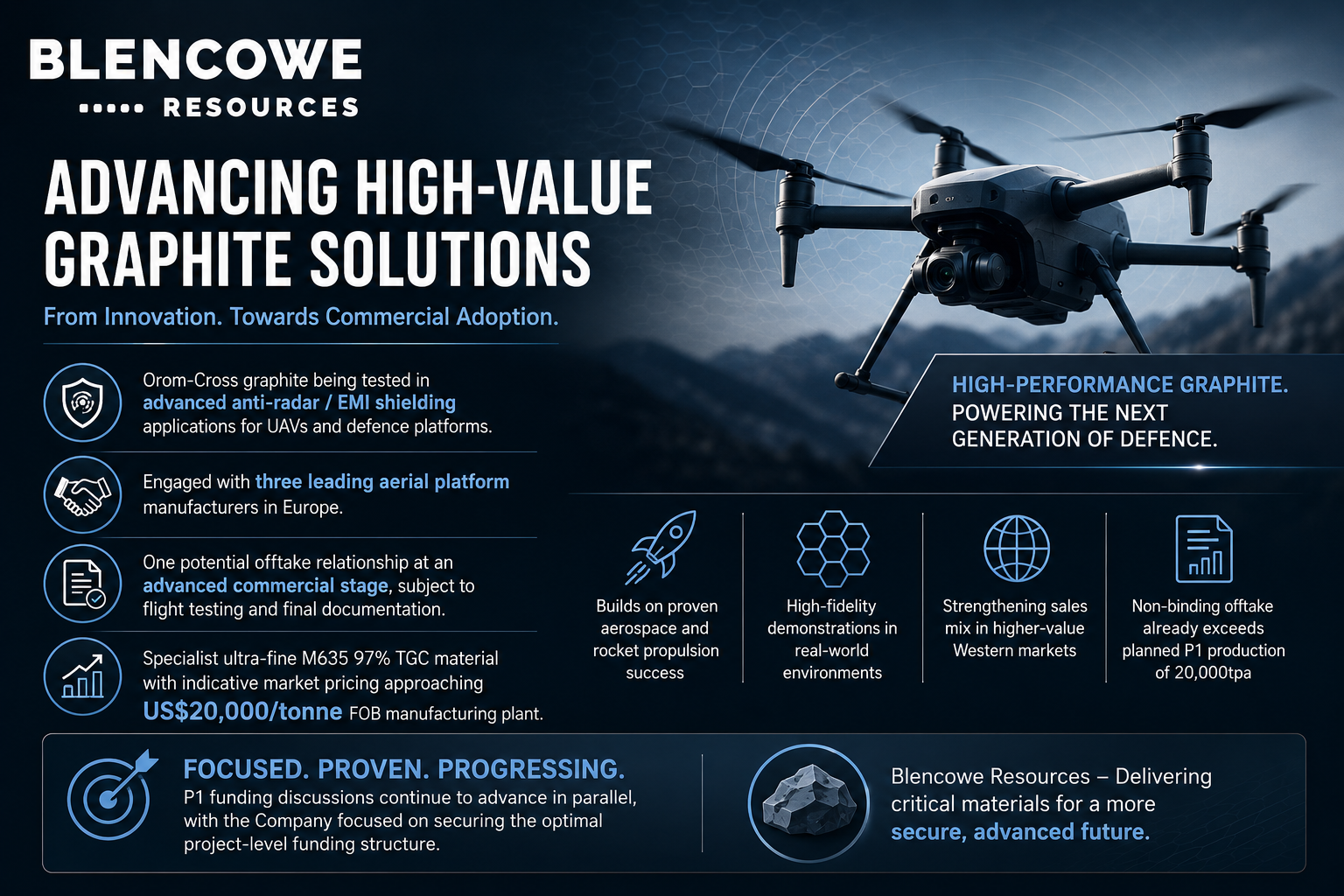 Blencowe Resources Plc (LSE: BRES) is pleased to report an update on the progress of the ongoing application component testing utilising Orom-Cross graphite concentrates produced from its 100%-owned Orom-Cross Graphite Project in Uganda.
In July, Iain Wearing, the Company’s COO, visited development and testing partner American Energy Technologies (“AETC”) in Chicago for an update on several important programmes currently underway using Orom-Cross graphite products.
The latest work further demonstrates the potential for Orom-Cross graphite products to access specialist, high-value markets beyond conventional concentrate sales. This supports Blencowe’s strategy to continually optimise its product and sales mix towards higher-value applications as the Project advances towards production.
Highlights
· Orom-Cross graphite products being tested in advanced anti-radar / electromagnetic interference (“EMI”) shielding applications for Unmanned Aerial Vehicles (“UAV”) and other defence-related platforms
· Blencowe currently engaged with three manufacturers of advanced aerial platforms in Europe
· One potential offtake relationship now at an advanced commercial stage, subject to completion of ongoing flight testing and finalisation of documentation
· Specialist ultra-fine M635 97% Total Graphitic Carbon (“TGC”) material used in this application has indicative market pricing approaching US$20,000/tonne FOB manufacturing plant
· Latest UAV and anti-radar coating programmes build on previous successful aerospace and rocket propulsion testing, demonstrating continued progression from technical validation towards commercial end-use adoption
· Orom-Cross material currently being used in high-fidelity demonstration projects in real application environments
· Further evidence of Blencowe’s strategy to continually upgrade its sales mix towards higher-value graphite products and specialist Western markets
· Existing non-binding offtake coverage already exceeds planned P1 production of 20,000tpa, while the Company continues to build the broader sales book required for P2 production
· P1 funding discussions continue to advance in parallel, with the Company focused on securing the optimal project-level funding structure
Blencowe Resources is working with its development partners and several manufacturers of UAV technology platforms in Europe to develop formulations for EMI shielding coatings on top of advanced mobile aerial platforms. This anti-radar pigment is very topical for drone manufacturing as well as other defence applications.
In addition to its superb electrical conductivity, testing indicates that Orom-Cross graphite exhibits preferential naturally occurring characteristics of particular relevance to reducing the electromagnetic signature on objects to which this graphite is applied.
Experimental work has also demonstrated highly pronounced hydrophobic properties within natural crystalline flake graphite from Orom-Cross. These characteristics are beneficial for advanced aerial platforms applications where equipment may be exposed to fog, rain and other adverse atmospheric conditions.
Advanced Offtake Discussions
Blencowe Resources has engaged with three manufacturers of advanced aerial platforms, with one offtake relationship now at an advanced stage for application-ready dry powder pigment based on ultra-fine M635 97% TGC flake originating from Orom-Cross.
Commercial documentation is being progressed, with completion subject to final technical inputs and the outcome of ongoing flight testing.
Indicative market pricing for material used in this specialist application approaches US$20,000/tonne FOB manufacturing plant, demonstrating the potential value available from niche applications compared with conventional graphite concentrate sales.
Material from Orom-Cross is currently being used in high-fidelity demonstration projects in real application environments. The Company will update the market as this potential offtake progresses towards execution.
This opportunity represents the latest stage in a broader commercialisation pathway that has seen Orom-Cross graphite successfully tested across multiple aerospace, defence and advanced materials applications.
Offtake and Funding Strategy
Blencowe has already secured non-binding offtake coverage exceeding the planned 20,000tpa P1 Production volume and continues to optimise its sales portfolio as higher-value applications and counterparties emerge.
The Company’s strategy is to progressively replace lower-value sales opportunities with higher-value product pathways where appropriate, while simultaneously building the broader offtake book required to support the planned 70,000tpa P2 Production target.
In parallel, P1 funding discussions continue to advance. The Company remains focused on securing a project-level funding structure that supports development of Orom-Cross while minimising dilution at plc level and will update the market when there is substantive progress suitable for announcement.
Separately, as previously referenced, the Company continues to advance discussions around a potentially strategically significant tier one offtake. This process is now well advanced, with final technical and commercial inputs being completed. The Company will provide a further update if and when appropriate.
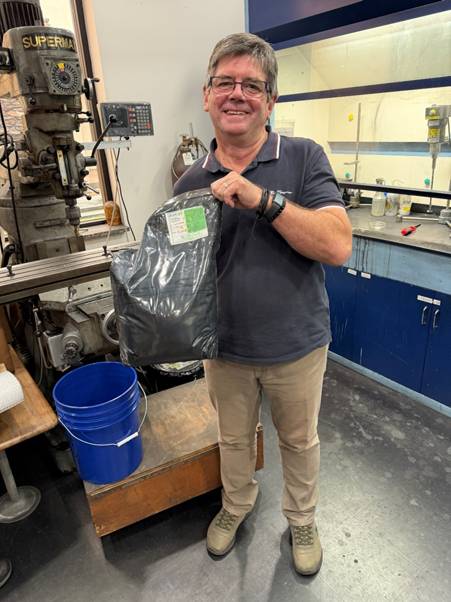
Photo: Blencowe COO, Iain Wearing holding sample of dry-powder pigment prior to shipment
Executive Chairman Cameron Pearce commented:
“This latest work further demonstrates the quality and versatility of Orom-Cross graphite products and the value that can be captured by moving beyond conventional concentrate sales into specialist, higher-value applications.
Blencowe has already more than covered the 20,000tpa P1 Production volume through existing non-binding offtake agreements. Our strategy now is to continually optimise that sales portfolio as higher-value opportunities emerge, while at the same time building the broader offtake book required to support P2 Production.
This particular defence application is a good example. Our Orom-Cross graphite is already being used in real-world testing environments, and the potential offtake relationship has progressed to an advanced commercial stage, subject to completion of the remaining technical work and documentation.
Funding remains the key gatekeeper to first production and we continue to advance P1 funding discussions in parallel. Our focus remains on securing the right project-level structure for Orom-Cross, rather than simply the quickest capital available.
Western customers are increasingly seeking high-quality graphite products from non-Chinese sources to reduce geopolitical and supply-chain risk. We believe Orom-Cross is exceptionally well positioned for this shift, and the emergence of specialist opportunities such as these further strengthens the commercial case for the Project.“
|
For further information please contact: |
|||
|
Blencowe Resources Plc |
|
|
|
|
Sam Quinn (Director) |
Tel: +44 (0)1624 681 250
|
|
|
|
Sasha Sethi (Investor Relations) |
Tel: +44 (0) 7891 677 441 |
|
|
|
Tavira Financial (Joint Broker):
Jonathan Evans |
Tel: +44 (0)20 3192 1733 |
|
|
|
Oak Securities (Joint Broker):
Mungo Sheehan / Jerry Keen |
Tel: +44 (0)20 3973 3678 |
|
|
|
Cavendish (Joint Broker):
Neil McDonald / Peter Lynch / Hanna Leijonmarck |
Tel: +44 (0) 20 7908 6000 |
|
|
|
|
|||
|
|
|
||
|
|
|
||
#SVML Sovereign Metals Limited – JUNE 2026 QUARTERLY REPORT
 Sovereign Metals Limited (ASX:SVM, AIM:SVML, OTCQX:SVMLF) (Sovereign or the Company) is pleased to provide its quarterly report for the period ended 30 June 2026 including advances made at its Kasiya Critical Minerals Project (Kasiya or the Project) in Malawi. Kasiya is the world’s largest known natural rutile deposit and one of the largest flake graphite deposits in the world, with the potential to produce a heavy rare earth concentrate as a by-product.
HIGHLIGHTS DURING AND SUBSEQUENT TO THE QUARTER
Kasiya Definitive Feasibility Study Delivers Outstanding Results
· Pre-tax NPV8 of US$2.2 billion on capital expenditure to first production of US$727 million – an NPV to capex ratio of 3.0x
· Steady state annual EBITDA of US$476 million and pre-tax, unlevered free cash flow of US$452 million; total revenue of US$16.2 billion initial 25-year mine life with potential for multi-generational mine life extensions
· Operating cost of just US$450/t product (FOB Nacala) – underpinning strong margin resilience across commodity cycles
· Positioned to become the world’s largest producer of both natural rutile (222ktpa) and natural flake graphite (275ktpa) – two commodities designated as Critical Minerals by the United States and the European Union
· DFS completed under the oversight of the Sovereign-Rio Tinto Technical Committee, with workstreams aligned with IFC Performance Standards; World Bank/IFC Collaboration Agreement in place as potential co-lead mandated lead arranger for project financing
· Data obtained from Pilot Mining Program, completed with technical input from Rio Tinto, provided real-world inputs and validation across key DFS workstreams
· Heavy rare earth potential not included in DFS – evaluation of monazite by-product from rutile tailings stream now underway
Sovereign to Advance Kasiya with US-Focused Critical Minerals Strategy
· Since the completion of the DFS, Sovereign has had deepening engagement with the U.S. Government, major U.S. companies, and industry stakeholders
· Sovereign can now prioritise a U.S.-focused critical-minerals strategy, positioning Kasiya as a secure, non-Chinese source of titanium feedstock and natural graphite for the U.S. and allied supply chains
· Commercial workstreams will include:
· advancing rutile and graphite offtake discussions toward binding agreements with Mitsui, Traxys and other strategic U.S. and U.S.-allied counterparties
· continued engagement with potential offtake partners and U.S. government stakeholders in relation to the heavy rare earth co-product opportunity
· Kasiya provides exposure to three minerals designated critical by the U.S. – titanium (via natural rutile), graphite and heavy rare earths (via a Heavy Rare Earth Concentrate by-product) – each feeding U.S. and allied supply chains, including Japan, being the dominant supplier of titanium metal to the U.S.
Monazite Containing Critical Heavy Rare Earths Confirmed Across Multiple Pits
· Monazite concentrate containing the most critical and highly valuable heavy rare earth elements Dy, Tb and Yttrium recovered from four planned pits in the Kasiya DFS mine plan, including pits scheduled for Year 1 production
· DyTb and Yttrium oxide ratios in the TREO basket ~7-times higher than the world’s five largest rare earth producers – average 2.5% DyTb and 11.8% Yttrium vs. 0.4% DyTb and 1.7% Yttrium across the five largest producers
· Highest ratios of up to 3.1% DyTb and 17.2% Yttrium found near-surface (0-6m)
· U.S. Department of War describes heavy rare earth supply chain risk as “a clear and present danger to our national security”; MP Materials, America’s only fully integrated rare earth producer, reports no measurable Dy, Tb or Yttrium
· Monazite potentially a third revenue stream from the non-conductor tailings stream of the DFS flowsheet – potential for no additional mining and no new primary processing circuit
· Independent report by Project Blue shows potential pricing of US$16,000/t base case (US$19,000/t high case) in 2026 (real)
Successful Rehabilitation Trials and Community Partnerships
· Second year of rehabilitation trials at the Pilot Mining site neared completion ahead of the mid-2026 harvest, with crop yields expected to reach the first-year benchmark of 5.2 tonnes of maize per hectare – around five times the regional average
· Diversified multi-cropping system expanded, combining maize with bamboo, winter beans, grass fodder and groundnuts on rehabilitated post-mining land
· The 28 local farmers involved in the trials formally requested that Sovereign remain at the trial site and support the establishment of a farming co-operative – a strong community endorsement and a central pillar of Kasiya’s post-closure social transition strategy
· Empirical trial data integrated into the Mine Closure and Mine Rehabilitation Plans – critical components for project bankability and alignment with the standards required by development finance institutions
Next Steps
· Completion of heavy rare earth concentrate technical-economic study including a heavy rare earth mineral resource estimate
· Advance offtake discussions and progress towards binding definitive agreements
|
Enquiries |
|
|
Frank Eagar, Managing Director & CEO South Africa / Malawi +27 21 140 3190 |
|
|
Sapan Ghai, CCO London +44 207 478 3900 |
|
|
Nominated Adviser on AIM and Joint Broker |
|
|
SP Angel Corporate Finance LLP |
+44 20 3470 0470 |
|
Ewan Leggat Charlie Bouverat |
|
|
|
|
|
Joint Broker |
|
|
Stifel |
+44 20 7710 7600 |
|
Varun Talwar |
|
|
Ashton Clanfield |
KASIYA DEFINITIVE FEASIBILITY STUDY RESULTS
During the quarter, the Company announced the results of the Definitive Feasibility Study (DFS or the Study) for Kasiya. The DFS built on the outcomes of the Optimised Pre-feasibility Study announced in January 2025 and on empirical data from the Pilot Mining and Rehabilitation Program (Pilot Mining) completed in 2024. The DFS was undertaken in accordance with a scope of work approved by, and with technical input and oversight from, the Sovereign-Rio Tinto Technical Committee and, where applicable, conforms to the World Bank Group’s International Finance Corporation (IFC) Performance Standards to enhance bankability of the Project.
Following input from world-class consultancies, Sovereign’s highly experienced owners’ team, and subject matter experts from Rio Tinto, the DFS has reconfirmed that Kasiya will be a leading future supplier to two distinct strategic critical minerals supply chains and outside of Chinese control – natural rutile for the titanium industry and natural flake graphite.
Outstanding Financial Returns
The key financial metrics from the DFS (steady state, all on a 100% project basis) are set out below:
TABLE 1: Key DFS Metrics (Steady State)
|
OPERATING METRICS |
Units |
Results |
|
Initial Life of Mine (LOM) |
Yrs |
25 |
|
Total Ore Mined |
Mt |
536 |
|
Phase 1 Plant Throughput (Yrs 1-4) |
Mtpa |
12 |
|
Phase 2 Plant Throughput (Yrs 5-25) |
Mtpa |
24 |
|
Annual Rutile Production (95%+ TiO2) |
ktpa |
222 |
|
Annual Graphite Production (96% TGC) |
ktpa |
275 |
|
FINANCIAL PERFORMANCE |
||
|
Total Revenue |
US$M |
16,210 |
|
Annual Revenue |
US$M |
728 |
|
Annual EBITDA |
US$M |
476 |
|
Annual Free Cash Flow (pre-tax, unlevered) |
US$M |
452 |
|
NPV8 (real, pre-tax) |
US$M |
2,204 |
|
IRR (pre-tax) |
% |
23% |
|
OPERATING AND CAPITAL EXPENDITURE |
||
|
Capex to First Production |
US$M |
727 |
|
Total LOM Development Capex |
US$M |
1,239 |
|
Total LOM Sustaining Capex |
US$M |
431 |
|
Operating Costs (FOB Nacala) |
US$/t product |
450 |
Note: Steady State is defined as years of operation during which total run-of-mine is at full capacity of 24 Mtpa (i.e., years 5 to 23). All results are presented on a 100% project basis.
Summary of Key DFS Workstreams
Dry Mining Method Confirmed
Using real-world data collected from the Pilot Mining, the DFS confirms a dry mechanical mining method using draglines and 100t rigid dump trucks. The soft, free-dig saprolite orebody requires no drilling, blasting, crushing or milling. A two-bench approach (5m top cut, up to 15m bottom cut) keeps the draglines above the water table, eliminating the need for production equipment below groundwater level. This represents a significant de-risking step from the hydro-mining method originally considered in the original Pre-feasibility Study.
No Conventional Tailings Storage Facility
A major advancement in the DFS is the elimination of the conventional Tailings Storage Facility, leading to a significant reduction in the mining footprint and providing a flexible, lower-risk tailings management solution. All tailings will be stored via hydraulic co-disposal backfilling of mined-out pits, designed in compliance with the Global Industry Standard on Tailings Management. The 50:50 fines-to-sand backfill ratio closely matches the existing soil profile, supporting progressive rehabilitation.
Hydropower-Sourced Grid Electricity
The DFS is based on connection to Malawi’s national hydropower grid via a 132kV overhead line to the Nkhoma substation. Electricity Supply Corporation of Malawi Limited has confirmed significant grid expansion is underway, including a 400kV Mozambique interconnector and the 375MW IFC/World Bank-funded Mpatamanga hydropower station. Grid connection delivers substantially lower power costs and a favourable emissions profile.
Dual Plant Configuration and Processing Flowsheet
The DFS confirms a staged development with two 12Mtpa processing plants – South Plant from Year 1 and North Plant from Year 5 – positioned at the respective resource centres of gravity to minimise haulage distances and costs. The Wet Concentration Plant employs a low-energy gravity separation process to produce a Heavy Mineral Concentrate, which is then fed to the Mineral Separation Plant for electrostatic and magnetic separation to yield premium-quality rutile (+95% TiO₂). Graphite-rich concentrate recovered from the spirals is processed in a dedicated flotation plant, producing a high-purity, high-crystallinity, coarse-flake graphite product.
Logistics and Export Infrastructure
Kasiya’s products will be railed directly from a purpose-built dry port at the mine site eastward along the Nacala Logistics Corridor to the container terminal at the Port of Nacala on the Indian Ocean. The existing heavy-haul rail line and deep-water port provide a proven, operational export route – a significant infrastructure advantage over comparable undeveloped projects. Product transport cost is estimated at US$117/t product (FOB Nacala).
IFC Performance Standards Integrated into Design
The DFS has been prepared in alignment with IFC Performance Standards, with a comprehensive Environmental and Social Impact Assessment nearing completion and the full suite of environmental and social specialist studies completed. Sovereign’s established on-the-ground social team of 22 core staff and 90-member Community Liaison Team represent a level of social preparedness rarely achieved at DFS stage.
Heavy rare earth potential was not included in the DFS – evaluation of a monazite by-product from the rutile tailings stream continued during the quarter (see below).
SOVEREIGN TO ADVANCE KASIYA WITH US-FOCUSED CRITICAL MINERALS STRATEGY
With full responsibility for commercial, offtake and financing workstreams now with Sovereign, the Company is prioritising a US-focused critical minerals strategy. Kasiya is well placed to supply natural rutile and natural graphite to supply chains serving the US and allied economies, addressing acute gaps in secure, non-Chinese sources of critical minerals feedstock, alongside the potential heavy rare earth by-product opportunity.
Sovereign intends to progress existing rutile and graphite offtake arrangements, including those with Mitsui & Co., Ltd and Traxys North America LLC, from non-binding arrangements toward binding agreements, subject to negotiation. The Company will deepen engagement with the US Government, major US companies, industry stakeholders and development-finance institutions, and intends to pursue partnerships and financing arrangements with institutions across the US-allied economies, consistent with Kasiya’s role in securing critical minerals supply. The Company’s Collaboration Agreement with the IFC remains central to the Project’s financing strategy.
MONAZITE CONTAINING CRITICAL HEAVY RARE EARTHS CONFIRMED ACROSS MULTIPLE PITS
In May 2026, the Company announced significant heavy rare earth metallurgical testwork results at Kasiya. The testwork was conducted on monazite concentrates recovered from four pits in the Project’s DFS mine plan – Babbler, Kingfisher, Sparrow and Mousebird – including pits scheduled for Year 1 production.
The results confirm that the heavy rare earth content of Dysprosium (Dy), Terbium (Tb) and Yttrium (Y) first reported in January 2026 is present in pits scheduled for the early years of production at Kasiya, with average Total Rare Earth Oxide (TREO) basket ratios approximately 7x higher than the world’s five largest rare earth producers. Heavy rare earth content is highest in the near-surface (0-6m), which returns DyTb and Y ratios within the TREO basket materially above those of the deeper horizon.
TABLE 2: Summary Results (% of TREO basket)
|
Pit |
|
Light REE |
Heavy REE |
|
|
NdPr (%) |
DyTb (%) |
Y (%) |
||
|
Babbler |
21.0 |
2.6 |
11.7 |
|
|
Kingfisher |
20.5 |
2.7 |
12.5 |
|
|
Sparrow |
20.9 |
2.5 |
11.9 |
|
|
Mousebird |
21.2 |
2.4 |
11.3 |
|
|
Kasiya Four-pit Average |
20.9 |
2.5 |
11.8 |
|
|
Near Surface (0-6m) |
19.3 |
2.9 |
15.4 |
|
|
Deeper (6m+) |
21.6 |
2.3 |
10.3 |
|
|
Top Five Producers Average REE Content |
19.4 |
0.4 |
1.7 |
|
Note: Kasiya Four-pit Average calculated as average of per-pit TREO basket ratios. See ASX Announcement dated 27 May 2026 “MONAZITE CONTAINING CRITICAL HEAVY RARE EARTHS CONFIRMED ACROSS MULTIPLE PITS AT KASIYA” – Appendix 1 and 2 for source details
Strategic Importance of Dysprosium-Terbium and Yttrium
Dy and Tb are heavy magnet rare earths essential for high-temperature permanent magnets used in advanced defence systems, precision weapons, aerospace applications and next-generation electric drivetrains. Y is a high-impact rare earth element critical for aerospace thermal barrier coatings, radar and laser systems, high-performance alloys and semiconductor manufacturing.
On 24 February 2026, the U.S. Assistant Secretary of War for Industrial Base Policy, Michael P. Cadenazzi Jr., testified before the Senate Armed Services Committee that on heavy rare earths China controls 95% of global output, with the U.S. importing almost 100% of what it uses – 90% of that from China – describing the situation as “a clear and present danger to our national security”. China’s April 2025 export controls on Dy, Tb and Y created immediate supply tightness for Western manufacturers, and on 6 January 2026 China announced strengthened export controls on dual-use items to Japan. The U.S. is 100% reliant on imports for its Y requirements, and MP Materials Corp., America’s only fully integrated rare earth producer, reports no measurable Dy, Tb or Y.
Western Supply-Chain Strategy: Market Context
The strategic value of non-Chinese heavy rare earth supply has been crystallised by recent corporate activity. On 20 April 2026, Nasdaq-listed USA Rare Earth, Inc. announced a definitive agreement to acquire Brazil’s Serra Verde Group for approximately US$2.8 billion, underpinned by a 15-year 100% U.S. Government-backed offtake agreement with contractual price floors of US$110/kg for both Neodymium and Praseodymium, US$575/kg for Dysprosium and US$2,050/kg for Terbium. On 20 January 2026, U.S. uranium and rare earth producer Energy Fuels Inc. announced a US$299 million acquisition of ASX-listed Australian Strategic Materials Limited.
These transactions crystallise the value that Western governments and capital markets now ascribe to scaled, non-Chinese rare earth supply. Kasiya’s monazite concentrate contains all four magnetic rare earth elements – plus Y – at TREO basket ratios consistent with or exceeding benchmark operations, potentially recovered as a by-product of a project that is already at DFS stage with a US$2.2 billion pre-tax NPV8.
By-Product Economics: Near-Zero Incremental Cost
The monazite concentrates are recovered from the non-conductor tailings stream of the processing flowsheet specified in the Kasiya DFS – material that would otherwise report to tailings. Recovery as a by-product of the DFS-specified flowsheet could potentially mean no additional mining, no new primary processing circuits, no parallel rare-earth processing plant of the kind required by primary rare earth producers, and no additional reagents. In aggregate, monazite concentrate recovery is potentially achievable at near-zero incremental cost relative to the DFS base case. Further work is required to assess the capital and operating cost implications of any downstream product separation or refining, and to characterise the mineralogy, deportment, liberation and radioactive element (uranium and thorium) handling requirements of the Kasiya monazite.
Independent Price Forecast
Project Blue Group Limited (Project Blue), a specialist in critical minerals market intelligence, prepared an independent price forecast for a monazite mineral concentrate containing 60% TREO with a distribution in line with that observed in Sovereign’s testwork to date. Project Blue’s 2026 base-case forecast is US$16,000/t (high case US$19,000/t), against the April 2026 Shanghai Metals Market benchmark monazite concentrate (54-55% TREO grade) price of approximately US$6,142/t. Project Blue notes that prices for key rare earth products are commanding a premium in ex-China markets, reflecting the limited pool of non-Chinese suppliers and the ongoing decoupling of Western and Chinese rare earth supply chains.
Sovereign has not entered into any offtake or sales agreement for monazite concentrate. Realised prices will depend on commercial negotiation, market conditions at the time of sale, the actual specifications of any concentrate produced and the terms of any offtake agreement.
SUCCESSFUL REHABILITATION TRIALS AND COMMUNITY PARTNERSHIPS
In April 2026, the Company announced that its second year of rehabilitation trials, as part of the Pilot Mining at Kasiya, was nearing completion for the upcoming harvest season in Malawi. The rehabilitation trials provide practical, multi-year evidence demonstrating Sovereign’s alignment with international rehabilitation, environmental, and community good-practice standards. Empirical data from the trials were used to prepare the Mine Closure and Mine Rehabilitation Plans, which are now integrated into the mining, backfilling and post-mining closure planning – critical components for project bankability and alignment with the standards required by development finance institutions.
The second year of trials builds on the success of the first year, which delivered maize yields of 5.2 tonnes per hectare versus the regional average of 1 tonne per hectare – a fivefold increase that confirmed post-mining land can achieve superior agricultural productivity compared to pre-mining land. Second-year crop yields are expected to reach the first-year benchmark when harvested in mid-2026. The second year expanded the rehabilitation approach into a diversified multi-cropping system, combining maize with Giant Bamboo, winter beans, grass fodder and groundnuts, providing participating communities with a wider range of food, cash and fodder crops.
After two years of close collaboration, the 28 local farmers involved in the trials formally requested that Sovereign remain at the trial site and support them in establishing a farming co-operative. This represents a strong community endorsement of the program’s value and is a central pillar of Kasiya’s post-closure social transition strategy, demonstrating that the Project can deliver lasting economic benefits to local communities well beyond the mine life. The outcomes directly complement the collaboration with the IFC, which is supporting integration of IFC Performance Standards into the Project’s Environmental and Social Impact Assessment, and strengthening Kasiya’s pathway to bankable development and international project financing.
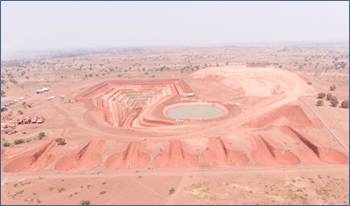
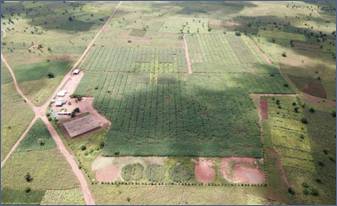
Figures 1 & 2: Pilot mining site post-mining and following rehabilitation.
Competent Person Statement
The information in this announcement that relates to the DFS (including Mine Engineering, Mine Scheduling, Processing, Infrastructure, Capital and Operating Costs, Production Target and Ore Reserves) is extracted from an announcement dated 16 April 2026, which is available to view at www.sovereignmetals.com.au. Sovereign confirms that a) it is not aware of any new information or data that materially affects the information included in the original announcement; b) all material assumptions included in the original announcement continue to apply and have not materially changed; and c) the form and context in which the relevant Competent Persons’ findings are presented in this announcement have not been materially changed from the original announcement.
The information in this announcement that relates to the exploration results (metallurgy) is extracted from announcements dated 28 September 2023, 8 May 2024, 15 May 2024, 4 September 2024, 21 January 2026 and 27 May 2026, which is available to view at www.sovereignmetals.com.au. Sovereign confirms that a) it is not aware of any new information or data that materially affects the information included in the original announcement; b) all material assumptions included in the original announcement continue to apply and have not materially changed; and c) the form and context in which the relevant Competent Persons’ findings are presented in this announcement have not been materially changed from the original announcement.
The information contained within this announcement is deemed by Sovereign to constitute inside information as stipulated under the Regulation 2014/596/EU which is part of domestic law pursuant to the Market Abuse (Amendment) (EU Exit) Regulations (SI 2019/310) (“UK MAR”). By the publication of this announcement via a Regulatory Information Service, this inside information (as defined in UK MAR) is now considered to be in the public domain.
APPENDIX 1: SUMMARY OF MINING TENEMENTS
As at 30 June 2026, the Company had an interest in the following tenements:
|
Licence |
Holding Entity |
Interest |
Type |
Licence Renewal Date |
Expiry Term Date2 |
Licence Area (km2) |
Status |
|
EL0609 |
MML |
100% |
Exploration |
25/09/2026 |
25/09/2028 |
219.5 |
Granted |
|
EL0582 |
SSL |
100% |
Exploration |
15/09/20253 |
15/09/2028 |
69.8 |
Granted |
|
EL0561 |
SSL |
100% |
Exploration |
15/09/20253 |
15/09/2028 |
30.7 |
Granted |
|
EL0657 |
SSL |
100% |
Exploration |
3/10/2028 |
3/10/2031 |
2.3 |
Granted |
|
EL0710 |
SSL |
100% |
Exploration |
1/02/2027 |
1/02/2031 |
38.4 |
Granted |
|
RTL0035-RTL0045 |
SSL |
100% |
Retention |
N/A |
26/06/20261 |
285.2 |
Granted |
Notes:
SSL: Sovereign Services Limited, MML: McCourt Mining Limited
1 During the quarter, the Company submitted a Mining Licence (ML) application for the licence areas covered by the DFS for the Kasiya Project. The application for the ML has been acknowledged by the Malawi Mining and Minerals Regulatory Authority and remains pending as as at the date of this report.
2 An exploration licence (EL) covering a preliminary period in accordance with the Mines and Minerals Act (2023) (2023 Mines Act) is granted an initial period of five (5) years with the ability to extend by three (3) years on two occasions (a total term of 11 years). ELs that have come to the end of their term can be converted by the EL holder into a retention licence (RTL) for a term not exceeding five (5) years subject to meeting certain criteria or any conditions imposed on the RTL.
3 The Company has submitted two EL applications, APL0739 (16.2km2) and APL0740 (71.5km2), which remain pending as at the date of this report.
APPENDIX 2: RELATED PARTY PAYMENTS
During the quarter ended 30 June 2026, the Company made payments of A$356,000 to related parties and their associates. These payments relate to existing remuneration arrangements (executive salaries, director fees, superannuation and bonuses (A$258,000) and for the provision of administrative, secretarial and corporate services (A$98,000).
APPENDIX 3: MINING EXPLORATION EXPENDITURES
During the quarter, the Company made the following payments in relation to mining exploration activities:
|
Activity |
A$’000 |
|
Feasibility Studies (DFS & Pilot Mining (including rehabilitation trials)) |
1,362 |
|
Project Operations (site office, personnel, field supplies, equipment, vehicles and travel |
1,135 |
|
Assaying and Metallurgical Test-work |
138 |
|
ESG related (including community and social development programs) |
437 |
|
Drilling related |
64 |
|
Total as reported in Appendix 5B |
3,136 |
There were no mining or production activities and expenses incurred during the quarter ended 30 June 2026.
Appendix 5B
Mining exploration entity or oil and gas exploration entity
quarterly cash flow report
|
Name of entity |
||
|
Sovereign Metals Limited |
||
|
ABN |
Quarter ended (“current quarter”) |
|
|
71 120 833 427 |
30 June 2026 |
|
|
Consolidated statement of cash flows |
Current quarter |
Year to date |
|
|
1. |
Cash flows from operating activities |
– |
– |
|
1.1 |
Receipts from customers |
||
|
1.2 |
Payments for |
(3,136) |
(26,436) |
|
(a) exploration & evaluation |
|||
|
(b) development |
– |
– |
|
|
(c) production |
– |
– |
|
|
(d) staff costs |
(404) |
(1,655) |
|
|
(e) administration and corporate costs |
(510) |
(1,559) |
|
|
1.3 |
Dividends received (see note 3) |
– |
– |
|
1.4 |
Interest received |
381 |
1,902 |
|
1.5 |
Interest and other costs of finance paid |
– |
– |
|
1.6 |
Income taxes paid |
– |
– |
|
1.7 |
Government grants and tax incentives |
– |
– |
|
1.8 |
Other – Business Development |
(373) |
(1,412) |
|
1.9 |
Net cash from / (used in) operating activities |
(4,042) |
(29,160) |
|
2. |
Cash flows from investing activities |
– |
– |
|
2.1 |
Payments to acquire or for: |
||
|
(a) entities |
|||
|
(b) tenements |
– |
– |
|
|
(c) property, plant and equipment |
(103) |
(237) |
|
|
(d) exploration & evaluation |
– |
– |
|
|
(e) investments |
– |
– |
|
|
(f) other non-current assets |
– |
– |
|
|
2.2 |
Proceeds from the disposal of: |
– |
– |
|
(a) entities |
|||
|
(b) tenements |
– |
– |
|
|
(c) property, plant and equipment |
– |
– |
|
|
(d) investments |
– |
– |
|
|
(e) other non-current assets |
– |
– |
|
|
2.3 |
Cash flows from loans to other entities |
– |
– |
|
2.4 |
Dividends received (see note 3) |
– |
– |
|
2.5 |
Other (provide details if material) |
– |
– |
|
2.6 |
Net cash from / (used in) investing activities |
(103) |
(237) |
|
3. |
Cash flows from financing activities |
– |
– |
|
3.1 |
Proceeds from issues of equity securities (excluding convertible debt securities) |
||
|
3.2 |
Proceeds from issue of convertible debt securities |
– |
– |
|
3.3 |
Proceeds from exercise of options |
– |
– |
|
3.4 |
Transaction costs related to issues of equity securities or convertible debt securities |
(23) |
(23) |
|
3.5 |
Proceeds from borrowings |
– |
– |
|
3.6 |
Repayment of borrowings |
– |
– |
|
3.7 |
Transaction costs related to loans and borrowings |
– |
– |
|
3.8 |
Dividends paid |
– |
– |
|
3.9 |
Other (provide details if material) |
– |
– |
|
3.10 |
Net cash from / (used in) financing activities |
(23) |
(23) |
|
4. |
Net increase / (decrease) in cash and cash equivalents for the period |
||
|
4.1 |
Cash and cash equivalents at beginning of period |
29,271 |
54,538 |
|
4.2 |
Net cash from / (used in) operating activities (item 1.9 above) |
(4,042) |
(29,160) |
|
4.3 |
Net cash from / (used in) investing activities (item 2.6 above) |
(103) |
(237) |
|
4.4 |
Net cash from / (used in) financing activities (item 3.10 above) |
(23) |
(23) |
|
4.5 |
Effect of movement in exchange rates on cash held |
22 |
7 |
|
4.6 |
Cash and cash equivalents at end of period |
25,125 |
25,125 |
|
5. |
Reconciliation of cash and cash equivalents |
Current quarter |
Previous quarter |
|
5.1 |
Bank balances |
13,105 |
5,751 |
|
5.2 |
Call deposits |
12,020 |
23,520 |
|
5.3 |
Bank overdrafts |
– |
– |
|
5.4 |
Other (provide details) |
– |
– |
|
5.5 |
Cash and cash equivalents at end of quarter (should equal item 4.6 above) |
25,125 |
29,271 |
|
6. |
Payments to related parties of the entity and their associates |
Current quarter |
|
6.1 |
Aggregate amount of payments to related parties and their associates included in item 1 |
(356) |
|
6.2 |
Aggregate amount of payments to related parties and their associates included in item 2 |
– |
|
Note: if any amounts are shown in items 6.1 or 6.2, your quarterly activity report must include a description of, and an explanation for, such payments. |
||
|
7. |
Financing facilities Add notes as necessary for an understanding of the sources of finance available to the entity. |
Total facility amount at quarter end |
Amount drawn at quarter end |
|
7.1 |
Loan facilities |
– |
– |
|
7.2 |
Credit standby arrangements |
– |
– |
|
7.3 |
Other (please specify) |
– |
– |
|
7.4 |
Total financing facilities |
– |
– |
|
|
|||
|
7.5 |
Unused financing facilities available at quarter end |
– |
|
|
7.6 |
Include in the box below a description of each facility above, including the lender, interest rate, maturity date and whether it is secured or unsecured. If any additional financing facilities have been entered into or are proposed to be entered into after quarter end, include a note providing details of those facilities as well. |
||
|
8. |
Estimated cash available for future operating activities |
$A’000 |
|
8.1 |
Net cash from / (used in) operating activities (item 1.9) |
(4,042) |
|
8.2 |
(Payments for exploration & evaluation classified as investing activities) (item 2.1(d)) |
– |
|
8.3 |
Total relevant outgoings (item 8.1 + item 8.2) |
(4,042) |
|
8.4 |
Cash and cash equivalents at quarter end (item 4.6) |
25,125 |
|
8.5 |
Unused finance facilities available at quarter end (item 7.5) |
– |
|
8.6 |
Total available funding (item 8.4 + item 8.5) |
25,125 |
|
8.7 |
Estimated quarters of funding available (item 8.6 divided by item 8.3) |
6.2 |
|
Note: if the entity has reported positive relevant outgoings (ie a net cash inflow) in item 8.3, answer item 8.7 as “N/A”. Otherwise, a figure for the estimated quarters of funding available must be included in item 8.7. |
||
|
8.8 |
If item 8.7 is less than 2 quarters, please provide answers to the following questions: |
|
|
8.8.1 Does the entity expect that it will continue to have the current level of net operating cash flows for the time being and, if not, why not? |
||
|
Answer: Not applicable |
||
|
8.8.2 Has the entity taken any steps, or does it propose to take any steps, to raise further cash to fund its operations and, if so, what are those steps and how likely does it believe that they will be successful? |
||
|
Answer: Not applicable |
||
|
8.8.3 Does the entity expect to be able to continue its operations and to meet its business objectives and, if so, on what basis? |
||
|
Answer: Not applicable |
||
|
Note: where item 8.7 is less than 2 quarters, all of questions 8.8.1, 8.8.2 and 8.8.3 above must be answered. |
||
Compliance statement
1 This statement has been prepared in accordance with accounting standards and policies which comply with Listing Rule 19.11A.
2 This statement gives a true and fair view of the matters disclosed.
Date: 30 July 2026
Authorised by: Company Secretary
(Name of body or officer authorising release – see note 4)
Sovereign Metals Limited (ASX:SVM, AIM:SVML, OTCQX:SVMLF) (Sovereign or the Company) is pleased to provide its quarterly report for the period ended 30 June 2026 including advances made at its Kasiya Critical Minerals Project (Kasiya or the Project) in Malawi. Kasiya is the world’s largest known natural rutile deposit and one of the largest flake graphite deposits in the world, with the potential to produce a heavy rare earth concentrate as a by-product.
HIGHLIGHTS DURING AND SUBSEQUENT TO THE QUARTER
Kasiya Definitive Feasibility Study Delivers Outstanding Results
· Pre-tax NPV8 of US$2.2 billion on capital expenditure to first production of US$727 million – an NPV to capex ratio of 3.0x
· Steady state annual EBITDA of US$476 million and pre-tax, unlevered free cash flow of US$452 million; total revenue of US$16.2 billion initial 25-year mine life with potential for multi-generational mine life extensions
· Operating cost of just US$450/t product (FOB Nacala) – underpinning strong margin resilience across commodity cycles
· Positioned to become the world’s largest producer of both natural rutile (222ktpa) and natural flake graphite (275ktpa) – two commodities designated as Critical Minerals by the United States and the European Union
· DFS completed under the oversight of the Sovereign-Rio Tinto Technical Committee, with workstreams aligned with IFC Performance Standards; World Bank/IFC Collaboration Agreement in place as potential co-lead mandated lead arranger for project financing
· Data obtained from Pilot Mining Program, completed with technical input from Rio Tinto, provided real-world inputs and validation across key DFS workstreams
· Heavy rare earth potential not included in DFS – evaluation of monazite by-product from rutile tailings stream now underway
Sovereign to Advance Kasiya with US-Focused Critical Minerals Strategy
· Since the completion of the DFS, Sovereign has had deepening engagement with the U.S. Government, major U.S. companies, and industry stakeholders
· Sovereign can now prioritise a U.S.-focused critical-minerals strategy, positioning Kasiya as a secure, non-Chinese source of titanium feedstock and natural graphite for the U.S. and allied supply chains
· Commercial workstreams will include:
· advancing rutile and graphite offtake discussions toward binding agreements with Mitsui, Traxys and other strategic U.S. and U.S.-allied counterparties
· continued engagement with potential offtake partners and U.S. government stakeholders in relation to the heavy rare earth co-product opportunity
· Kasiya provides exposure to three minerals designated critical by the U.S. – titanium (via natural rutile), graphite and heavy rare earths (via a Heavy Rare Earth Concentrate by-product) – each feeding U.S. and allied supply chains, including Japan, being the dominant supplier of titanium metal to the U.S.
Monazite Containing Critical Heavy Rare Earths Confirmed Across Multiple Pits
· Monazite concentrate containing the most critical and highly valuable heavy rare earth elements Dy, Tb and Yttrium recovered from four planned pits in the Kasiya DFS mine plan, including pits scheduled for Year 1 production
· DyTb and Yttrium oxide ratios in the TREO basket ~7-times higher than the world’s five largest rare earth producers – average 2.5% DyTb and 11.8% Yttrium vs. 0.4% DyTb and 1.7% Yttrium across the five largest producers
· Highest ratios of up to 3.1% DyTb and 17.2% Yttrium found near-surface (0-6m)
· U.S. Department of War describes heavy rare earth supply chain risk as “a clear and present danger to our national security”; MP Materials, America’s only fully integrated rare earth producer, reports no measurable Dy, Tb or Yttrium
· Monazite potentially a third revenue stream from the non-conductor tailings stream of the DFS flowsheet – potential for no additional mining and no new primary processing circuit
· Independent report by Project Blue shows potential pricing of US$16,000/t base case (US$19,000/t high case) in 2026 (real)
Successful Rehabilitation Trials and Community Partnerships
· Second year of rehabilitation trials at the Pilot Mining site neared completion ahead of the mid-2026 harvest, with crop yields expected to reach the first-year benchmark of 5.2 tonnes of maize per hectare – around five times the regional average
· Diversified multi-cropping system expanded, combining maize with bamboo, winter beans, grass fodder and groundnuts on rehabilitated post-mining land
· The 28 local farmers involved in the trials formally requested that Sovereign remain at the trial site and support the establishment of a farming co-operative – a strong community endorsement and a central pillar of Kasiya’s post-closure social transition strategy
· Empirical trial data integrated into the Mine Closure and Mine Rehabilitation Plans – critical components for project bankability and alignment with the standards required by development finance institutions
Next Steps
· Completion of heavy rare earth concentrate technical-economic study including a heavy rare earth mineral resource estimate
· Advance offtake discussions and progress towards binding definitive agreements
|
Enquiries |
|
|
Frank Eagar, Managing Director & CEO South Africa / Malawi +27 21 140 3190 |
|
|
Sapan Ghai, CCO London +44 207 478 3900 |
|
|
Nominated Adviser on AIM and Joint Broker |
|
|
SP Angel Corporate Finance LLP |
+44 20 3470 0470 |
|
Ewan Leggat Charlie Bouverat |
|
|
|
|
|
Joint Broker |
|
|
Stifel |
+44 20 7710 7600 |
|
Varun Talwar |
|
|
Ashton Clanfield |
KASIYA DEFINITIVE FEASIBILITY STUDY RESULTS
During the quarter, the Company announced the results of the Definitive Feasibility Study (DFS or the Study) for Kasiya. The DFS built on the outcomes of the Optimised Pre-feasibility Study announced in January 2025 and on empirical data from the Pilot Mining and Rehabilitation Program (Pilot Mining) completed in 2024. The DFS was undertaken in accordance with a scope of work approved by, and with technical input and oversight from, the Sovereign-Rio Tinto Technical Committee and, where applicable, conforms to the World Bank Group’s International Finance Corporation (IFC) Performance Standards to enhance bankability of the Project.
Following input from world-class consultancies, Sovereign’s highly experienced owners’ team, and subject matter experts from Rio Tinto, the DFS has reconfirmed that Kasiya will be a leading future supplier to two distinct strategic critical minerals supply chains and outside of Chinese control – natural rutile for the titanium industry and natural flake graphite.
Outstanding Financial Returns
The key financial metrics from the DFS (steady state, all on a 100% project basis) are set out below:
TABLE 1: Key DFS Metrics (Steady State)
|
OPERATING METRICS |
Units |
Results |
|
Initial Life of Mine (LOM) |
Yrs |
25 |
|
Total Ore Mined |
Mt |
536 |
|
Phase 1 Plant Throughput (Yrs 1-4) |
Mtpa |
12 |
|
Phase 2 Plant Throughput (Yrs 5-25) |
Mtpa |
24 |
|
Annual Rutile Production (95%+ TiO2) |
ktpa |
222 |
|
Annual Graphite Production (96% TGC) |
ktpa |
275 |
|
FINANCIAL PERFORMANCE |
||
|
Total Revenue |
US$M |
16,210 |
|
Annual Revenue |
US$M |
728 |
|
Annual EBITDA |
US$M |
476 |
|
Annual Free Cash Flow (pre-tax, unlevered) |
US$M |
452 |
|
NPV8 (real, pre-tax) |
US$M |
2,204 |
|
IRR (pre-tax) |
% |
23% |
|
OPERATING AND CAPITAL EXPENDITURE |
||
|
Capex to First Production |
US$M |
727 |
|
Total LOM Development Capex |
US$M |
1,239 |
|
Total LOM Sustaining Capex |
US$M |
431 |
|
Operating Costs (FOB Nacala) |
US$/t product |
450 |
Note: Steady State is defined as years of operation during which total run-of-mine is at full capacity of 24 Mtpa (i.e., years 5 to 23). All results are presented on a 100% project basis.
Summary of Key DFS Workstreams
Dry Mining Method Confirmed
Using real-world data collected from the Pilot Mining, the DFS confirms a dry mechanical mining method using draglines and 100t rigid dump trucks. The soft, free-dig saprolite orebody requires no drilling, blasting, crushing or milling. A two-bench approach (5m top cut, up to 15m bottom cut) keeps the draglines above the water table, eliminating the need for production equipment below groundwater level. This represents a significant de-risking step from the hydro-mining method originally considered in the original Pre-feasibility Study.
No Conventional Tailings Storage Facility
A major advancement in the DFS is the elimination of the conventional Tailings Storage Facility, leading to a significant reduction in the mining footprint and providing a flexible, lower-risk tailings management solution. All tailings will be stored via hydraulic co-disposal backfilling of mined-out pits, designed in compliance with the Global Industry Standard on Tailings Management. The 50:50 fines-to-sand backfill ratio closely matches the existing soil profile, supporting progressive rehabilitation.
Hydropower-Sourced Grid Electricity
The DFS is based on connection to Malawi’s national hydropower grid via a 132kV overhead line to the Nkhoma substation. Electricity Supply Corporation of Malawi Limited has confirmed significant grid expansion is underway, including a 400kV Mozambique interconnector and the 375MW IFC/World Bank-funded Mpatamanga hydropower station. Grid connection delivers substantially lower power costs and a favourable emissions profile.
Dual Plant Configuration and Processing Flowsheet
The DFS confirms a staged development with two 12Mtpa processing plants – South Plant from Year 1 and North Plant from Year 5 – positioned at the respective resource centres of gravity to minimise haulage distances and costs. The Wet Concentration Plant employs a low-energy gravity separation process to produce a Heavy Mineral Concentrate, which is then fed to the Mineral Separation Plant for electrostatic and magnetic separation to yield premium-quality rutile (+95% TiO₂). Graphite-rich concentrate recovered from the spirals is processed in a dedicated flotation plant, producing a high-purity, high-crystallinity, coarse-flake graphite product.
Logistics and Export Infrastructure
Kasiya’s products will be railed directly from a purpose-built dry port at the mine site eastward along the Nacala Logistics Corridor to the container terminal at the Port of Nacala on the Indian Ocean. The existing heavy-haul rail line and deep-water port provide a proven, operational export route – a significant infrastructure advantage over comparable undeveloped projects. Product transport cost is estimated at US$117/t product (FOB Nacala).
IFC Performance Standards Integrated into Design
The DFS has been prepared in alignment with IFC Performance Standards, with a comprehensive Environmental and Social Impact Assessment nearing completion and the full suite of environmental and social specialist studies completed. Sovereign’s established on-the-ground social team of 22 core staff and 90-member Community Liaison Team represent a level of social preparedness rarely achieved at DFS stage.
Heavy rare earth potential was not included in the DFS – evaluation of a monazite by-product from the rutile tailings stream continued during the quarter (see below).
SOVEREIGN TO ADVANCE KASIYA WITH US-FOCUSED CRITICAL MINERALS STRATEGY
With full responsibility for commercial, offtake and financing workstreams now with Sovereign, the Company is prioritising a US-focused critical minerals strategy. Kasiya is well placed to supply natural rutile and natural graphite to supply chains serving the US and allied economies, addressing acute gaps in secure, non-Chinese sources of critical minerals feedstock, alongside the potential heavy rare earth by-product opportunity.
Sovereign intends to progress existing rutile and graphite offtake arrangements, including those with Mitsui & Co., Ltd and Traxys North America LLC, from non-binding arrangements toward binding agreements, subject to negotiation. The Company will deepen engagement with the US Government, major US companies, industry stakeholders and development-finance institutions, and intends to pursue partnerships and financing arrangements with institutions across the US-allied economies, consistent with Kasiya’s role in securing critical minerals supply. The Company’s Collaboration Agreement with the IFC remains central to the Project’s financing strategy.
MONAZITE CONTAINING CRITICAL HEAVY RARE EARTHS CONFIRMED ACROSS MULTIPLE PITS
In May 2026, the Company announced significant heavy rare earth metallurgical testwork results at Kasiya. The testwork was conducted on monazite concentrates recovered from four pits in the Project’s DFS mine plan – Babbler, Kingfisher, Sparrow and Mousebird – including pits scheduled for Year 1 production.
The results confirm that the heavy rare earth content of Dysprosium (Dy), Terbium (Tb) and Yttrium (Y) first reported in January 2026 is present in pits scheduled for the early years of production at Kasiya, with average Total Rare Earth Oxide (TREO) basket ratios approximately 7x higher than the world’s five largest rare earth producers. Heavy rare earth content is highest in the near-surface (0-6m), which returns DyTb and Y ratios within the TREO basket materially above those of the deeper horizon.
TABLE 2: Summary Results (% of TREO basket)
|
Pit |
|
Light REE |
Heavy REE |
|
|
NdPr (%) |
DyTb (%) |
Y (%) |
||
|
Babbler |
21.0 |
2.6 |
11.7 |
|
|
Kingfisher |
20.5 |
2.7 |
12.5 |
|
|
Sparrow |
20.9 |
2.5 |
11.9 |
|
|
Mousebird |
21.2 |
2.4 |
11.3 |
|
|
Kasiya Four-pit Average |
20.9 |
2.5 |
11.8 |
|
|
Near Surface (0-6m) |
19.3 |
2.9 |
15.4 |
|
|
Deeper (6m+) |
21.6 |
2.3 |
10.3 |
|
|
Top Five Producers Average REE Content |
19.4 |
0.4 |
1.7 |
|
Note: Kasiya Four-pit Average calculated as average of per-pit TREO basket ratios. See ASX Announcement dated 27 May 2026 “MONAZITE CONTAINING CRITICAL HEAVY RARE EARTHS CONFIRMED ACROSS MULTIPLE PITS AT KASIYA” – Appendix 1 and 2 for source details
Strategic Importance of Dysprosium-Terbium and Yttrium
Dy and Tb are heavy magnet rare earths essential for high-temperature permanent magnets used in advanced defence systems, precision weapons, aerospace applications and next-generation electric drivetrains. Y is a high-impact rare earth element critical for aerospace thermal barrier coatings, radar and laser systems, high-performance alloys and semiconductor manufacturing.
On 24 February 2026, the U.S. Assistant Secretary of War for Industrial Base Policy, Michael P. Cadenazzi Jr., testified before the Senate Armed Services Committee that on heavy rare earths China controls 95% of global output, with the U.S. importing almost 100% of what it uses – 90% of that from China – describing the situation as “a clear and present danger to our national security”. China’s April 2025 export controls on Dy, Tb and Y created immediate supply tightness for Western manufacturers, and on 6 January 2026 China announced strengthened export controls on dual-use items to Japan. The U.S. is 100% reliant on imports for its Y requirements, and MP Materials Corp., America’s only fully integrated rare earth producer, reports no measurable Dy, Tb or Y.
Western Supply-Chain Strategy: Market Context
The strategic value of non-Chinese heavy rare earth supply has been crystallised by recent corporate activity. On 20 April 2026, Nasdaq-listed USA Rare Earth, Inc. announced a definitive agreement to acquire Brazil’s Serra Verde Group for approximately US$2.8 billion, underpinned by a 15-year 100% U.S. Government-backed offtake agreement with contractual price floors of US$110/kg for both Neodymium and Praseodymium, US$575/kg for Dysprosium and US$2,050/kg for Terbium. On 20 January 2026, U.S. uranium and rare earth producer Energy Fuels Inc. announced a US$299 million acquisition of ASX-listed Australian Strategic Materials Limited.
These transactions crystallise the value that Western governments and capital markets now ascribe to scaled, non-Chinese rare earth supply. Kasiya’s monazite concentrate contains all four magnetic rare earth elements – plus Y – at TREO basket ratios consistent with or exceeding benchmark operations, potentially recovered as a by-product of a project that is already at DFS stage with a US$2.2 billion pre-tax NPV8.
By-Product Economics: Near-Zero Incremental Cost
The monazite concentrates are recovered from the non-conductor tailings stream of the processing flowsheet specified in the Kasiya DFS – material that would otherwise report to tailings. Recovery as a by-product of the DFS-specified flowsheet could potentially mean no additional mining, no new primary processing circuits, no parallel rare-earth processing plant of the kind required by primary rare earth producers, and no additional reagents. In aggregate, monazite concentrate recovery is potentially achievable at near-zero incremental cost relative to the DFS base case. Further work is required to assess the capital and operating cost implications of any downstream product separation or refining, and to characterise the mineralogy, deportment, liberation and radioactive element (uranium and thorium) handling requirements of the Kasiya monazite.
Independent Price Forecast
Project Blue Group Limited (Project Blue), a specialist in critical minerals market intelligence, prepared an independent price forecast for a monazite mineral concentrate containing 60% TREO with a distribution in line with that observed in Sovereign’s testwork to date. Project Blue’s 2026 base-case forecast is US$16,000/t (high case US$19,000/t), against the April 2026 Shanghai Metals Market benchmark monazite concentrate (54-55% TREO grade) price of approximately US$6,142/t. Project Blue notes that prices for key rare earth products are commanding a premium in ex-China markets, reflecting the limited pool of non-Chinese suppliers and the ongoing decoupling of Western and Chinese rare earth supply chains.
Sovereign has not entered into any offtake or sales agreement for monazite concentrate. Realised prices will depend on commercial negotiation, market conditions at the time of sale, the actual specifications of any concentrate produced and the terms of any offtake agreement.
SUCCESSFUL REHABILITATION TRIALS AND COMMUNITY PARTNERSHIPS
In April 2026, the Company announced that its second year of rehabilitation trials, as part of the Pilot Mining at Kasiya, was nearing completion for the upcoming harvest season in Malawi. The rehabilitation trials provide practical, multi-year evidence demonstrating Sovereign’s alignment with international rehabilitation, environmental, and community good-practice standards. Empirical data from the trials were used to prepare the Mine Closure and Mine Rehabilitation Plans, which are now integrated into the mining, backfilling and post-mining closure planning – critical components for project bankability and alignment with the standards required by development finance institutions.
The second year of trials builds on the success of the first year, which delivered maize yields of 5.2 tonnes per hectare versus the regional average of 1 tonne per hectare – a fivefold increase that confirmed post-mining land can achieve superior agricultural productivity compared to pre-mining land. Second-year crop yields are expected to reach the first-year benchmark when harvested in mid-2026. The second year expanded the rehabilitation approach into a diversified multi-cropping system, combining maize with Giant Bamboo, winter beans, grass fodder and groundnuts, providing participating communities with a wider range of food, cash and fodder crops.
After two years of close collaboration, the 28 local farmers involved in the trials formally requested that Sovereign remain at the trial site and support them in establishing a farming co-operative. This represents a strong community endorsement of the program’s value and is a central pillar of Kasiya’s post-closure social transition strategy, demonstrating that the Project can deliver lasting economic benefits to local communities well beyond the mine life. The outcomes directly complement the collaboration with the IFC, which is supporting integration of IFC Performance Standards into the Project’s Environmental and Social Impact Assessment, and strengthening Kasiya’s pathway to bankable development and international project financing.
Figures 1 & 2: Pilot mining site post-mining and following rehabilitation.
Competent Person Statement
The information in this announcement that relates to the DFS (including Mine Engineering, Mine Scheduling, Processing, Infrastructure, Capital and Operating Costs, Production Target and Ore Reserves) is extracted from an announcement dated 16 April 2026, which is available to view at www.sovereignmetals.com.au. Sovereign confirms that a) it is not aware of any new information or data that materially affects the information included in the original announcement; b) all material assumptions included in the original announcement continue to apply and have not materially changed; and c) the form and context in which the relevant Competent Persons’ findings are presented in this announcement have not been materially changed from the original announcement.
The information in this announcement that relates to the exploration results (metallurgy) is extracted from announcements dated 28 September 2023, 8 May 2024, 15 May 2024, 4 September 2024, 21 January 2026 and 27 May 2026, which is available to view at www.sovereignmetals.com.au. Sovereign confirms that a) it is not aware of any new information or data that materially affects the information included in the original announcement; b) all material assumptions included in the original announcement continue to apply and have not materially changed; and c) the form and context in which the relevant Competent Persons’ findings are presented in this announcement have not been materially changed from the original announcement.
The information contained within this announcement is deemed by Sovereign to constitute inside information as stipulated under the Regulation 2014/596/EU which is part of domestic law pursuant to the Market Abuse (Amendment) (EU Exit) Regulations (SI 2019/310) (“UK MAR”). By the publication of this announcement via a Regulatory Information Service, this inside information (as defined in UK MAR) is now considered to be in the public domain.
APPENDIX 1: SUMMARY OF MINING TENEMENTS
As at 30 June 2026, the Company had an interest in the following tenements:
|
Licence |
Holding Entity |
Interest |
Type |
Licence Renewal Date |
Expiry Term Date2 |
Licence Area (km2) |
Status |
|
EL0609 |
MML |
100% |
Exploration |
25/09/2026 |
25/09/2028 |
219.5 |
Granted |
|
EL0582 |
SSL |
100% |
Exploration |
15/09/20253 |
15/09/2028 |
69.8 |
Granted |
|
EL0561 |
SSL |
100% |
Exploration |
15/09/20253 |
15/09/2028 |
30.7 |
Granted |
|
EL0657 |
SSL |
100% |
Exploration |
3/10/2028 |
3/10/2031 |
2.3 |
Granted |
|
EL0710 |
SSL |
100% |
Exploration |
1/02/2027 |
1/02/2031 |
38.4 |
Granted |
|
RTL0035-RTL0045 |
SSL |
100% |
Retention |
N/A |
26/06/20261 |
285.2 |
Granted |
Notes:
SSL: Sovereign Services Limited, MML: McCourt Mining Limited
1 During the quarter, the Company submitted a Mining Licence (ML) application for the licence areas covered by the DFS for the Kasiya Project. The application for the ML has been acknowledged by the Malawi Mining and Minerals Regulatory Authority and remains pending as as at the date of this report.
2 An exploration licence (EL) covering a preliminary period in accordance with the Mines and Minerals Act (2023) (2023 Mines Act) is granted an initial period of five (5) years with the ability to extend by three (3) years on two occasions (a total term of 11 years). ELs that have come to the end of their term can be converted by the EL holder into a retention licence (RTL) for a term not exceeding five (5) years subject to meeting certain criteria or any conditions imposed on the RTL.
3 The Company has submitted two EL applications, APL0739 (16.2km2) and APL0740 (71.5km2), which remain pending as at the date of this report.
APPENDIX 2: RELATED PARTY PAYMENTS
During the quarter ended 30 June 2026, the Company made payments of A$356,000 to related parties and their associates. These payments relate to existing remuneration arrangements (executive salaries, director fees, superannuation and bonuses (A$258,000) and for the provision of administrative, secretarial and corporate services (A$98,000).
APPENDIX 3: MINING EXPLORATION EXPENDITURES
During the quarter, the Company made the following payments in relation to mining exploration activities:
|
Activity |
A$’000 |
|
Feasibility Studies (DFS & Pilot Mining (including rehabilitation trials)) |
1,362 |
|
Project Operations (site office, personnel, field supplies, equipment, vehicles and travel |
1,135 |
|
Assaying and Metallurgical Test-work |
138 |
|
ESG related (including community and social development programs) |
437 |
|
Drilling related |
64 |
|
Total as reported in Appendix 5B |
3,136 |
There were no mining or production activities and expenses incurred during the quarter ended 30 June 2026.
Appendix 5B
Mining exploration entity or oil and gas exploration entity
quarterly cash flow report
|
Name of entity |
||
|
Sovereign Metals Limited |
||
|
ABN |
Quarter ended (“current quarter”) |
|
|
71 120 833 427 |
30 June 2026 |
|
|
Consolidated statement of cash flows |
Current quarter |
Year to date |
|
|
1. |
Cash flows from operating activities |
– |
– |
|
1.1 |
Receipts from customers |
||
|
1.2 |
Payments for |
(3,136) |
(26,436) |
|
(a) exploration & evaluation |
|||
|
(b) development |
– |
– |
|
|
(c) production |
– |
– |
|
|
(d) staff costs |
(404) |
(1,655) |
|
|
(e) administration and corporate costs |
(510) |
(1,559) |
|
|
1.3 |
Dividends received (see note 3) |
– |
– |
|
1.4 |
Interest received |
381 |
1,902 |
|
1.5 |
Interest and other costs of finance paid |
– |
– |
|
1.6 |
Income taxes paid |
– |
– |
|
1.7 |
Government grants and tax incentives |
– |
– |
|
1.8 |
Other – Business Development |
(373) |
(1,412) |
|
1.9 |
Net cash from / (used in) operating activities |
(4,042) |
(29,160) |
|
2. |
Cash flows from investing activities |
– |
– |
|
2.1 |
Payments to acquire or for: |
||
|
(a) entities |
|||
|
(b) tenements |
– |
– |
|
|
(c) property, plant and equipment |
(103) |
(237) |
|
|
(d) exploration & evaluation |
– |
– |
|
|
(e) investments |
– |
– |
|
|
(f) other non-current assets |
– |
– |
|
|
2.2 |
Proceeds from the disposal of: |
– |
– |
|
(a) entities |
|||
|
(b) tenements |
– |
– |
|
|
(c) property, plant and equipment |
– |
– |
|
|
(d) investments |
– |
– |
|
|
(e) other non-current assets |
– |
– |
|
|
2.3 |
Cash flows from loans to other entities |
– |
– |
|
2.4 |
Dividends received (see note 3) |
– |
– |
|
2.5 |
Other (provide details if material) |
– |
– |
|
2.6 |
Net cash from / (used in) investing activities |
(103) |
(237) |
|
3. |
Cash flows from financing activities |
– |
– |
|
3.1 |
Proceeds from issues of equity securities (excluding convertible debt securities) |
||
|
3.2 |
Proceeds from issue of convertible debt securities |
– |
– |
|
3.3 |
Proceeds from exercise of options |
– |
– |
|
3.4 |
Transaction costs related to issues of equity securities or convertible debt securities |
(23) |
(23) |
|
3.5 |
Proceeds from borrowings |
– |
– |
|
3.6 |
Repayment of borrowings |
– |
– |
|
3.7 |
Transaction costs related to loans and borrowings |
– |
– |
|
3.8 |
Dividends paid |
– |
– |
|
3.9 |
Other (provide details if material) |
– |
– |
|
3.10 |
Net cash from / (used in) financing activities |
(23) |
(23) |
|
4. |
Net increase / (decrease) in cash and cash equivalents for the period |
||
|
4.1 |
Cash and cash equivalents at beginning of period |
29,271 |
54,538 |
|
4.2 |
Net cash from / (used in) operating activities (item 1.9 above) |
(4,042) |
(29,160) |
|
4.3 |
Net cash from / (used in) investing activities (item 2.6 above) |
(103) |
(237) |
|
4.4 |
Net cash from / (used in) financing activities (item 3.10 above) |
(23) |
(23) |
|
4.5 |
Effect of movement in exchange rates on cash held |
22 |
7 |
|
4.6 |
Cash and cash equivalents at end of period |
25,125 |
25,125 |
|
5. |
Reconciliation of cash and cash equivalents |
Current quarter |
Previous quarter |
|
5.1 |
Bank balances |
13,105 |
5,751 |
|
5.2 |
Call deposits |
12,020 |
23,520 |
|
5.3 |
Bank overdrafts |
– |
– |
|
5.4 |
Other (provide details) |
– |
– |
|
5.5 |
Cash and cash equivalents at end of quarter (should equal item 4.6 above) |
25,125 |
29,271 |
|
6. |
Payments to related parties of the entity and their associates |
Current quarter |
|
6.1 |
Aggregate amount of payments to related parties and their associates included in item 1 |
(356) |
|
6.2 |
Aggregate amount of payments to related parties and their associates included in item 2 |
– |
|
Note: if any amounts are shown in items 6.1 or 6.2, your quarterly activity report must include a description of, and an explanation for, such payments. |
||
|
7. |
Financing facilities Add notes as necessary for an understanding of the sources of finance available to the entity. |
Total facility amount at quarter end |
Amount drawn at quarter end |
|
7.1 |
Loan facilities |
– |
– |
|
7.2 |
Credit standby arrangements |
– |
– |
|
7.3 |
Other (please specify) |
– |
– |
|
7.4 |
Total financing facilities |
– |
– |
|
|
|||
|
7.5 |
Unused financing facilities available at quarter end |
– |
|
|
7.6 |
Include in the box below a description of each facility above, including the lender, interest rate, maturity date and whether it is secured or unsecured. If any additional financing facilities have been entered into or are proposed to be entered into after quarter end, include a note providing details of those facilities as well. |
||
|
8. |
Estimated cash available for future operating activities |
$A’000 |
|
8.1 |
Net cash from / (used in) operating activities (item 1.9) |
(4,042) |
|
8.2 |
(Payments for exploration & evaluation classified as investing activities) (item 2.1(d)) |
– |
|
8.3 |
Total relevant outgoings (item 8.1 + item 8.2) |
(4,042) |
|
8.4 |
Cash and cash equivalents at quarter end (item 4.6) |
25,125 |
|
8.5 |
Unused finance facilities available at quarter end (item 7.5) |
– |
|
8.6 |
Total available funding (item 8.4 + item 8.5) |
25,125 |
|
8.7 |
Estimated quarters of funding available (item 8.6 divided by item 8.3) |
6.2 |
|
Note: if the entity has reported positive relevant outgoings (ie a net cash inflow) in item 8.3, answer item 8.7 as “N/A”. Otherwise, a figure for the estimated quarters of funding available must be included in item 8.7. |
||
|
8.8 |
If item 8.7 is less than 2 quarters, please provide answers to the following questions: |
|
|
8.8.1 Does the entity expect that it will continue to have the current level of net operating cash flows for the time being and, if not, why not? |
||
|
Answer: Not applicable |
||
|
8.8.2 Has the entity taken any steps, or does it propose to take any steps, to raise further cash to fund its operations and, if so, what are those steps and how likely does it believe that they will be successful? |
||
|
Answer: Not applicable |
||
|
8.8.3 Does the entity expect to be able to continue its operations and to meet its business objectives and, if so, on what basis? |
||
|
Answer: Not applicable |
||
|
Note: where item 8.7 is less than 2 quarters, all of questions 8.8.1, 8.8.2 and 8.8.3 above must be answered. |
||
Compliance statement
1 This statement has been prepared in accordance with accounting standards and policies which comply with Listing Rule 19.11A.
2 This statement gives a true and fair view of the matters disclosed.
Date: 30 July 2026
Authorised by: Company Secretary
(Name of body or officer authorising release – see note 4)
Notes
1. This quarterly cash flow report and the accompanying activity report provide a basis for informing the market about the entity’s activities for the past quarter, how they have been financed and the effect this has had on its cash position. An entity that wishes to disclose additional information over and above the minimum required under the Listing Rules is encouraged to do so.
2. If this quarterly cash flow report has been prepared in accordance with Australian Accounting Standards, the definitions in, and provisions of, AASB 6: Exploration for and Evaluation of Mineral Resources and AASB 107: Statement of Cash Flows apply to this report. If this quarterly cash flow report has been prepared in accordance with other accounting standards agreed by ASX pursuant to Listing Rule 19.11A, the corresponding equivalent standards apply to this report.
3. Dividends received may be classified either as cash flows from operating activities or cash flows from investing activities, depending on the accounting policy of the entity.
4. If this report has been authorised for release to the market by your board of directors, you can insert here: “By the board”. If it has been authorised for release to the market by a committee of your board of directors, you can insert here: “By the [name of board committee – eg Audit and Risk Committee]”. If it has been authorised for release to the market by a disclosure committee, you can insert here: “By the Disclosure Committee”.
5. If this report has been authorised for release to the market by your board of directors and you wish to hold yourself out as complying with recommendation 4.2 of the ASX Corporate Governance Council’s Corporate Governance Principles and Recommendations, the board should have received a declaration from its CEO and CFO that, in their opinion, the financial records of the entity have been properly maintained, that this report complies with the appropriate accounting standards and gives a true and fair view of the cash flows of the entity, and that their opinion has been formed on the basis of a sound system of risk management and internal control which is operating effectively.
1. This quarterly cash flow report and the accompanying activity report provide a basis for informing the market about the entity’s activities for the past quarter, how they have been financed and the effect this has had on its cash position. An entity that wishes to disclose additional information over and above the minimum required under the Listing Rules is encouraged to do so.
2. If this quarterly cash flow report has been prepared in accordance with Australian Accounting Standards, the definitions in, and provisions of, AASB 6: Exploration for and Evaluation of Mineral Resources and AASB 107: Statement of Cash Flows apply to this report. If this quarterly cash flow report has been prepared in accordance with other accounting standards agreed by ASX pursuant to Listing Rule 19.11A, the corresponding equivalent standards apply to this report.
3. Dividends received may be classified either as cash flows from operating activities or cash flows from investing activities, depending on the accounting policy of the entity.
4. If this report has been authorised for release to the market by your board of directors, you can insert here: “By the board”. If it has been authorised for release to the market by a committee of your board of directors, you can insert here: “By the [name of board committee – eg Audit and Risk Committee]”. If it has been authorised for release to the market by a disclosure committee, you can insert here: “By the Disclosure Committee”.
5. If this report has been authorised for release to the market by your board of directors and you wish to hold yourself out as complying with recommendation 4.2 of the ASX Corporate Governance Council’s Corporate Governance Principles and Recommendations, the board should have received a declaration from its CEO and CFO that, in their opinion, the financial records of the entity have been properly maintained, that this report complies with the appropriate accounting standards and gives a true and fair view of the cash flows of the entity, and that their opinion has been formed on the basis of a sound system of risk management and internal control which is operating effectively.
#BRES Blencowe Resources PLC – Investor Presentation and CEO Interviews
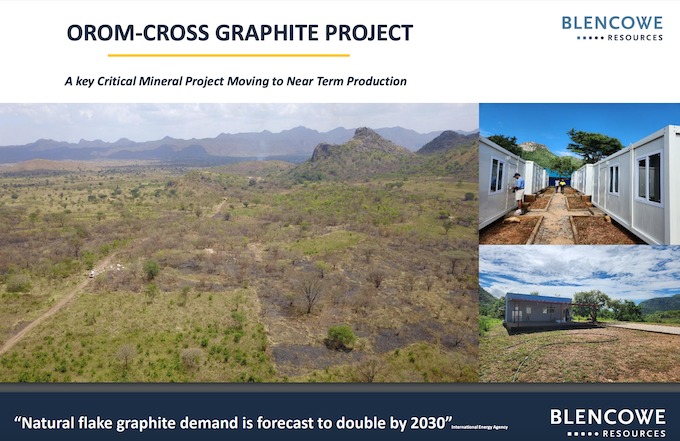 Blencowe Resources Plc (LSE: BRES), the graphite development company focused on the Orom-Cross Graphite Project in Uganda, is pleased to provide shareholders with links to a number of recent investor communications, including an updated corporate presentation, a live investor Q&A hosted by SmallCapPix and a CEO interview with FocusIR.
The materials provide further detail on the Company’s recent operational progress, enlarged resource base, updated DFS economics, downstream beneficiation strategy, and the opportunity emerging for secure, scalable non-China graphite supply.
Updated Corporate Presentation
The Company’s updated corporate presentation covers recent project milestones, updated DFS economics and Blencowe’s strategy to move into higher-value downstream graphite products.
The presentation is available to view here:
https://blencoweresourcesplc.com/wp-content/uploads/2026/07/Blencowe-Presentation-July-2026.pdf
SmallCapPix X Spaces Interview and Investor Q&A
The recording covers the 168% JORC Resource increase, DFS re-optimisation, downstream beneficiation progress, offtake strategy and Phase 1 funding pathway.
The recording is available here:
https://youtu.be/9VIR_Ubs9xM?is=5ZdjCvQHAyGphmM3
FocusIR Interview
CEO Mike Ralston discusses global graphite market dynamics and the growing opportunity for new producers outside China to supply Western markets. The interview is available here:
https://media.focusir.com/blencoweresources
Commenting on the publication of these materials, CEO Mike Ralston said:
“There has been considerable progress across Blencowe in recent months, and we believe it is important that shareholders and prospective investors have easy access to the latest materials explaining where the Company is now positioned and where we are heading. The updated presentation, interviews and investor Q&A bring together the recent resource growth, DFS re-optimisation, downstream strategy and funding pathway for Orom-Cross.”
Blencowe encourages shareholders and prospective investors to view these materials for further insight into the Company’s strategy, recent progress and the rapidly evolving global graphite market.
Company Newsletter
Investors and stakeholders can register for the Company’s newsletter to receive future news, video updates and event invitations directly:
For further information please contact:
|
Blencowe Resources Plc |
|
|
Sam Quinn (Director) |
Tel: +44 (0)1624 681 250
|
|
Sasha Sethi (Investor Relations) |
Tel: +44 (0) 7891 677 441 |
|
Tavira Financial (Joint Broker):
Jonathan Evans |
Tel: +44 (0)20 3192 1733 |
|
Oak Securities (Joint Broker):
Calvin Man / Mungo Sheehan / Jerry Keen |
Tel: +44 (0)20 3973 3678 |
|
Cavendish (Joint Broker):
Neil McDonald / Peter Lynch / Hanna Leijonmarck |
Tel: +44 (0) 20 7908 6000 |
|
|
|
|
|
#SVML Sovereign Metals Ltd – SVM Advances U.S. Strategy as Rio Collab Concludes
HIGHLIGHTS
· Rio Tinto has not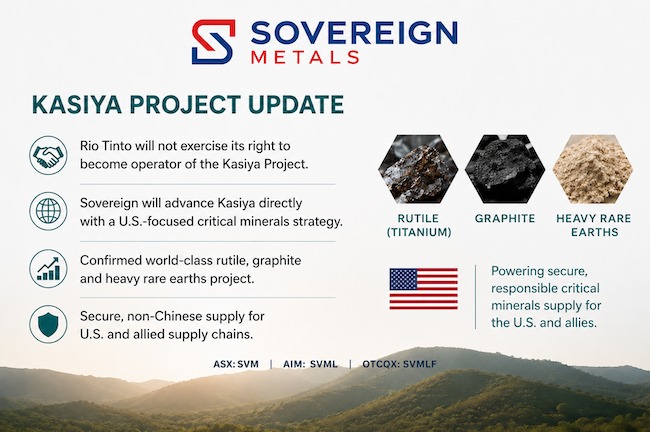 ified Sovereign that it will not exercise its right to elect to become operator of Sovereign’s Kasiya Rutile-Graphite Project under the Investment Agreement
· Rio Tinto has advised the Company, in its formal notice, that its decision reflects its change in corporate strategy regarding its Titanium business
· Accordingly, certain rights that Rio Tinto had in the Investment Agreement have now lapsed, including:
o exclusive marketing rights to market 40% of the annual production of all products
o pre-emptive right over any offer from a third party to acquire an interest in the Project
· Rio’s decision does not reflect any change in the fundamentals, economics or strategic importance of Kasiya as highlighted in the Kasiya DFS, which was completed with technical input from Rio Tinto
· Since the completion of the DFS, Sovereign has had deepening engagement with the U.S. Government, major U.S. companies, and industry stakeholders
· Sovereign can now prioritise a U.S.-focused critical-minerals strategy, positioning Kasiya as a secure, non-Chinese source of titanium feedstock and natural graphite for the U.S. and allied supply chains
· Commercial workstreams will include:
o advancing rutile and graphite offtake discussions toward binding agreements with Mitsui, Traxys and other strategic U.S. and U.S.-allied counterparties
o continued engagement with potential offtake partners and U.S. government stakeholders in relation to the heavy rare earth co-product opportunity
· Kasiya provides exposure to three minerals designated critical by the U.S. – titanium (via natural rutile), graphite and heavy rare earths (via a Heavy Rare Earth Concentrate by-product) – each feeding U.S. and allied supply chains, including Japan, being the dominant supplier of titanium metal to the U.S.
Mr Ben Stoikovich, Chairman, commented:
“As the Sovereign-Rio Tinto collaboration concludes, we would like to acknowledge and thank Rio Tinto for its significant contribution to the advancement of Kasiya.
Since 2023, Rio Tinto has invested over A$60 million in the Project and has provided valuable technical input through its participation on the Sovereign-Rio Tinto Technical Committee. This expertise has contributed to the successful delivery of the unique Pilot Mining and Rehabilitation program, which generated real-world operating and mining data that was incorporated into the tier-1 DFS completed earlier this year.
Sovereign looks forward to Rio Tinto continuing as a supportive shareholder as it builds on this important period of technical and operational progress, with the Company now well positioned to prioritise a U.S.-focused critical minerals strategy, positioning Kasiya as a secure, non-Chinese source of titanium feedstock and natural graphite for the U.S. and allied supply chains.”
Sovereign Metals Limited (ASX:SVM; AIM:SVML; OTCQX: SVMLF) (Sovereign or the Company) confirms that pursuant to the terms of the Investment Agreement between the Company and Rio Tinto Mining and Exploration Limited (Rio Tinto), Rio Tinto has notified Sovereign that it will not exercise its option to elect to become operator of the Kasiya Rutile-Graphite Project (Kasiya or the Project) in Malawi. Accordingly, Sovereign will continue as operator and will advance Kasiya directly.
In its notice to Sovereign, Rio Tinto advised that its decision not to elect operatorship reflects its change in corporate strategy and the strategic review of its Iron and Titanium business. This is consistent with Rio Tinto’s publicly outlined strategy under which it is narrowing its portfolio focus to iron ore, copper, aluminium and lithium. Accordingly, the decision does not reflect any change in the fundamentals, economics or strategic importance of the Project.
As a result of Rio Tinto’s decision not to elect operatorship, certain rights conferred on Rio Tinto under the Investment Agreement, including its operatorship, product marketing rights, consent and pre-emption rights in respect of the Project, cease, and Rio Tinto continues to hold a shareholding of approximately 18.2% in Sovereign. Rio Tinto will continue to hold a right to appoint a nominee director to the board of the Company (for as long as Rio Tinto holds at least a 15% shareholding in the Company) and a right to be notified of future equity issues (for as long as Rio Tinto holds at least a 10% shareholding in the Company).
Sovereign can now advance its commercial workstreams directly.
Sovereign intends to prioritise a US-focused strategy for Kasiya. The Project is positioned to supply natural rutile and natural graphite into supply chains serving the U.S. and allied economies, addressing acute gaps in secure, non-Chinese sources of critical minerals feedstock. Sovereign will deepen its engagement with the U.S. Government and industry stakeholders and focus its offtake and partnership efforts where Kasiya’s strategic value is greatest.
The Company intends to advance its existing rutile and graphite offtake MOUs, including those with its established counterparties, Mitsui & Co., Ltd., and Traxys North America, from non-binding arrangements to binding agreements, subject to negotiation.
Sovereign’s existing Collaboration Agreement with the International Finance Corporation (IFC), a member of the World Bank Group – of which the U.S. Government is the single largest shareholder – positions the Company to advance a development financing strategy for Kasiya alongside a globally recognised development-finance partner. With the Investment Agreement having fallen away, Sovereign is now able to progress its financing workstreams directly and on its own terms. The Company intends to pursue partnerships and financing arrangements for Kasiya, drawing on its engagement with the IFC and with development-finance and export-credit institutions across U.S. and allied economies, consistent with the Project’s role in secure, non-Chinese critical-minerals supply.
Sovereign thanks Rio Tinto for its investment, funding and technical contribution, which have been instrumental in advancing Kasiya to a world-class DFS.
|
Enquiries |
|
|
|
Frank Eagar, Managing Director & CEO South Africa / Malawi +27 21 140 3190
Sapan Ghai, CCO London +44 207 478 3900
|
|
|
|
Nominated Adviser on AIM and Joint Broker |
|
|
|
SP Angel Corporate Finance LLP |
+44 20 3470 0470 |
|
|
Ewan Leggat Charlie Bouverat |
|
|
|
|
|
|
|
Joint Broker |
|
|
|
Stifel |
+44 20 7710 7600 |
|
|
Varun Talwar |
|
|
|
Ashton Clanfield |
|
|
#BRES Blencowe Resources PLC – Site for Downstream Processing Operations
 Blencowe Resources Plc (LSE: BRES) is pleased to announce that it has selected the preferred site for the future downstream operations associated with its Orom-Cross Graphite Project in Uganda.
Following an extensive search and evaluation process, the Company has secured, by way of an option to purchase, a site of 100 acres located approximately 35km north of Gulu in Northern Uganda, as the future base for downstream processing operations to further beneficiate its graphite concentrate into purified products.
The agreed purchase price for the site is US$70,000, with a 30% down payment payable to secure the option. The option runs for an initial six-month period, with a further three-month extension available. The Company considers the cost to be modest and aligned with its staged downstream development strategy.
The infrastructure surrounding the site is particularly strong, with direct access to a large modern electrical substation connected to Uganda’s hydroelectric power network, including generation from the Karuma Falls Hydropower Station, as well as access to a permanent water source. Downstream beneficiation requires reliable and cost-competitive energy, and the Company believes the selected location provides an optimal platform to support a low operating cost profile as downstream capacity is developed.
The scale of this site supports future anticipated growth as both Orom-Cross and the beneficiation facility ramp up together. Site selection is consistent with previously announced planned downstream development strategy and ongoing engineering work.
Highlights
· 100-acre site selected for downstream processing operations near Gulu, Northern Uganda
· Site secured by way of an option to purchase, with a total purchase price of US$70,000
· Site provides access to hydro-linked grid power and a permanent water source
· Planned facilities to support spheronised graphite and expandable graphite product pathways
· Supports Blencowe’s strategy to move up the value chain beyond graphite concentrate sales
· Strengthens Uganda in-country beneficiation strategy and Western non-China graphite supply chain positioning
· ESIA and infrastructure costings now being progressed
The planned downstream facility is expected to support the Company’s long-term strategy to move beyond graphite concentrate sales into higher-value upgraded graphite products, including spheronised graphite and expandable graphite. These product pathways form a central part of Blencowe’s strategy to increase product optionality, improve realised pricing and position Orom-Cross within Western supply chains seeking scalable, non-China graphite supply.
Spheronisation is a key processing step used to shape graphite into spherical particles suitable for downstream battery-related applications, subject to further purification, coating, customer qualification and commercial requirements. Expandable graphite is used across a range of industrial, fire-retardant, thermal management and energy-related applications, and provides an additional higher-value product pathway for suitable flake material.
The Company believes the selected site offers several strategic advantages:
· Power: direct access to national grid infrastructure connected to Uganda’s hydroelectric generation network
· Water: access to a permanent water source for downstream processing requirements
· Location: proximity to Gulu, supporting workforce, logistics (roads and rail) and regional infrastructure access
· Scale: 100 acres, providing space for phased expansion as downstream capacity is developed
· In-country value-add: supports Uganda’s objective of increasing local beneficiation and industrial development
The downstream project is expected to include what the Company believes would be the first spheronisation/purification plant and expandable graphite processing facilities of their kind in Africa.
The Company is now progressing the Environmental and Social Impact Assessment (ESIA) for the site and confirming infrastructure costings.
Blencowe Resources Executive Chairman, Cameron Pearce commented:
“Securing a preferred downstream processing site near Gulu is an important step in Blencowe’s strategy to build Orom-Cross into more than a conventional graphite concentrate project.
Our long-term objective is to capture more of the value chain in Uganda through the production of upgraded graphite products, including spheronised purified graphite and expandable graphite. The selected site provides access to key infrastructure, including hydro-linked power and water, and gives us the land footprint required to develop downstream capacity in phases as demand and commercial agreements progress.
This is strategically important for Blencowe, for Orom-Cross and for Uganda. In-country beneficiation has the potential to support higher-value product sales, local skills development, industrial growth and stronger alignment with Western markets actively seeking secure, scalable non-China graphite supply.
We are now progressing ESIA work and infrastructure costings for the site and will update the market as these workstreams advance.”
For further information please contact:
|
Blencowe Resources Plc |
|
|
Sam Quinn (Director) |
Tel: +44 (0)1624 681 250
|
|
Sasha Sethi (Investor Relations) |
Tel: +44 (0) 7891 677 441 |
|
Tavira Financial (Joint Broker):
Jonathan Evans |
Tel: +44 (0)20 3192 1733 |
|
Oak Securities (Joint Broker):
Calvin Man / Mungo Sheehan / Jerry Keen |
Tel: +44 (0)20 3973 3678 |
|
Cavendish (Joint Broker):
Neil McDonald / Peter Lynch / Hanna Leijonmarck |
Tel: +44 (0) 20 7908 6000 |
|
|
|
|
|
#BRES Blencowe Resources PLC – Orom Cross Graphite DFS NPV10 up 15% to US$1.254bn
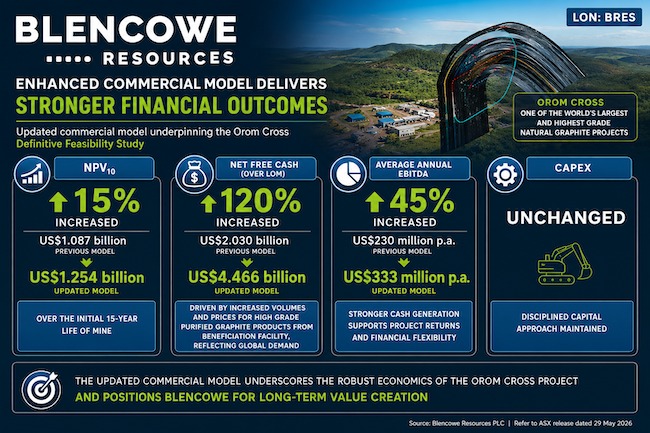 Blencowe Resources Plc (LSE: BRES) is pleased to announce an update to the commercial model underpinning the Definitive Feasibility Study (“DFS”) for the Orom-Cross graphite project in Uganda, reflecting a number of developments since the initial DFS was published in December 2025.
The updated model incorporates revised assumptions and inputs since the initial DFS, including new high value offtakers, updated pricing, costings and timings, expanded reserves incorporated into the mine plan, and increased confidence in product mix and saleability based on ongoing testwork and commercial engagement. Importantly, these improvements have been achieved without any increase in capital spend to deliver the project.
The revised commercial model increases Net Present Value10 (“NPV10“) by 15%, from US$1.087 billion to US$1.254 billion over the initial 15-year life of mine (“LOM”). While IRR has moderated versus the initial model due to updated inputs (specifically timing of capital spend), the revised DFS model continues to demonstrate robust economics with increased free cash generation.
Highlights
· NPV10: +15% to US$1.254 billion (initial 15-year LOM); IRR10: 51%.
· Net Free Cash: +120% to US$4.466 billion over LOM with increased volumes and prices for high grade purified graphite products from beneficiation facility, reflecting global demand.
· Average Annual EBITDA: +45% to US$333 million p.a.
· Capex: unchanged for both phases (P1 US$45m; P2 US$125m). Competitive internationally given infrastructure proximity.
· Commercial progress: several new offtake agreements, including high value niche sales, now reflected within revised DFS model.
· Market shift: western markets actively seeking purified products ex-China supports higher volume sales expected in highest value products.
· Expandables included: additional downstream processing pathway for expandable graphite and associated sales incorporated.
· Tenders submitted: applications submitted into several sizeable graphite tenders; outcomes expected to become clearer in Q3 2026.
· Strategy: downstream beneficiation / higher-value upgraded products remains core (including USPG and expandables).
Commercial Model and Scaling
Orom-Cross is expected to scale-up production in line with expected increased demand from offtakers for both concentrates and purified products. The Company’s view is that the project is less constrained by what it can produce than by what it can contract and sell into higher-value pathways, particularly as all upgraded products are now qualified and commercial terms for these are more evident.
Blencowe believes demand for natural flake graphite and upgraded products will continue to grow, specifically from Western markets seeking non-Chinese supply, while supply growth may remain constrained, thus supporting the opportunity for new entrants with scalable, high-quality product pathways and beneficiation.
Following successful bulk sample testing in 2025, the Company has continued engagement across multiple markets and sectors. Several new offtake agreements have been signed (including higher-value niche sales) and these are now reflected in the revised DFS model. Growth in net cash flow and NPV is largely the result of increased volumes of purified products sold as well as higher pricing for these as expected from Western markets. The Company expects to provide updates as further milestones are reached and disclosure is permitted.
The revised model reflects improved reserve confidence from the Stage 7 programme and incorporates the updated mine plan assumptions, providing greater assurance around production volumes and scalable operations over time.
Capital Framework and Phasing
Importantly, the revised DFS model reflects updated operating inputs (including fuel and equipment assumptions) without any increase in anticipated capital spend required to deliver the project:
· Phase 1 Production (P1): US$45 million (project equity-led pathway; faster start-up)
· Phase 2 Production (P2): US$125 million (scale-up and in-country downstream capability; predominantly debt-led)
This phasing supports a staged approach to de-risk execution while maintaining the long-term vision to deliver upgraded products in-country.
Blencowe notes the capital requirements are in the lowest percentile internationally and are highly competitive by industry standards, particularly as they cover both the Orom-Cross mining and processing operation and the beneficiation facility near Gulu.
Downstream Pathway and Non-China Demand
The Company’s long-term strategy to deliver upgraded purified products remains core, including uncoated spheronised purified graphite (“USPG”) and expandables. Where appropriate, the Company expects to utilise third-party processing partners to upgrade in the interim while progressing in-country capability.
Demand for non-Chinese graphite products (particularly purified products) continues to build as Western markets seek supply chain resilience. The Company believes Orom-Cross’ expanding inventory, product options and developing commercial pathway significantly strengthen the project’s strategic relevance.
Uganda Value-Add and In-Country Beneficiation
Blencowe’s long-term strategy is to maximise in-country value-add in Uganda through the production of upgraded graphite products, including USPG and expandables, supported by beneficiation capacity near Gulu. This approach aligns with Uganda’s broader objectives around local processing and value addition, skills transfer and industrial development, while strengthening Orom-Cross’ positioning within resilient, non-China supply chains.
Infrastructure and On-Site Progress
· Upgrade and sealing works have commenced on the road from Kitgum to Orom-Cross, managed and paid for by the UK Government, improving logistics to Mombasa port. This project is expected to be completed ahead of ramp up of Orom-Cross (P2 Production) and thus supports higher volumes moved from site.
· A first permanent camp was completed at Orom-Cross in 1Q 2026 to house contractors during mine construction, which will commence following funding.
Next Steps
The Company will continue to pursue value enhancement across Orom-Cross as further test work is delivered, tenders are completed, and as strategic relationships progress.
· Tenders:
The Company has submitted applications into several sizeable, strategic graphite tenders and expects greater clarity on outcomes in the next quarter (Q3 2026). Successful outcomes will underpin expected volume growth for both concentrate and upgraded product streams.
· SAFELOOP:
Significant progress has been made within the EU’s SAFELOOP initiative (developing a Gen3 lithium-ion battery for deployment in standardised EV buses across the European continent) but no sales for this initiative have been included in any DFS modelling to date.
· Price and product mix: continued improvements from higher-value niche sales and upgraded products.
Additional upside under evaluation but not yet modelled include industrial diamonds, further micronisation, speciality defence/energy applications, ultra-high purity (99.99% TGC) products, tenders underway and Project SAFELOOP (all subject to commercial terms).
As the project advances, the Company is focused on ensuring Orom-Cross is understood by a broader pool of sophisticated capital, supported by improved research coverage and institutional engagement. This will become a central part of Blencowe’s corporate strategy over forthcoming months as the Company seeks to bring more institutional shareholders onto the register.
Funding Strategy and Near-Term Priorities
The combination of low upfront capex, staged development, and downstream exposure positions Orom-Cross within a limited subset of graphite projects capable of meeting both return-thresholds and strategic supply chain requirements to attract the required capital.
Blencowe continues to progress two complementary funding pathways alongside ongoing commercial and development activity:
1. Phase 1 Production (P1) – US$45m (project-level focus):
· Primary focus is securing P1 equity funding, with a preference for project-level funding to minimise dilution at the plc level.
· The Company notes that several interested P1 investment partners have signed NDAs and are conducting due diligence in the data room as part of their internal financial decision-making processes.
· P1 is designed to establish an operating and sales track record and support downstream qualification from site, and to deliver pricing visibility which is critical to debt funding.
2. Phase 2 Production (P2) – US$125m (predominantly debt):
· P2 funds ramp-up mining to scale as well as in-country downstream processing capability near to Orom-Cross and is expected to be funded predominantly via debt.
· Expressions of interest and diligence pathways for debt providers are underway as they typically take longer than equity-led funding.
· DFI-style routes, including DFC, continue to be considered as potential debt funding pathways for P2 (not considered within P1 equity).
Several interested P1 funding parties have signed NDAs and are conducting due diligence in the data room. The Company is progressing all parties as efficiently as possible and will provide updates when there is substantive progress suitable for announcement.
Updated Production Pathway (as reflected in the model)
The updated DFS incorporates a refined staged plan:
· P1: delivers up to 20,000tpa of 97% TGC concentrate at Orom-Cross plus up to 3,000tpa spheronised graphite from in-country beneficiation at a proposed facility near to Gulu.
· P2: delivers up to 70,000tpa of 97% TGC concentrate plus up to 10,000tpa USPG and expandables from in-country beneficiation.
The Company notes that all subsequent phases of growth beyond P2 Production are driven by demand and contracted sales, with Orom-Cross not constrained by potential production so much as by sell-through of higher-value product streams.
Blencowe CEO Mike Ralston discusses the updated DFS with Vox in the interview below:
www.voxmarkets.com/articles/interview-with-blencowe-resources-0de98ba
Executive Chairman Cameron Pearce commented:
“This DFS model update reflects tangible progress across Orom-Cross. NPV10 increases to US$1.254 billion and net free cash rises to US$4.466 billion, while capital spend remains unchanged across both Phase 1 and Phase 2. While IRR has moderated versus the prior model due to updated inputs, the economics remain highly robust and the uplift in NPV and cash generation is the key outcome for project funding and delivery.
Just as importantly, the revised model now reflects additional commercial inputs, including new offtake agreements and the inclusion of expandables. We have also submitted into several sizeable graphite tenders and expect greater clarity on outcomes for these in the next quarter.
Funding remains the key gatekeeper. We continue to progress Phase 1 equity discussions, alongside longer-dated Phase 2 debt pathways, and we will update the market as and when appropriate.
Additionally, as Orom-Cross advances, we are also focused on ensuring the enlarged investment case is understood by a broader pool of sophisticated capital, supported by improved research coverage and institutional engagement.”
For further information please contact:
|
Blencowe Resources Plc |
|
|
Sam Quinn (Director) |
Tel: +44 (0)1624 681 250
|
|
Sasha Sethi (Investor Relations) |
Tel: +44 (0) 7891 677 441 |
|
Tavira Financial (Joint Broker):
Jonathan Evans |
Tel: +44 (0)20 3192 1733 |
|
Oak Securities (Joint Broker):
Calvin Man / Mungo Sheehan / Jerry Keen |
Tel: +44 (0)20 3973 3678 |
|
Cavendish (Joint Broker):
Neil McDonald / Peter Lynch / Hanna Leijonmarck |
Tel: +44 (0) 20 7908 6000 |
|
|
|
|
|
#SVML Sovereign Metals LTD – Monazite Containing Heavy Rare Earths at Kasiya
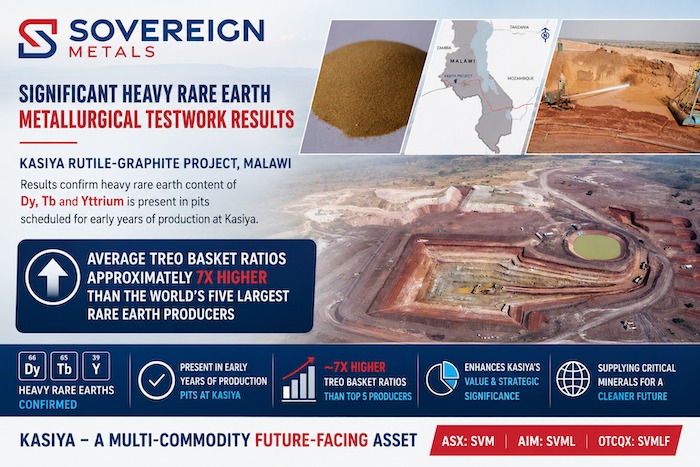 KEY HIGHLIGHTS
· Monazite concentrate containing the most critical and highly valuable heavy rare earth elements Dysprosium (Dy), Terbium (Tb) and Yttrium recovered from four planned pits in the Kasiya DFS mine plan, including pits scheduled for Year 1 production.
· DyTb and Yttrium oxide ratios in the Total Rare Earth Oxide (TREO) basket ~7-times higher than world’s five largest rare earth producers.
o Average 2.5% DyTb and 11.8% Yttrium within TREO basket vs. 0.4% DyTb and 1.7% Yttrium across the five largest rare earth producers.
o Highest ratios of up to 3.1% DyTb and 17.2% Yttrium found near-surface (0-6m).
· U.S. Department of War describes heavy rare earth supply chain risk as “a clear and present danger to our national security” – Assistant Secretary of War for Industrial Base Policy Michael P. Cadenazzi Jr., testifying before the Senate Armed Services Committee, 24 February 2026.
o MP Materials Corp., America’s only fully integrated rare earth producer, reports no measurable Dy, Tb or Yttrium.
· Western supply-chain decoupling has accelerated as DyTb and Yttrium subject to Chinese export controls.
o On 20 April 2026, USA Rare Earth, Inc. agreed to acquire Serra Verde Group for ~US$2.8 billion, underpinned by a 15-year U.S. government-backed offtake with floor pricing.
· Monazite potentially a third revenue stream from the non-conductor tailings stream of the DFS flowsheet – potential for no additional mining and no new primary processing circuit – confirmation of this is in progress.
· Independent report shows potential pricing of US$16,000/t base case (US$19,000/t high case) in 2026 (real), vs April 2026 Shanghai Metals Market benchmark spot monazite price (min 54-55% TREO grade) of US$6,142/t for a monazite product with identical TREO as these latest results.
Managing Director and CEO Frank Eagar commented:
“These results confirm that the monazite-hosted rare earth content first reported in January 2026 is present in pits scheduled for the early years of production at Kasiya. The monazite concentrate contains all four magnetic rare earth elements – Neodymium, Praseodymium, Dysprosium and Terbium – plus highly critical Yttrium. These elements appear to be recoverable from the current tailings stream of our DFS flowsheet. We are advancing the additional mineralogical and metallurgical work required to quantify the potential economic upside to the DFS reported last month.“
Sovereign Metals Limited (ASX:SVM; AIM:SVML; OTCQX:SVMLF) (Sovereign or the Company) is pleased to announce significant heavy rare earth metallurgical testwork results at its Kasiya Rutile-Graphite Project (Kasiya or the Project) in Malawi. The testwork was conducted on monazite concentrates recovered from four pits in the Project’s Definitive Feasibility Study (DFS) mine plan.
The results confirm that the heavy rare earth content of Dy, Tb and Yttrium first reported in January 2026 (See ASX Announcement dated 21 January 2026) is present in pits scheduled for the early years of production at Kasiya, with average TREO basket ratios approximately 7x higher than the world’s five largest rare earth producers.
Heavy rare earth content is highest in the near-surface (0-6m) which returns DyTb and Yttrium ratios within the TREO basket materially above those of the deeper horizon.
Table 1: Summary Results
|
Pit |
|
Light REE |
Heavy REE |
|
|
NdPr (%) |
DyTb (%) |
Y (%) |
||
|
Babbler |
21.0 |
2.6 |
11.7 |
|
|
Kingfisher |
20.5 |
2.7 |
12.5 |
|
|
Sparrow |
20.9 |
2.5 |
11.9 |
|
|
Mousebird |
21.2 |
2.4 |
11.3 |
|
|
Kasiya Four-pit Average |
20.9 |
2.5 |
11.8 |
|
|
Near Surface (0-6m) |
19.3 |
2.9 |
15.4 |
|
|
Deeper (6m+) |
21.6 |
2.3 |
10.3 |
|
|
Top Five Producers Average REE Content |
19.4 |
0.4 |
1.7 |
|
Note: Kasiya Four-pit Average calculated as average of per-pit TREO basket ratios. See Appendix 1 & 2 for source detail.
The findings come as the U.S. accelerates efforts to decouple heavy rare earth supply chains from China – a supply-chain risk the U.S. Department of War has described as a matter of national security.
Kasiya, already at DFS stage with a US$2.2 billion pre-tax NPV8, contains the four magnetic rare earth elements plus highly critical Yttrium recoverable from the DFS flowsheet as a potential by-product alongside rutile and graphite.
An independent price report for a monazite concentrate has been prepared based on the composition of a 60% TREO basket. Due to the exceptionally high proportion of heavy rare earths within Kasiya’s TREO basket, the independent report has identified the potential for a premium to benchmark monazite prices. The 2026 forecast base-case price is US$16,000/t (high case US$19,000/t), against a current benchmark monazite concentrate (54-55% TREO grade) price of approximately US$6,142/t based on the Shanghai Metals Market.
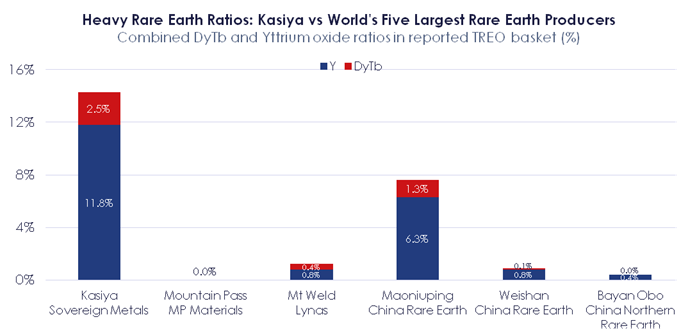
Figure 1: Combined DyTb and Yttrium content in the TREO basket of Kasiya monazite concentrate (four-pit weighted average) vs the rare earth assemblages reported by the five largest global rare earth producers
(Sources: See Appendix 2)
STRATEGIC IMPORTANCE OF DYSPROSIUM-TERBIUM AND YTTRIUM
Dy and Tb are heavy magnet rare earths essential for high-temperature permanent magnets used in advanced defence systems, precision weapons, aerospace applications and next-generation electric drivetrains.
Yttrium is a high-impact rare earth element critical for aerospace thermal barrier coatings, radar and laser systems, high-performance alloys and semiconductor manufacturing.
On 24 February 2026, the U.S. Assistant Secretary of War for Industrial Base Policy, Michael P. Cadenazzi Jr., testified before the Senate Armed Services Committee that on heavy rare earths China controls 95% of global output, with the U.S. importing almost 100% of what it uses – 90% of that from China. Mr Cadenazzi stated that this control provides Beijing with the ability to weaponize these supply chains, describing the situation as “a clear and present danger to our national security.”
China’s April 2025 export controls on Dy, Tb and Yttrium created immediate supply tightness for Western manufacturers. On 6 January 2026, China announced strengthened export controls on dual-use items to Japan, effective immediately. Despite 15 years of diversification efforts, Japan remains approximately 60% dependent on Chinese rare earth imports, and for heavy rare earths Japan’s dependence on China approaches 100%. The U.S. is 100% reliant on imports for its Yttrium requirements.
Western Supply-Chain Strategy: Market Context
The strategic value of non-Chinese heavy rare earth supply has been crystallised by recent corporate activity. On 20 April 2026, Nasdaq-listed USA Rare Earth, Inc. (USA Rare Earth) announced a definitive agreement to acquire Brazil’s Serra Verde Group (Serra Verde) for approximately US$2.8 billion. The acquisition is underpinned by a 15-year 100% U.S. Government backed offtake agreement, with contractual price floors of US$110/kg for both Neodymium (Nd) and Praseodymium (Pr), US$575/kg for Dy and US$2,050/kg for Tb.
Upon announcing the acquisition, USA Rare Earth described Serra Verde’s product as containing a high percentage of all four magnetic rare earths, “including the most critical and highly valuable heavy rare earths Dysprosium, Terbium and Yttrium.” USA Rare Earth also positioned Serra Verde as the only producer outside Asia capable of supplying all four magnetic rare earths at scale, and noted that Serra Verde has secured a US$565 million mine development finance package from the U.S. International Development Finance Corporation.
On 20 January 2026, U.S. uranium and rare earth producer Energy Fuels Inc. announced a US$299 million acquisition of ASX-listed Australian Strategic Materials Limited, expanding its mine-to-metal-and-alloy rare earth platform with the stated aim of becoming “the largest fully integrated producer of REE materials outside of China.”
These transactions crystallise the value that Western governments and capital markets now ascribe to scaled, non-Chinese rare earth supply. Kasiya’s monazite concentrate contains all four magnetic rare earth elements – plus Yttrium – at TREO basket ratios consistent with or exceeding benchmark operations, potentially recovered as a by-product of a project that is already at DFS stage with a US$2.2 billion pre-tax NPV8.
BY-PRODUCT ECONOMICS: NEAR-ZERO INCREMENTAL COST
The monazite concentrates reported above are recovered from the non-conductor tailings stream of the processing flowsheet specified in the Kasiya DFS. This is material that would otherwise report to tailings.
Recovery as a by-product of the DFS-specified flowsheet could potentially mean:
• No additional mining – the mine plan remains unchanged
• No new primary processing circuits
• No parallel rare-earth processing plant of the kind required by primary rare earth producers
• Monazite is isolated from the existing non-conductor product stream
• No additional reagents required
In aggregate, monazite concentrate recovery is potentially achievable at near-zero incremental costs relative to the DFS base case. Further work is required to assess the capital and operating cost implications of any downstream product separation or refining, and to characterise the mineralogy, deportment, liberation and radioactive element (uranium and thorium) handling requirements of the Kasiya monazite.
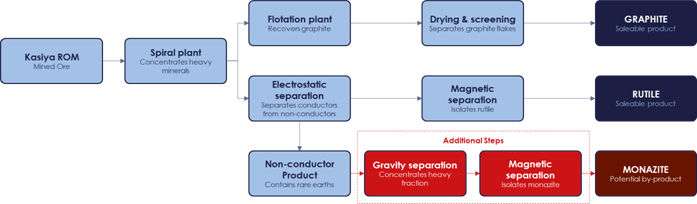
Figure 2: High-level DFS process flowsheet and additional potential steps required for a monazite by-product
KASIYA MONAZITE INDEPENDENT PRICE FORECAST
Project Blue Group Limited (Project Blue), a specialist in critical minerals market intelligence, prepared an independent price forecast for a monazite mineral concentrate containing 60% TREO.
Project Blue’s methodology values a contained Mixed Rare Earth Compound (MREC) within a concentrate using ex-China rare earth oxide prices, applies a payability factor reflecting commercial discounts, deducts for downstream processing and transportation to Japan as a Western-aligned ex-China proxy, and other realisation costs.
Table 2: Project Blue 2026 price estimates for a monazite concentrate with TREO distribution in line with that observed in Sovereign’s monazite testwork to date
|
Scenario |
Payability factor |
MREC value (US$/kg) |
Monazite concentrate (US$/kg) |
|
Base case |
60% |
39.49 |
16.00 |
|
High case |
70% |
46.07 |
19.00 |
|
April 2026 monazite concentrate price (54-55% TREO grade) |
6.14 |
||
Sources: Project Blue; Shanghai Metal Exchange (https://www.metal.com/Concentrate/202403260008).
Project Blue’s base-case forecast prices range from US$15.81/kg to US$16.00/kg over 2026-2028. High-case prices range from US$18.78/kg to US$19.00/kg over the same period.
Project Blue notes that prices for key rare earth products including NdPr oxide, Tb oxide, Dy oxide and Yttrium oxide are commanding a premium in ex-China markets relative to Chinese domestic prices, reflecting the limited pool of non-Chinese suppliers and ongoing decoupling of Western and Chinese rare earth supply chains.
The Project Blue forecast is independent commentary on potential pricing for a monazite concentrate with a 60% TREO. Sovereign has not entered into any offtake or sales agreement for monazite concentrate. Realised prices will depend on commercial negotiation, market conditions at the time of sale, the actual specifications of any concentrate produced and the terms of any offtake agreement.
SAMPLE PROCESSING AND METHODOLOGY
Monazite concentrates were produced from bulk sampling sites across four pits within the Kasiya DFS mine plan, namely Babbler, Kingfisher, Sparrow and Mousebird.
The Babbler bulk samples were extracted at two locations using a 700mm spiral auger and composited to represent planned pit depth or ROM feed material at each borehole location. The bulk samples were processed through the company’s pilot plant to produce a 45µm to 2mm spiral Heavy Mineral Concentrate (HMC). A 200kg portion of the spiral HMC was screened at 600µm and the resultant 45µm to 600µm sand fraction was processed over the Wilfley wet table to produce an HMC.
The Kingfisher, Sparrow and Mousebird bulk samples were composited from twin pit and Air Core (AC) samples at several sites within each pit. The pit composite bulk samples represent the 0m to 6m Ferruginous Pedolith (FERP) and Mottled Clay (MOTT) weathering units, while the AC bulk composites represent the +6m Pallid Saprolite (PSAP) and Saprolite (SAPL) weathering units.
The bulk composite samples of between 200kg and 1000kg were processed using mechanical vibrating screens to produce a 45µm to 600µm sand fraction which was further processed over the Wilfley wet table to produce an HMC.
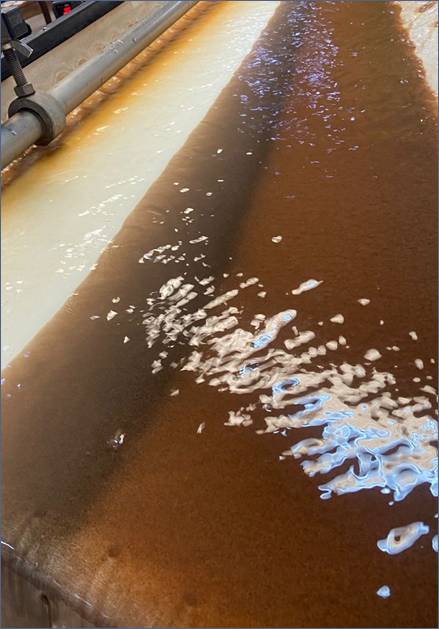
Figure 3: Monazite rich HMC clearly observable from gravity separation of non-conductor tailings (taken from samples disclosed in this announcement)
The Wilfley HMC of each bulk sample from the four pits were then processed through the Corona Stat electrostatic separator to produce a monazite-bearing, non-conductor product. A monazite-rich, non-conductor HMC was produced from the Wilfley table processing of each non-conductor product from which a final magnetic monazite concentrate was produced by magnetic separation. The monazite concentrates were sent for X-ray fluorescence (XRF) and Inductively Coupled Plasma (ICP) analysis.
NEXT STEPS
• Further detailed mineralogical characterisation of the monazite across the pits tested, including liberation, grain size and deportment of uranium and thorium.
• Additional metallurgical testwork to assess potential downstream processing pathways for the monazite concentrate.
• Characterisation of monazite grades and recoveries and marketable product volumes
• Study to assess the economic uplift from incorporating monazite as a bolt-on to the existing DFS flowsheet.
• Continued engagement with potential offtake partners and government stakeholders in relation to the heavy rare earth co-product opportunity.
|
Enquiries |
|
|
|
Frank Eagar, Managing Director & CEO South Africa / Malawi +27 21 140 3190 Sapan Ghai, CCO London +44 207 478 3900 |
|
|
|
Nominated Adviser on AIM and Joint Broker |
|
|
|
SP Angel Corporate Finance LLP |
+44 20 3470 0470 |
|
|
Ewan Leggat Charlie Bouverat |
|
|
|
|
|
|
|
Joint Broker |
|
|
|
Stifel |
+44 20 7710 7600 |
|
|
Varun Talwar |
|
|
|
Ashton Clanfield |
|
|
Link here to view the full announcement