
Home » Posts tagged 'deposits'
Tag Archives: deposits
#FCM First Class Metals PLC – FCM Secures 100% of Kerrs Gold, Issue of Equity & Total Voting Rights
 First Class Metals PLC (“First Class Metals”, “FCM” or the “Company”) the UK listed company focused on the discovery of economic metal deposits across its exploration properties in Ontario, Canada, is pleased to announce that it has completed the final cash payment under the Kerrs Gold Property option agreement and has now secured 100% ownership of the Kerrs Gold Project in northeastern Ontario.
Importantly, the Company has accelerated completion of the acquisition significantly ahead of the original staged earn-in schedule announced on 22 April 2024.
Highlights
• FCM now owns 100% of the Kerrs Gold Project.
• All option obligations completed materially ahead of the original three-year schedule.
• The claims are in the process of being transferred to First Class Metals Canada Inc.
• Acceleration reflects the Company’s confidence in the strategic value of the asset and its broader portfolio positioning initiatives.
• Kerrs hosts a historic NI 43-101 inferred gold resource estimate of 386,467 ounces grading 1.71 g/t Au.
• Full ownership provides maximum strategic and corporate flexibility as FCM advances initiatives focused on unlocking shareholder value.
The Kerrs Gold Project is situated within the highly prolific Timmins Mining Camp in Ontario, Canada, one of the world’s premier gold producing regions, surrounded by major mining operations including Newmont’s Hoyle Pond and Hollinger mines and McEwen Mining’s Black Fox Complex.
By accelerating the acquisition timetable, FCM has consolidated outright ownership of a significant gold asset within a Tier-1 mining jurisdiction at a time when the Company continues to evaluate multiple avenues to maximise value across its Ontario project portfolio.
James Knowles, Executive Chairman of First Class Metals, commented:
“We believe outright ownership of quality projects in established mining jurisdictions, particularly those with defined gold inventory and resource expansion potential, will become increasingly important as new models for recognising and financing resource-backed gold assets continue to emerge.”
Further Information on the Kerrs Gold Project
The Kerrs Gold Project comprises 36 units covering approximately 665 hectares located approximately 90 kilometres east-northeast of Timmins, Ontario within the Abitibi Greenstone Belt.
The Project hosts a historic inferred resource estimate, prepared in accordance with NI 43-101 by Kirkham Geosystems Ltd. in 2011, of:
7,041,460 tonnes grading 1.71 g/t Au for 386,467 ounces of gold at a 0.5 g/t cut-off grade, using a gold price significantly below the current price.
First Class Metals PLC (“First Class Metals”, “FCM” or the “Company”) the UK listed company focused on the discovery of economic metal deposits across its exploration properties in Ontario, Canada, announces it has received a conversion notice in respect of a portion of the Notes* issued pursuant to the Convertible Loan Note instrument announced on 30 January 2026 as detailed below.
Following this conversion, £75,000 debt remains to be converted under the Convertible Loan Note instrument announced on 30 January 2026.
| Notes to be converted: * & ** | 325,000 |
| Value of Notes to be converted: | £325,000 |
| Date of conversion: | 27/05/2026 |
| Number of Ordinary shares to be issued to satisfy the conversion | 18,771,501 |
* Notes = 325,000 £1.00 interest-free convertible loan notes
** Using the conversion formula set out in the 30 Jan 2026 announcement
Application will be made to the London Stock Exchange for the 18,771,501 new Ordinary shares to be admitted to trading on the Main Market for listed securities (“Admission”) and it is expected that such Admission will take place at 8.00 a.m. on or around on 4th June 2026.
In accordance with the provision of the Disclosure Guidance and Transparency Rules of the Financial Conduct Authority, the Company confirms that, following the issue of the above new Ordinary shares, its issued ordinary share capital will comprise 386,720,973 Ordinary Shares. All the Ordinary Shares have equal voting rights and none of the Ordinary Shares are held in Treasury. The total number of voting rights in the Company will therefore be 386,720,973. The above figure may be used by shareholders as the denominator for the calculations to determine if they are required to notify their interests in, or a change to their interest in, the Company.
For further information, please contact:
James Knowles, Executive Chair
Email: JamesK@Firstclassmetalsplc.com
Tel: 07488 362641
Marc J Sale, CEO
Email: MarcS@Firstclassmetalsplc.com
Tel: 07711 093532
AlbR Capital Limited
David Coffman / Dan Harris
Website: www.albrcapital.com
Tel: (0)20 7469 0930
Axis Capital Markets (Broker)
Richard Hutchinson
Website: Axcap247.com
Tel: (0)203 026 0449
#FCM First Class Metals PLC – ROY: DRILL MOBILISED & DRILL PREPARATION COMMENCED
Drilling preparation commenced at Roy on the Sunbeam Property
First Class Metals PLC (“First Class Metals” “FCM” or the “Company”) the UK listed company focused on the discovery of economic metal deposits across its exploration properties in Ontario, Canada, is pleased to provide an update on preparations for the forthcoming drill programme at the Roy structure on the Sunbeam Property. Drill mobilisation has now been completed.
Highlights
· 1,000m drill contract with provision for additional 500m signed with Forage PL (“Forage”) drilling
· Drill preparation commenced on the Roy structure at the Sunbeam property
· First four drill collars have been marked.
· Drill rig and supporting equipment on site
· Drilling will focus on the Roy area of the Sunbeam property
· Drilling will seek to prove depth continuity in the area of and along strike of the 18.8g/t gold (Au) channel samplefrom the stripping
· Emerald Geological Services (“EGS”) will supervise drill preparation, the day-to-day drilling as well as core logging and sampling
Marc J. Sale CEO First Class Metals Commented:
“The mobilisation of the drill rig to Roy and the anticipation of drilling starting this weekend marks an important step forward in advancing the Sunbeam Property. Forage has recently completed a programme in the district and brings both local experience and a strong operational reputation.
The rapid progression from planning to mobilisation at Sunbeam demonstrates that FCM is a company focused on delivery. Having recently completed drilling at North Hemlo and now positioning to commence at Sunbeam, we are advancing our exploration strategy in a disciplined and systematic manner.
The Roy trend represents a robust mineralised structure of district scale in a geological environment know to host significant resources.”
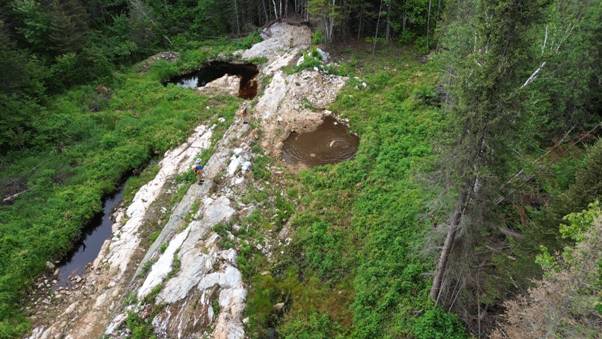
Figure 1 showing the stripped area at Roy which returned 18.8g/t Au and will be the focus of the drilling.
Qualified Person
The technical disclosures contained in this announcement have been drafted in line with the Canadian Institute of Mining, Metallurgy and Petroleum standards and guidelines and approved by Marc J. Sale, who has more than 30 years in the gold exploration industry and is considered a Qualified Person owing to his status as a Fellow of the Australian Institute of Mining and Metallurgy.
For Further Information:
Engage with us by asking questions, watching video summaries, and seeing what other shareholders have to say. Navigate to our Interactive Investor hub here:
For further information, please contact:
James Knowles, Executive Chair
Email: JamesK@Firstclassmetalsplc.com
Tel: 07488 362641
Marc J Sale, CEO
Email: MarcS@Firstclassmetalsplc.com
Tel: 07711 093532
Novum Securities Limited (Financial Adviser)
David Coffman
Website: www.novumsecurities.com
Tel: (0)20 7399 9400
Axis Capital Markets (Broker)
Lewis Jones
Website: Axcap247.com
Tel: (0)203 026 0449
#BRES Blencowe Resources PLC – Beehive Returns 92.55m @ 6.83% TGC from Surface
Blencowe Resources Plc (LSE: BRES) is pleased to report the first deep-hole assay results from the newly identified Beehive Deposit, located approximately 3kms from the existing Northern Syncline and Camp Lode deposits at the Orom-Cross graphite project in Uganda. Along with these other deposits Beehive sits within the existing Mining License (ML1959).
The Company is pleased to announce an exceptional drilling result from Beehive Deposit where early indications of a strong system have now been materially exceeded by the latest assay results from Hole L238B.
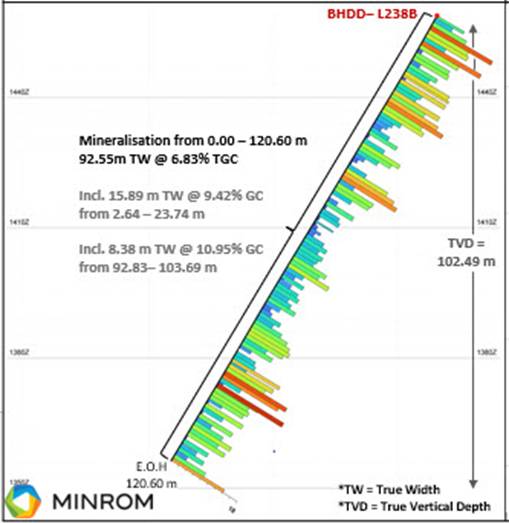
Hole L238B returned 92.55m (True Width) @ 6.83% TGC from surface to 120.60m, including multiple high-grade zones. This outstanding intercept confirms Beehive as a thick, continuous, near-surface graphite system and represents one of the most significant results generated at Orom-Cross to date.
This result is the first of over 100 Beehive holes to be reported, with further results to follow.
Beehive Deposit – Key Drill Result
Hole L238B: 92.55m (TW) @ 6.83% TGC [0.00-120.60m]
including:
· 15.89m @ 9.42% TGC
· 8.38m @ 10.95% TGC
Geological Interpretation
The intersection demonstrates continuous graphite mineralisation from surface, extending well beyond the ~30m oxide boundary and confirming strong grade continuity at depth. The thickness and consistency of mineralisation in Hole L238B significantly enhances confidence in the scale and robustness of the Beehive Deposit.
These results support the interpretation of Beehive as a large, laterally extensive system with the potential to materially contribute to future resource growth at Orom-Cross, sitting within the existing Mining License. Beehive is a new discovery with zero previous drilling to date.
Strategic Context
Global demand for secure, high-quality graphite supply continues to accelerate, with increasing focus from Western governments and industrial groups on securing critical mineral assets outside of China.
Recent engagement in the United States by senior management highlighted strong interest in scalable, long-life graphite projects ex-China, capable of supporting growing downstream supply chains. Orom-Cross, and Beehive in particular, displays many of the attributes sought by potential strategic and offtake partners, including scale, grade, near-surface mineralisation and substantial expansion potential.
Executive Chairman Cameron Pearce commented:
“We knew Beehive was shaping up as a promising system, however, the result from Hole L238B has exceeded all expectations. Delivering over 92 metres of continuous graphite mineralisation from surface at a strong average grade is an exceptional outcome and clearly demonstrates the scale potential emerging at Beehive.
This result sits within a substantial drilling programme that has now been completed across Beehive and the nearby Iyan deposit. Approximately 182 step-out and exploration holes have been drilled at both, with a steady flow of assays still pending from the laboratories, alongside the two additional Beehive deep drill holes underway. The results from this programme are expected to materially expand the mineralised footprint and support an updated JORC Mineral Resource Estimate in due course.
Following the Company’s recent £3.0 million fundraise we are well capitalised as we move into 2026, placing us in a strong position to maintain momentum across drilling, resource growth, early project implementation and ongoing strategic engagement following the completion of an outstanding DFS. We continue to see growing interest from potential offtake partners and expect these discussions to progress as the New Year unfolds.
As we approach the end of the year I would also like to thank shareholders, stakeholders and supporters of Blencowe for their continued support, and to wish everyone a happy holiday and festive season.”
For further information please contact:
|
Blencowe Resources Plc Sam Quinn |
www.blencoweresourcesplc.com Tel: +44 (0)1624 681 250 |
|
Investor Relations Sasha Sethi |
Tel: +44 (0) 7891 677 441 |
|
Tavira Financial Jonathan Evans |
Tel: +44 (0)20 3192 1733 |
Twitter https://twitter.com/BlencoweRes
LinkedIn https://www.linkedin.com/company/72382491/admin/
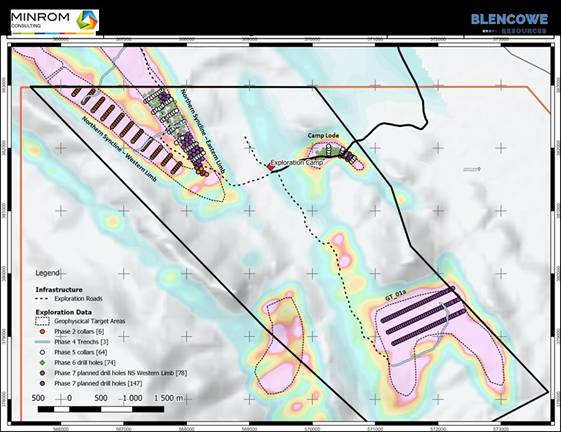
Map 1: Showing the 4x Orom-Cross deposits, including Camp Lode, Northern Syncline, and new Iyan (NS western limb) and Beehive (GT 01a) deposits.
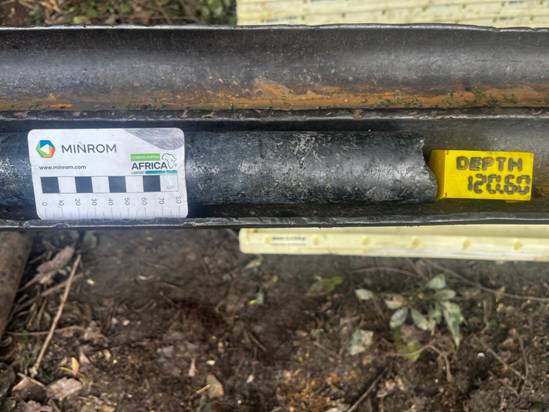
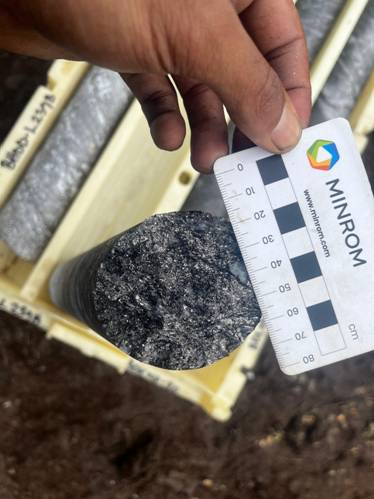
Diagrams 1-3: Beehive Core

#AYM Anglesey Mining PLC – Half yearly report for the six months to 30 September 2025
 Chairman’s Statement and Management Report
During the half year period, we were pleased to publish a conceptual study of a high-density fluid hydro-power energy storage project at the mine.
The findings of the conceptual study led to the commencement of a pre-feasibility study (PFS) in the energy storage scheme and we have published the proposed operational methodology and revenue streams associated with the project in terms of both Long Duration Energy Storge (LDES) and how that might be the catalyst for the commencement of mining of the Parys Mountain VMS mineral deposits.
Our investigations show there is a positive business case for the energy project on a standalone basis, that the risks identified thus far can be reasonably overcome or mitigated. Elements of the energy storage project scope, for example: the de-watering and refitting of the Morris shaft for material and personnel hoisting, the dewatering of the workings emanating from the Morris shaft 280m below the surface, the upgrading of the power-line to site, the on-going environmental and social studies and the deployment of impact avoidance, mitigation and compensation strategies, are each synergistic with the first steps of establishing a modern underground mine on Parys Mountain.
It is an essential and clear intent of the energy project that Anglesey Mining retains all the optionality that it currently has for the construction and commissioning of an underground mine, and that the hydro energy pumped storage project should not detract from those options over the medium and long term.
In the period to the 30th September 2025, we unfortunately had to announce the termination of our management rights and obligations over Grangesberg Iron AB (GIAB). Under a shareholders’ agreement our 100% owned subsidiary, Angmag AB, and therefore Anglesey Mining, had management rights with the ability to appoint the majority of the Board of GIAB. The Agreement had an initial term of 10 years from 28 May 2014, extendable on a year-to-year basis, unless terminated on one year’s notice. On 28 May 2024, Eurmag AB, which holds the remaining 50.2% of GIAB, gave notice of termination of the Agreement.
As at 31 December 2024, GIAB had loans outstanding to its senior debt holder of approximately US$9.0 million. Despite the best efforts of the Company, revised terms and conditions for the senior debt could not be arrived at such that the Board of Anglesey Mining could then explore the raising of funds to facilitate a settlement of this debt and therefore management of GIAB reverted to Eurmag AB, GIAB’s 50.2% shareholder, with Anglesey retaining its 49.8% ownership interest.
Post the end of the half year period, on 5 December 2025 the Company announced that it had entered into a binding letter of intent with its largest shareholder and largest creditor Energold Minerals Inc. whereby Anglesey will eliminate approximately £4 million of debt in exchange for its interest in GIAB and holding of Labrador Iron Mines Holdings Limited, reducing total outstanding debt to approximately £100,000.
Energold has also provided immediate funding to Anglesey of £350,000 through the purchase of non-voting exchangeable warrants.
The Board believes that the restructuring of the Company’s balance sheet, in addition to the investment of fresh funds by Energold, will place the Company in a materially stronger position from which to pursue its primary objective of advancing Parys Mountain.
Finally, at the beginning of December 2025, we were delighted to welcome Brendan Cahill and Jim Williams to Anglesey’s board.
Financial
The group had no revenue for the period. The loss for the six months to 30 September 2025 was £334,699 (2024 comparative period £311,052) and expenditure on the mineral properties in the period was £50,955 compared to £125,479 in the same period in 2024.
Net current liabilities as at 30 September 2025 were £370,085 compared to net current liabilities of £182,582 at 31 March 2025.
Andrew King
Chairman
19 December 2025
Unaudited condensed consolidated income statement
| Notes | Unaudited six months ended 30 September 2025 | Unaudited six months ended 30 September 2024 | ||
| All operations are continuing | £ | £ | ||
| Revenue | – | – | ||
| Expenses | (236,591) | (213,575) | ||
| Equity-settled employee benefits | – | (4,230) | ||
| Investment income | 883 | 2,169 | ||
| Finance costs | (98,957) | (95,384) | ||
| Foreign exchange movement | (34) | (32) | ||
| Loss before tax | (334,699) | (311,052) | ||
| Taxation | 8 | – | – | |
| Loss for the period | 7 | (334,699) | (311,052) | |
| Loss per share | ||||
| Basic – pence per share | (0.1)p | (0.1)p | ||
| Diluted – pence per share | (0.1)p | (0.1)p | ||
Unaudited condensed consolidated statement of comprehensive income
| Loss for the period | (334,699) | (311,052) | ||
| Other comprehensive income | ||||
| Items that may subsequently be reclassified to profit or loss: | ||||
| Change in fair value of investment | 14 | (449,562) | 388,683 | |
| Foreign currency translation reserve | 13,912 | 17,654 | ||
| Total comprehensive (loss) for the period | (770,349) | 95,285 | ||
All attributable to equity holders of the company
Unaudited condensed consolidated statement of financial position
| Notes | Unaudited 30 September 2025 | 31 March 2025 | ||
| £ | £ | |||
| Assets | ||||
| Non-current assets | ||||
| Mineral property exploration and evaluation | 9 | 17,043,457 | 16,992,502 | |
| Property, plant and equipment | 204,687 | 204,687 | ||
| Investments | 10 | 777,119 | 1,226,681 | |
| Deposit | 129,727 | 128,857 | ||
| 18,154,990 | 18,552,727 | |||
| Current assets | ||||
| Other receivables | 35,358 | 36,988 | ||
| Cash and cash equivalents | 43,791 | 44,264 | ||
| 79,149 | 81,252 | |||
| Total assets | 18,234,139 | 18,633,979 | ||
| Liabilities | ||||
| Current liabilities | ||||
| Trade and other payables | (449,234) | (263,834) | ||
| (449,234) | (263,834) | |||
| Net current liabilities | (370,085) | (182,582) | ||
| Non-current liabilities | ||||
| Loans | (4,231,211) | (4,046,102) | ||
| Long term provision | (50,000) | (50,000) | ||
| (4,281,211) | (4,096,102) | |||
| Total liabilities | (4,730,445) | (4,359,936) | ||
| Net assets | 13,503,694 | 14,274,043 | ||
| Equity | ||||
| Share capital | 11 | 10,359,056 | 10,359,056 | |
| Share premium | 12,910,853 | 12,910,853 | ||
| Currency translation reserve | (68,797) | (82,709) | ||
| Retained losses | (9,697,418) | (8,913,157) | ||
| Total shareholders’ funds | 13,503,694 | 14,274,043 | ||
All attributable to equity holders of the company
Unaudited condensed consolidated statement of cash flows
| Notes | Unaudited six months ended 30 September 2025 | Unaudited six months ended 30 September 2024 | ||
| £ | £ | |||
| Operating activities | ||||
| Loss for the period | (334,699) | (311,052) | ||
| Adjustments for: | ||||
| Investment income | (883) | (2,169) | ||
| Finance costs | 98,957 | 95,384 | ||
| Share based payments charge | – | 4,230 | ||
| Foreign exchange movement | 34 | 32 | ||
| (236,591) | (213,575) | |||
| Movements in working capital | ||||
| Decrease/(increase) in receivables | 1,630 | 9,385 | ||
| Increase in payables | 182,627 | 4,041 | ||
| Net cash used in operating activities | (52,334) | (200,149) | ||
| Investing activities | ||||
| Investment income | 13 | 3 | ||
| Mineral property exploration and evaluation | (48,118) | (274,755) | ||
| Net cash used in investing activities | (48,105) | (274,752) | ||
| Financing activities | ||||
| Issue of share capital | – | 567,750 | ||
| Movements on loans | 100,000 | (29,207) | ||
| Net cash generated from financing activities | 100,000 | 538,543 | ||
| Net increase in cash and cash equivalents | (439) | 63,642 | ||
| Cash and cash equivalents at start of period | 44,264 | 219,685 | ||
| Foreign exchange movement | (34) | (32) | ||
| Cash and cash equivalents at end of period | 43,791 | 283,295 | ||
All attributable to equity holders of the company
Unaudited condensed consolidated statement of changes in group equity
| Share capital £ |
Share premium £ |
Currency translation reserve £ |
Retained losses £ |
Total £ |
|
| Equity at 1 April 2025 – audited | 10,359,056 | 12,910,853 | (82,709) | (8,913,157) | 14,274,043 |
| Total comprehensive loss for the period: |
|||||
| Loss for the period | – | – | – | (334,699) | (334,699) |
| Change in fair value of investment | – | – | – | (449,562) | (449,562) |
| Exchange difference on translation of foreign holding |
– | – | 13,912 | – | 13,912 |
| Total comprehensive loss for the period |
– | – | 13,912 | (784,261) | (770,349) |
| Shares issued | – | – | – | – | – |
| Share issue expenses | – | – | – | – | – |
| Equity-settled employee benefits | – | – | – | – | – |
| Equity at 30 September 2025 – unaudited |
10,359,056 | 12,910,853 | (68,797) | (9,697,418) | 13,503,694 |
| Comparative period | |||||
| Equity at 1 April 2024 – audited | 9,711,764 | 12,963,103 | (89,589) | (8,097,527) | 14,487,751 |
| Total comprehensive loss for the period: |
|||||
| Loss for the period | – | – | – | (311,052) | (311,052) |
| Change in fair value of investment | – | – | – | 388,683 | 388,683 |
| Exchange difference on translation of foreign holding |
– | – | 17,654 | – | 17,654 |
| Total comprehensive loss for the period |
– | – | 17,654 | 77,631 | 95,285 |
| Shares issued | 635,000 | – | – | – | 635,000 |
| Share issue expenses | – | (67,250) | – | – | (67,250) |
| Share issue expenses | – | – | – | 4,230 | 4,230 |
| Equity at 30 September 2024 – unaudited |
10,346,764 | 12,895,853 | (71,935) | (8,015,666) | 15,155,016 |
All attributable to equity holders of the company
Notes to the accounts
1. Basis of preparation
This half-yearly financial report comprises the unaudited condensed consolidated financial statements of the group for the six months ended 30 September 2025. It has been prepared in accordance with the Disclosure and Transparency Rules of the Financial Conduct Authority, the requirements of IAS 34 – Interim financial reporting (as adopted by the UK) and using the going concern basis. The directors are not aware of any events or circumstances which would make this inappropriate. It does not constitute financial statements within the meaning of section 434 of the Companies Act 2006 and does not include all of the information and disclosures required for annual financial statements. It should be read in conjunction with the annual report and financial statements for the year ended 31 March 2025 which is available on request from the company or may be viewed at www.angleseymining.co.uk/accounts.
The financial information contained in this report in respect of the year ended 31 March 2025 has been extracted from the report and financial statements for that year which have been filed with the Registrar of Companies. The report of the auditors on those accounts did not contain a statement under section 498(2) or (3) of the Companies Act 2006 and was not qualified. The half-yearly results for the current and comparative periods have not been audited or reviewed by the company’s auditor.
2. Significant accounting policies
The accounting policies applied in these unaudited condensed consolidated financial statements are consistent with those set out in the annual report and financial statements for the year ended 31 March 2025. There are no new standards, amendments to standards or interpretations that are expected to have a material impact on the group’s results.
The group has not applied certain new standards, amendments and interpretations to existing standards that have been issued but are not yet effective. They are either not expected to have a material effect on the consolidated financial statements or they are not currently relevant for the group.
3. Risks and uncertainties
The principal risks and uncertainties set out in the group’s annual report and financial statements for the year ended 31 March 2025 remain the same for this half-yearly period. They can be summarised as: development risks in respect of mineral properties, especially in respect of permitting and metal prices; liquidity risks during development; and foreign exchange risks. More information is to be found in the 2025 annual report – see note 1 above.
4. Statement of directors’ responsibilities
The directors confirm to the best of their knowledge that:
(a) the unaudited condensed consolidated financial statements have been prepared in accordance with the requirements of IAS 34 Interim financial reporting (as adopted by the UK); and
(b) the interim management report includes a fair review of the information required by the FCA’s Disclosure and Transparency Rules (4.2.7 R and 4.2.8 R).
This report and financial statements were approved by the board on 19 December 2025 and authorised for issue on behalf of the board by Andrew King, interim chairman and Rob Marsden, chief executive officer.
5. Activities
The group is engaged in mineral property development and currently has no turnover. There are no minority interests or exceptional items.
6. Earnings per share
The loss per share is computed by dividing the loss attributable to ordinary shareholders of £0.3 million by 484 million – the weighted average number of ordinary shares in issue during the period. The comparative figures were a loss to 30 September 2024 of £0.3m divided by 442 million shares. However where there are losses the effect of outstanding share options is not dilutive.
7. Business and geographical segments
There are no trading revenues. The cost of all activities charged in the income statement relates to exploration and evaluation of mining properties. The group’s income statement and assets and liabilities are analysed as follows by geographical segments, which is the basis on which information is reported to the board.
Income statement analysis
| Unaudited six months ended 30 September 2025 | |||||
| UK | Sweden – investment | Canada – investment | Total | ||
| £ | £ | £ | £ | ||
| Expenses | (242,701) | 6,110 | – | (236,591) | |
| Investment income | 883 | – | – | 883 | |
| Finance costs | (92,235) | (6,722) | – | (98,957) | |
| Exchange rate movements | – | (34) | – | (34) | |
| Loss for the period | (334,053) | (646) | – | (334,699) | |
| Unaudited six months ended 30 September 2024 | ||||
| UK | Sweden – investment | Canada – investment | Total | |
| £ | £ | £ | £ | |
| Expenses | (187,450) | (26,125) | – | (213,575) |
| Equity settled employee benefits | (4,230) | – | – | (4,230) |
| Investment income | 2,169 | – | – | 2,169 |
| Finance costs | (88,642) | (6,742) | – | (95,384) |
| Exchange rate movements | – | (32) | – | (32) |
| Loss for the period | (278,153) | (32,899) | – | (311,052) |
Assets and liabilities
| ` | Unaudited 30 September 2025 | |||
| UK | Sweden investment | Canada investment | Total | |
| £ | £ | £ | £ | |
| Non current assets | 17,377,871 | 633,170 | 143,949 | 18,154,990 |
| Current assets | 77,977 | 1,172 | – | 79,149 |
| Liabilities | (4,370,796) | (359,649) | – | (4,730,445) |
| Net assets | 13,085,052 | 274,693 | 143,949 | 13,503,694 |
| Audited 31 March 2025 | ||||
| UK | Sweden investment | Canada investment | Total | |
| £ | £ | £ | £ | |
| Non current assets | 17,326,046 | 633,170 | 593,511 | 18,552,727 |
| Current assets | 80,083 | 1,169 | – | 81,252 |
| Liabilities | (3,993,161) | (366,775) | – | (4,359,936) |
| Net assets | 13,412,968 | 267,564 | 593,511 | 14,274,043 |
8. Deferred tax
There is an unrecognised deferred tax asset of £1.6 million (31 March 2025 – £1.6m) which, in view of the group’s results, is not considered to be recoverable in the short term. There are also capital allowances, including mineral extraction allowances, of £14.5 million (unchanged from 31 March 2025) unclaimed and available. No deferred tax asset is recognised in the condensed financial statements.
9. Mineral property exploration and evaluation costs
Mineral property exploration and evaluation costs incurred by the group are carried in the unaudited condensed consolidated financial statements at cost, less an impairment provision if appropriate. The recovery of these costs is dependent upon the successful development and operation of the Parys Mountain project which is itself conditional on financing being available to fund such development. During the period activities were limited and no drilling took place.
10. Investments
| Labrador | Grangesberg | Total | |
| £ | £ | £ | |
| At 1 April 2024 | 771,564 | 633,170 | 1,404,734 |
| Net change during the period | (178,053) | – | (178,053) |
| At 31 March 2025 | 593,511 | 633,170 | 1,226,681 |
| Net change during the period | (449,562) | – | (449,562) |
| At Unaudited 30 September 2025 | 143,949 | 633,170 | 777,119 |
Labrador – Canada
The group has an investment in Labrador Iron Mines Holdings Limited, (LIM) a Canadian company which is carried at fair value through other comprehensive income. The group’s holding of 19,289,100 shares in LIM (12% of LIM’s total issued shares) is valued at the closing price traded on the OTC Markets in the United States. In the directors’ assessment this market is sufficiently active to give the best measure of fair value, which on 30 September 2025 was 1 US cent per share (2024 – 8 US cents). As at 19 December 2025 the share price was 2 US cents per share.
Grängesberg – Sweden
The group has, through its Swedish subsidiary Angmag AB, a 49.8% ownership interest in Grängesberg Iron AB an unquoted Swedish company (GIAB) which holds rights over the Grängesberg iron ore deposits.
The directors assessed the fair value of the investment in Grängesberg under IFRS 9 and consider the investment’s value at 30 September 2025 to be £633,170.
11. Share capital
| Ordinary shares of 1p | Deferred shares of 4p | Total | ||||
| Issued and fully paid |
Nominal value £ |
Number | Nominal value £ |
Number | Nominal value £ |
|
| At 31 March 2024 | 4,200,931 | 420,093,017 | 5,510,833 | 137,770,835 | 9,711,764 | |
| Issued in the period | 647,292 | 64,729,238 | – | – | 647,292 | |
| At 31 March 2025 | 4,848,223 | 484,822,255 | 5,510,833 | 137,770,835 | 10,359,056 | |
| Issued in the period | – | – | – | – | – | |
| At Unaudited 30 September 2025 | 4,848,223 | 484,822,255 | 5,510,833 | 137,770,835 | 10,359,056 | |
The deferred shares are non-voting, have no entitlement to dividends and have negligible rights to return of capital on a winding up.
12. Financial instruments
| Group | Financial assets classified at fair value through other comprehensive income | Financial assets measured at amortised cost | ||
| Unaudited 30 September 2025 | 31 March 2025 | Unaudited 30 September 2025 | 31 March 2025 | |
| £ | £ | £ | £ | |
| Financial assets | ||||
| Investments | 777,119 | 1,048,628 | – | – |
| Deposit | – | – | 129,727 | 128,857 |
| Other receivables | – | – | 35,358 | 36,988 |
| Cash and cash equivalents | – | – | 43,791 | 44,264 |
| 777,119 | 1,048,628 | 208,876 | 210,109 | |
| Financial liabilities measured at amortised cost | ||||
| Unaudited 30 September 2025 | 31 March 2025 | |||
| £ | £ | |||
| Trade payables | (179,123) | (107,559) | ||
| Other payables | (270,111) | (156,275) | ||
| Loans | (4,231,211) | (4,046,102) | ||
| (4,680,445) | (4,309,936) | |||
Anglesey Mining plc
Directors
Andrew King Chairman
Rob Marsden Chief executive
Douglas Hall Non executive
Brendan Cahill Non executive
Jim Williams Non executive
Registered office address – Parys Mountain, Amlwch, Anglesey, LL68 9RE
Phone 01407 831275 Email mail@angleseymining.co.uk
Registrars MUFG Corporate Markets, 29 Wellington Street, Leeds, LS1 4DL
Share dealing phone 0371 664 0445 Helpline phone 0371 664 0300
Company registered number 01849957
Web site www.angleseymining.co.uk
Shares listed AIM – AYM
#FCM First Class Metals LTD – Half Yearly Report & Total Voting Rights
 First Class Metals PLC (“First Class Metals”, “FCM”, or the “Company”), UK listed company focused on the discovery of economic metal deposits across its exploration properties in Ontario, Canada, is pleased to present its interim results for the six months ended 30 June 2025.
In accordance with the FCA’s Disclosure Guidance and Transparency Rules, as at 30 September 2025, the Company’s issued share capital consists of 233,932,820 Ordinary Shares of £0.001, each with one voting right. The Company does not hold any Ordinary Shares in treasury. Therefore, the total number of voting rights in the Company is 233,932,820.
The above figure of 233,932,820 should be used by shareholders in the Company as the denominator for the calculations by which they will determine if they are required to notify their interest in, or a change to their interest in, the share capital of the Company under the Financial Conduct Authority’s Disclosure Guidance and Transparency Rules.
For further information, please contact:
James Knowles, Executive Chair
Email: JamesK@Firstclassmetalsplc.com
Tel: 07488 362641
Marc J Sale, CEO and Executive Director
Email: MarcS@Firstclassmetalsplc.com
Tel: 07711 093532
Novum Securities Limited (Financial Adviser)
David Coffman / Dan Harris
Website: www.novumsecurities.com
Tel: (0)20 7399 9400
Axis Capital Markets (Broker)
Lewis Jones
Website: Axcap247.com
Tel: (0)203 026 0449
#BRES Blencowe Resources PLC – Drilling Results
Blencowe Resources Plc (LSE: BRES) is pleased to announce the first batch of assay results from its Stage 7 drilling programme at its Orom-Cross graphite project in Northern Uganda. This campaign, the largest in the Company’s history, included geotechnical holes, infill drilling and exploration drilling across both the Camp Lode and Northern Syncline deposits, as well step-out and deep drilling at the newly identified Beehive deposit.
Assays are being processed in batches for each component of the programme and will be reported regularly as results are returned. The first results, from the eight geotechnical holes drilled primarily to support pit design, have returned strong graphite grades.
These results confirm extensions to mineralisation and highlight high-grade zones within the existing deposits, further underscoring Orom-Cross’s unique combination of high grade, shallow ore and large-scale potential.
Highlights:
Camp Lode
· Hole CLGT03: 27.54m @ 8.68% TGC, including 1.3m @ 18.98% TGC and 1.3m @ 13.46%TGC
→ Confirms high-grade extensions to the orebody to the south-east.
· Hole CLGT02: 3.96m @ 9.08% TGC at depth.
· Shallow intersections in CLGT01 and CLGT04 confirm near-surface mineralisation and potential to extend the pit to the north.
Significance: Adds higher-grade tonnes to the Camp Lode resource and optimises mine scheduling for early production phases.
Northern Syncline
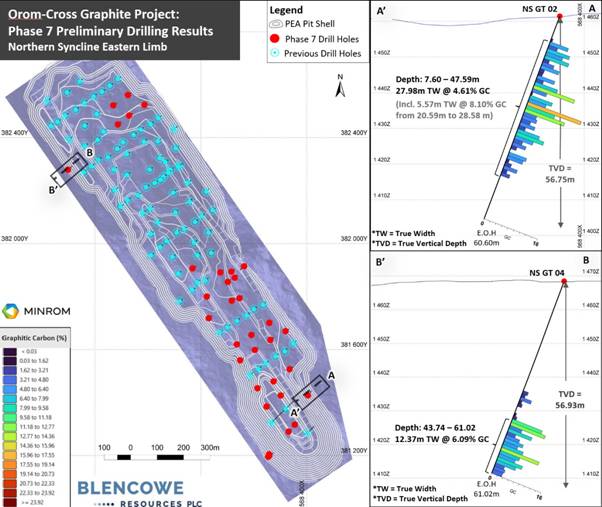
· Hole NSGT02: 27.98m @ 4.61% TGC, including 5.57m @ 8.10% TGC (majority <30m depth).
· Hole NSGT04: 12.37m @ 6.09% TGC.
Significance: Confirms shallow, high-grade mineralisation continuity in infill zones which are critical for low-cost, open-pitable production.
Drilling Programme Integration
· Geotechnical data will feed directly into Definitive Feasibility Study (“DFS”) pit wall design and mine scheduling.
· All results will be incorporated into the JORC Resource upgrade, which is expected to deliver a material increase in Reserves to support large-scale mining over life of mine.
· Additional assays from infill, step-out and deep drilling (Beehive deposit) programmes are expected shortly.
Construction of a Permanent Camp
Work is now underway on building a permanent camp at Orom-Cross which is expected to support further exploration in 2026 and provide facilities for contractors during the construction of the mine. This permanent camp represents the first tangible permanent structures on site which underlines the progress being made. With the DFS expected to be completed in Q4 2025 the next steps thereafter will be project funding and then construction of the mine.
Executive Chairman Cameron Pearce commented:
“The results confirm high-grade extensions to both Camp Lode and Northern Syncline, while reinforcing the advantage of shallow, easily mined ore that underpins our low-cost production profile.
All this data will be fed directly into both our JORC Resource upgrade and the Definitive Feasibility Study, which is due for completion in Q4 2025. Increasing ore reserves at higher grades is a critical step and we expect this to not only enhance the mine plan but also translate into a considerable uplift to project economics and NPV.
Orom-Cross already benefits from a unique combination of attributes, including abundant low cost national-grid hydropower, established roads and infrastructure, and independent test work from both Wuhan University and American Energy Technologies confirming some of the highest SPG purities recorded (up to 99.99% GC). This underscores the exceptional quality of Orom-Cross graphite and its suitability for premium battery-grade markets. Together, these factors give Orom-Cross a rare blend of scale, quality and deliverability that make it a truly bankable graphite opportunity.
With assays now beginning to come through and more results to follow we look forward to a steady flow of updates, including the JORC upgrade and the DFS. These milestones will showcase Orom-Cross as a standout global graphite project, provide the platform to move directly into financing discussions, and ultimately set the stage for a major value re-rating as we continue to de-risk.”
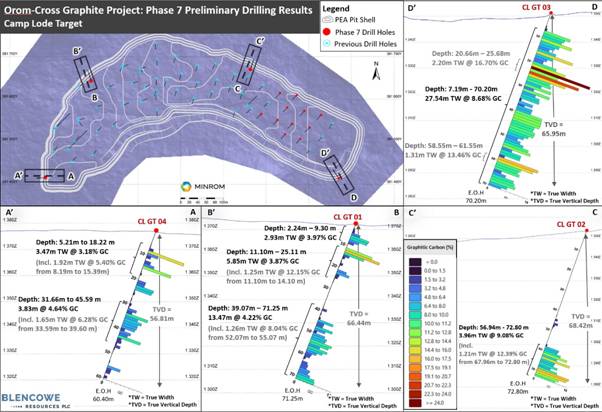
Preliminary drill results Camp Lode
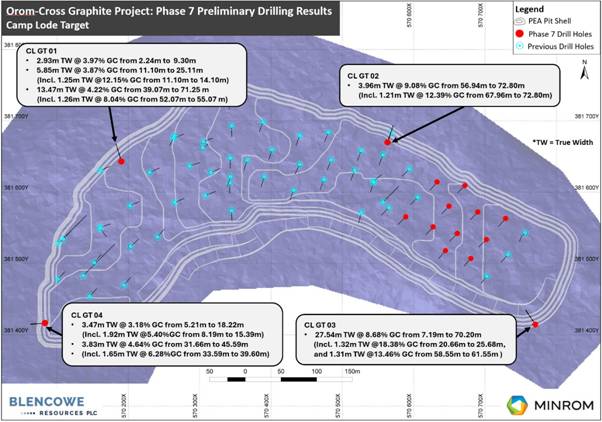
Preliminary drill results Northern Syncline
Further Drilling Detail
The Company drilled four geotechnical holes in each of the Northern Syncline and Camp Lode deposits. While primarily designed for geotechnical assessment to inform pit wall design, all holes were sampled for assays and incorporated into resource database.
At Camp Lode, these holes have indicated a possible extension to the orebody in the south-east, with hole CLGT03 intersecting 27.54m @ 8.68%GC including 2 separate intersections of 1.3M with grades of 18.98%GC and 13.46%GC respectively. These represent very high grades of graphite in comparison to the overall Orom-Cross resource. An additional intersection from hole CLGT02 of 3.96m @ 9.08%GC at depth and intersections near surface in holes CLGT01 and CLGT04 indicate potential to extend the pit to the north.
Similarly, at Northern Syncline hole NSGT02 intersected 27.98m @ 4.61%GC (including 5.57m @ 8.10%GC) and NSGT04 with 12.37m @ 6.09%GC. The intersection from NSGT02 occurs within the area of the completed infill drilling with the majority of the intersection occurring within 30 meters of the surface. The ability to mine substantial volume of graphite from shallow depths contributes to Orom-Cross having operating costs sitting within the lowest percentile of graphite projects worldwide, and this is considered a major advantage as Blencowe drives towards first production.
The results from all eight holes will be included within the resource model updates. The assay labs are continuing to prioritise the Orom-Cross samples and the Company expects further results of the infill program shortly.
For further information please contact:
|
Blencowe Resources Plc Sam Quinn |
www.blencoweresourcesplc.com Tel: +44 (0)1624 681 250
|
|
Investor Relations Sasha Sethi |
Tel: +44 (0) 7891 677 441
|
|
Tavira Financial Jonathan Evans |
Tel: +44 (0)20 3192 1733
|
Twitter https://twitter.com/BlencoweRes
LinkedIn https://www.linkedin.com/company/72382491/admin/
Background
Orom-Cross Graphite Project
Orom-Cross is a potential world class graphite project both by size and end-product quality, with a high component of more valuable larger flakes within the deposit.
A 21-year Mining Licence for the project was issued by the Ugandan Government in 2019 following extensive historical work on the deposit and Blencowe is finalising the Definitive Feasibility Study phase as it drives towards first production.
Orom-Cross presents as a large, shallow open-pitable deposit, with a maiden JORC Indicated & Inferred Mineral Resource deposit of 24.5Mt @ 6.0% Total Graphite Content. Development of the resource is expected to benefit from a low strip ratio and free dig operations, thereby ensuring lower operating and capital costs.
#FCM First Class Metals PLC – MOU with Valereum to Explore Tokenised Funding
 First Class Metals PLC (“First Class Metals” or the “Company”), the UK-listed exploration company focused on the discovery of economic metal deposits across its strategic footprint in Ontario, Canada, is pleased to announce that it has entered into a non-binding Memorandum of Understanding (“MOU”) with Valereum Plc (“Valereum”), a market-leading digital asset infrastructure group listed on the Aquis Stock Exchange (AQSE: VLRM).
The MOU sets out a framework for both parties to evaluate the potential for applying regulated tokenisation to fund mineral exploration and development projects within First Class Metals’ asset portfolio.
Pioneering a Modern Approach to Project-Level Funding
This strategic collaboration combines First Class Metals’ exploration expertise and project pipeline with Valereum’s innovative, regulated digital asset infrastructure to evaluate the development of a tokenised investment model for mineral exploration projects.
The initiative aims to create a digital pathway for project-level funding that:
· Enables project-level funding through SPV participation, preserving shareholder value on a non-dilutive basis for the Company’s shareholders.
· Facilitating market access to global investors with direct participation into high-potential mineral resource projects.
· Utilises existing regulated legal structures to issue fully compliant tokens with KYC/AML fulfilment.
· Supports ESG-aligned, responsible investment structures.
· Aligns with global investment trends, including the rapid expansion of the Real-World Asset (“RWA”) tokenisation market, forecast to exceed US$16 trillion by 2030[1].
The parties believe this represents the first serious attempt by a UK-listed resource company to apply regulated tokenisation to the mineral exploration sector – a development that could fundamentally transform how early-stage mineral exploration projects are financed and advanced.
Specific project selection remains under review, with further announcements to follow once assets are formally identified. It is emphasised that the MOU is non-binding and exploratory in nature, and there is no certainty that any transaction, investment, or tokenisation event will ultimately occur.
By exploring the application of regulated tokenisation to mineral projects, First Class Metals and Valereum are evaluating how such models could enhance investor access, support non-dilutive capital formation, and align with the increasing emphasis on ESG-aligned financing in the resource sector.
It is emphasised that the Company remains committed to its fundamental identity as a mineral resource exploration company.
James Knowles, Chairman of First Class Metals, commented:
“This collaboration represents a bold, forward-thinking approach to unlocking the value of our highly prospective portfolio while preserving shareholder value at the PLC level. By partnering with Valereum, a recognised innovator in regulated digital assets, we are positioning First Class Metals at the forefront of responsible, modern exploration finance. This has the potential to reshape how mineral projects like ours are funded, developed, and ultimately delivered.”
Pete Sekhon, Valereum Business Development commented:
“I have known James for a number of years, and when this opportunity presented itself, it made so much sense on many levels. We are excited about exploring what can be done together. This collaboration represents a pivotal moment in the evolution of both mining and blockchain. Bringing together Valereum’s expertise in digital assets with FCM’s high-quality exploration portfolio in Canada opens the door to a new era of capital markets access for mining. Tokenisation offers a route to unlock the value of in-ground resources in a regulated and accessible way.”
For Further Information:
Engage with us by asking questions, watching video summaries, and seeing what other shareholders have to say. Navigate to our Interactive Investor hub here:
https://fcm-l.investorhub.com/link/MP7o0P
For further information, please contact:
James Knowles, Executive Chair & Managing Director
Email: JamesK@Firstclassmetalsplc.com
Tel: 07488 362641
Marc J Sale, CEO
Email: MarcS@Firstclassmetalsplc.com
Tel: 07711 093532
Novum Securities Limited (Financial Adviser)
David Coffman
Website: www.novumsecurities.com
Tel: (0)20 7399 9400
Axis Capital Markets (Broker)
Lewis Jones
Website: Axcap247.com
Tel: (0)203 026 0449
First Class Metals PLC – Background
First Class Metals listed on the LSE in July 2022 and is focused on metals exploration in Ontario, Canada which has a robust and thriving junior mineral exploration sector. In particular, the Hemlo ‘camp’ near Marathon, Ontario is a proven world class address for gold exploration, featuring the Hemlo gold deposit operated by Barrick Mining (>23M oz gold produced), with the past producing Geco and Winston Lake base metal deposits also situated in the region.
FCM currently holds 100% ownership of seven claim blocks covering over 250km² in north west Ontario. A further three blocks are under option and cover an additional 30km2.FCM is focussed on exploring for gold, but has base metals and critical metals mineralisation. FCM is maintaining a joint venture with GT Resources on the West Pickle Lake Property a drill-proven ultra-high-grade Ni-Cu project.
The flagship properties, North Hemlo and Sunbeam, are gold focussed. North Hemlo has a significant discovery in the Dead Otter trend which is a discontinuous 3.5km gold anomalous trend with a 19.6g/t Au peak grab sample. This sampling being the highest known assay from a grab sample ever recorded on the North Limb of Hemlo.
In October 2022 FCM completed the option to purchase the historical high-grade past-producing Sunbeam gold mine near Atikokan, Ontario, ~15 km southeast of Agnico Eagle’s Hammond Reef gold deposit (3.3 Moz of open pit probable gold reserves).
FCM acquired the Zigzag Project near Armstrong, Ontario in March 2023. The property features Li-Ta-bearing pegmatites in the same belt as Green Technology Metals’ Seymour Lake Project, which contains a Mineral Resource estimate of 9.9 Mt @ 1.04% Li2O. Zigzag was successfully drilled prior to Christmas 2023 and results have now been released.
The Kerrs Gold property, acquired under option by First Class Metals in April 2024, is located in northeastern Ontario within the Abitibi Greenstone Belt, one of the world’s most prolific gold-producing regions. The project holds a historical inferred resource of approximately 386,000 ounces of gold, underscoring its potential as a meaningful addition to FCM’s expanding gold portfolio. Kerrs Gold complements the Company’s exploration strategy and provides exposure to a well-established mining district. FCM is currently reviewing plans to advance the project and further unlock its value.
The significant potential of the properties for precious, base and battery metals relates to ‘nearology’, since all properties lie in the same districts as known deposits (Hemlo, Hammond Reef, Seymour Lake), and either contain known showings, geochemical or geophysical anomalies, or favourable structures along strike from known showings (e.g. the Esa project, with an inferred Hemlo-style shear along strike from known gold occurrences).
For further information see the Company’s presentation on the web site:
www.firstclassmetalsplc.com
Forward Looking Statements
Certain statements in this announcement may contain forward-looking statements which are based on the Company’s expectations, intentions and projections regarding its future performance, anticipated events or trends and other matters that are not historical facts. Such forward-looking statements can be identified by the fact that they do not relate only to historical or current facts. Forward-looking statements sometimes use words such as ‘aim’, ‘anticipate’, ‘target’, ‘expect’, ‘estimate’, ‘intend’, ‘plan’, ‘goal’, ‘believe’, or other words of similar meaning. These statements are not guarantees of statements. Given these risks future performance and are subject to known and unknown risks, uncertainties and other factors that could cause actual results to differ materially from those expressed or implied by such forward-looking and uncertainties, prospective investors are cautioned not to place undue reliance on forward-looking statements. Forward-looking statements speak only as of the date of such statements and, except as required by applicable law, the Company undertakes no obligation to update or revise publicly any forward-looking statements, whether as a result of new information, future events or otherwise.
The MOU described herein is non-binding and does not constitute a legally enforceable agreement to proceed with any transaction. The parties have agreed to collaborate on an exploratory basis and any material developments will be disclosed as required under the Company’s regulatory obligations.
¹ Source: BCG Tokenisation Market Outlook 2023 | ESG Market Insights 2024
#FCM First Class Metals PLC – Investor Webinar
First Class Metals PLC (“First Class Metals” “FCM” or the “Company”) the UK listed company focused on the discovery of economic metal deposits across its strategic exploration footprint in Ontario, Canada is pleased to announce an investor webinar on Tuesday, 17 June 2025 at 2:30pm BST.
Hear from James Knowles (Executive Chairman) and Marc Sale (CEO), who will share an update on the Company’s current position and provide a forward-looking exploration overview across its priority projects, North Hemlo and Sunbeam.
Sign up for the webinar here: https://firstclassmetalsplc.com/webinars/lej6ne-next-steps-in-exploration-insights-into-north-hemlo-sunbeam
Engage with us by asking questions, watching video summaries and seeing what other shareholders have to say. Navigate to our Interactive Investor hub here: firstclassmetalsplc.com/announcements.
For further information, please contact:
|
Investor questions on this announcement We encourage all investors to share questions on this announcement via our investor hub
|
https://firstclassmetalsplc.com/link/Ky0Z7r
|
|
James Knowles, Executive Chairman
Marc J Sale, CEO
|
JamesK@Firstclassmetalsplc.com 07488 362641 07711 093532 |
|
Novum Securities Limited (Financial Adviser) David Coffman |
(0)20 7399 9400 |
|
Axis Capital Markets (Broker) Lewis Jones
|
Axcap247.com (0) 203 026 0449 |
#URU URU Metals Limited – Zeb Nickel Identifies High-Priority Drill Targets
 URU Metals Limited (“URU” or the “Company”) is pleased to announce the results of an advanced geophysical interpretation over its flagship project in South Africa. The work, conducted by GeoFocus Geophysical Solutions (Pty) Ltd, has identified a series of high-priority drill targets with strong potential to host high-grade nickel-copper-PGE sulphide mineralisation.
The results confirm key elements of Zeb Nickel’s exploration model, pointing toward a conduit-style magmatic sulphide system with striking similarities to the well-known Uitkomst Complex, which is a nickel-producing deposit in South Africa associated with the Bushveld Complex, and formed through the accumulation of dense sulphide minerals at the base of an ultramafic intrusion.
Richard Montjoie, VP Exploration at Zeb Nickel, commented:
“This interpretation marks a significant milestone in the development of the Zeb Project as announced 11 April 2025. The newly identified targets validate our model of a dynamic magmatic plumbing system with potential for sulphide accumulation along feeder conduits and in reactive footwall lithologies. These are precisely the kinds of structural and lithological settings associated with high-grade mineralisation at analogous deposits such as Uitkomst and Platreef. The results provide a clear framework to drill both the known nickel-PGE mineralisation in Zone 2 and test new, high-impact massive sulphide targets in what we define as Zone 3.“
Key Highlights
· Multiple Drill-Ready Targets: Several strong gravity and magnetic anomalies identified beneath and adjacent to the Uitloop I and II intrusions.
· Feeder Zone Confirmed: New data supports a vertically stacked system with a potential conduit linking Uitloop I and II – a key focus for future drilling.
· Target Zones Extend Below Known Mineralisation: Gravity modelling has identified dense zones ~100 to 800 metres below surface, suggesting untested high-grade sulphide potential at depth.
· Untested Offshoots: Magnetic-gravity anomalies up to 1 km from known intrusions suggest additional feeder zones or apophyses – enhancing the district-scale potential.
What is Uitkomst-Style Mineralisation?
The Uitkomst Complex, located in South Africa, is a known nickel-copper-PGE deposit with massive sulphide mineralisation hosted in a tubular ultramafic intrusion emplaced into dolomite and shale. These intrusions act as magma conduits, where heavy sulphide liquids sink and accumulate along the base of the intrusion or at structural traps. This style of mineralisation typically produces high-grade sulphide accumulations containing nickel, copper, cobalt, and platinum group elements (PGEs).
Before mining ceased, the Uitkomst Complex hosted a resource of approximately 3.7 million tonnes grading 2.0-2.5% nickel and 1% copper, with minor cobalt and PGE credits. The overlying disseminated sulphide deposit, known as the Main Mineralised Zone (“MMZ”), was significantly larger, with an estimated resource of ~140 million tonnes at 0.3% nickel and 0.15% copper, also containing minor cobalt and PGM credits.
The Zeb Project exhibits many of these same geological hallmarks:
· A vertically stacked intrusion system
· Reactive footwall rocks (dolomite, shale)
· Evidence of feeder conduits
· Historic intercepts of PGE-Ni-Cu in the footwall
Zeb Nickel’s Zone 2, possibly analogous to the MMZ, has already returned intersections of up to 2 g/t 3E+Au, 0.4% Ni and 0.2% Cu, and the new interpretation adds multiple deeper, denser bodies to test.
The Zone 2 mineralisation is hosted within pyroxenite and ultramafic sills, and appears geologically similar to the Flatreef orebody at Ivanhoe Mines’ Platreef Project, located adjacent to – and down-dip from – the Zeb Project. Flatreef is a flat-lying, high-grade polymetallic deposit formed through sulphide accumulation in broad, reactive sedimentary traps. Like Flatreef, Zeb’s mineralisation appears to be laterally extensive, PGE-rich, and vertically continuous.
As of 2025, Platreef hosts 59 million ounces of precious metals in Indicated Resources and 94 million ounces in Inferred Resources. Once fully developed, Platreef is positioned to become one of the world’s largest and lowest-cost producers of PGEs, delivering over 1 million ounces of 3PGE+Au annually, with major by-product credits from nickel and copper.
Next Steps
These newly defined targets not only confirm the presence of Platreef-style mineralisation in Zone 2, but also highlight the potential for high-grade, conduit-hosted sulphide bodies in Zone 3, analogous to the Uitkomst Complex. This dual geological model enhances Zeb’s prospectivity and will directly inform the upcoming drill strategy, which is designed to test both disseminated and massive sulphide zones.
Immediate next steps include:
· 3D Integration: GeoFocus is providing full 3D magnetic and gravity models for integration into Zeb’s geological database.
· Drill Planning: A list of top-priority targets is being finalised, focused initially on zones with overlapping gravity and magnetic signatures.
About the Company
URU Metals is a mineral exploration and development company focused on advancing its high-potential critical metals projects in South Africa. The Company is committed to creating sustainable value through responsible mining practices, regulatory compliance, and engagement with stakeholders. For more information, visit www.urumetals.com.
Market Abuse Regulation (MAR) Disclosure
This announcement contains inside information for the purposes of Article 7 of the Market Abuse Regulation (EU) 596/2014 as it forms part of UK domestic law by virtue of the European Union (Withdrawal) Act 2018 (“MAR”), and is disclosed in accordance with the Company’s obligations under Article 17 of MAR.
For further information, please contact:
|
URU Metals Limited John Zorbas (Chief Executive Officer)
|
+1 416 504 3978
|
|
SP Angel Corporate Finance LLP (Nominated Adviser and Broker) Ewan Leggat / Jen Clarke |
+ 44 (0) 203 470 0470 |
#POW Power Metal Resources PLC – Molopo Farms Complex, Botswana – Programme Results
 Power Metal Resources PLC (LON:POW), the London listed exploration company seeking large-scale metal discoveries across its global project portfolio announces results from the recently completed 2022/2023 drilling campaign at the 1,478.6 km2 Molopo Farms Complex Project (“Molopo Farms” or the “Project” or “MFC”) targeting a large-scale nickel (“Ni”) and platinum group element (“PGE”) discovery in southwestern Botswana.
On 7 February 2023 the Company announced an update regarding the completion of the 2022/2023 drilling campaign. The link to this announcement can be found below:
Sean Wade, Chief Executive Officer of Power Metal Resources PLC commented:
“I am very pleased to present this set of drill results, which I know have been long awaited. We have provided a comprehensive analysis of the results achieved as well as a detailed exploration history of the Molopo Farms Complex and of our Project area.
Based on the information provided below, including historical drilling and petrographic results, it is evident that the MFC has the required ingredients which would allow for the formation of a magmatic sulphide deposit.
It is fair to say the discovery of major nickel sulphide & PGE deposits is highly challenging, which is why they are so sought after and valuable. Some of the main challenges are to find demonstrable evidence of the right geological environment and targeted mineralisation within what is a very large area of sand covered ground – as is the case at Molopo Farms with a 1,478.6 km2 Project footprint.
These major challenges have been overcome and we have been able to confirm the postulated geological model and confirm the presence of nickel sulphides and PGEs. It is now time to move to the next stage where the knowledge and data we have assembled can be deployed in continuing ground exploration.
In this regard, conversations with potential Project partners are underway as previously announced, with further interest received very recently. We strongly believe that we are now in a position to significantly advance those conversations and set a course for the large-scale exploration programme that Molopo Farms needs to prove the potential for a magmatic sulphide deposit or deposits.“
HIGHLIGHTS:
§ During the 2022/2023 diamond core drilling campaign Power Metal successfully completed a total of 2,402.8m of drilling across five drillholes targeting four individual target areas including:
– DDH1-6B (650.2m), DDH1-6B(2) (300.2m), DDH1-14B (519.1m), DDH1-3 (450.1m) and DDH2-3 (483.2m).
§ Drilling at all target areas (T1-6, T1-14, T1-3, T2-3) was designed to test geophysical conductors identified by the time-domain electromagnetic (“TDEM”) geophysics surveys completed by Power Metal earlier in 2022.
§ Multiple drillholes successfully intersected mineralised pyroxenites which returned anomalous precious metal (gold (Au) + platinum (Pt) + palladium (Pd)) mineralisation including 2.3m @ 0.56 g/t Pt+Pd+Au & 0.17% Ni from 497.2m downhole, including 0.8m @ 0.81 g/t Pt+Pd+Au & 0.18% Ni from 498.7m downhole, in drillhole DDH1-6B.
§ Downhole electromagnetic (“EM”) survey completed on drillhole DDH1-14B indicates that the superconductor targeted lies beyond the depth of the current end of hole (519m) at a projected downhole depth of approximately 610m. Conductivity depth imaging completed previously under-estimated the depth to the central part of this conductor. DDH1-14B would therefore need to be extended to intersect the superconductor target.
§ The 2022/2023 results achieved for nickel and precious metals are in line or exceed some of the highest results achieved from the minimal historical exploration that has been completed within the Molopo Farms Complex, and although these grades are currently not a levels permitting economical extraction, they are very encouraging. A detailed overview of the geology, historical exploration, and next steps are included in the body of this release and interested parties are encouraged to read through the below section in its entirety.
FURTHER INFORMATION
Summary Drilling Results
|
Hole ID (current downhole depth m) |
Target |
Notable Outcome |
Action proposed |
|
|
DDH 1-14B (519.1 m) |
Targeted moderately dipping superconductor. The superconductor targeted by DDH1-14B was not intersected. |
Further proved the presence of a ultramafic feeder dyke within the MFC and delineated its northern edge. The dyke is a funnel shaped intrusion with a generally east-west strike. It is composed mainly of harzburgites and dunites. The dyke follows the Jwaneng – Makopong structure. |
Investigate for mineralisation within or closer to the ultramafic dyke. Drill for intersection between pyritic mudstone and ultramafic dyke where magmatic sulphide deposits are known to form. |
|
|
DDH 1-6B (650.2 m) |
Targeted moderately dipping (to the south) conductor, the causative body of which remains uncertain. |
Drilled to the south and downdip of drillhole KKME1-6 further from feeder dyke. Successfully Intersected down dip extension of upper pyroxenite from 2020/2021 drillhole KKME1-6. The upper mineralised pyroxenite within DDH1-6B returned 2.27m @ 0.56 g/t Pt+Pd+Au & 0.17% Ni from 497.2m downhole (incl. 0.77m @ 0.81 g/t Pt+Pd+Au & 0.18% Ni from 498.7m). This is close to the highest ever precious metals values obtained from ultramafic rocks of the MFC (compared to 1.1 g/t Pt+Pd+Au from government borehole MF38). Hole also returned 0.65m @ 0.38% Ni from 564.05m downhole, precious metal assays are still awaited. |
Investigate layered rocks closer to known feeder dyke |
|
|
DDH 1-6B(2) (300.2 m) |
Targeted up dip extension of mineralised coarse pyroxenite unit which was intersected in both KKME1-6 and DDH1-1B. |
The hole intersected thick, coarse grained pyroxenites, maximum assay values in a weathered intersection of 1.0m @ 0.166g/t Pt+Pd+Au & 0.10% Ni from 63.0m downhole. This weathered coarse pyroxenite intersected is believe the represent the same geological unit targeted from KKME1-6 and DDH1-6B |
Investigate layered rocks closer to known feeder dyke |
|
|
DDH 1-3 (450.1 m) |
Targeted a ‘jelly-bean’ shaped conductor. The Causative body remains unclear. This conductor extends for at least 1.6km in a east-west direction. This target is part of a approx. 14km long east-west trending magnetic high. |
Intersected ultramafic rocks of the MFC under 131.5m of Kalahari Group sediments. Intersected serpentinites intruded by later gabbro and dolerite bodies, which are likely part of the MFC suite of rocks. Local anomalous precious metals results including 1.02m @ 0.52 g/t Pt+Pd+Au & 0.23% Ni from 381.m downhole and 1.0m @ 0.44 g/t Pt+Pd+Au & 0.30% Ni from 385.0m downhole. The precious metal values are not associated with visible sulphide mineralisation.
Considering this, Company is contemplating sending further sections with no visible sulphide mineralisation for assay testing.
|
Further structural and geological analysis of physical drillcore as well as possible further assay analysis required prior to determining next steps |
|
|
DDH 2-3 (483.2 m) |
Targeting flat-lying, slightly concave down, strong conductor which remains open in all directions. Conductor is coincident with 14km long east-east trending magnetic high. This represents the first ever drillhole into this target area. Significant magnetite intersected near depth of major conductor. |
Intersected ultramafic rocks of the MFC at depth of 280m under cover of Waterberg Group and Transvaal Supergroup. Demonstrated presence of MFC ultramafics further west than previously known. Ultramafics are intruded by a number of thin dolerite bodies. |
Further structural and geological analysis of physical drillcore as well as possible further assay analysis required prior to determining next steps |
Drill Hole Collar Table
|
Hole ID |
Operator |
UTM Easting |
UTM Northing |
Azimuth |
Dip |
Total Depth (m) |
Date Completed |
|
KKME1-14 |
KKME |
232917 |
7267290 |
345° |
-60° |
515.8 |
12-Nov-20 |
|
KKME1-6 |
KKME |
213494 |
7255681 |
180° |
-60° |
597.8 |
20-Jan-21 |
|
KKME1-11A |
KKME |
231666 |
7267130 |
157° |
-60° |
502.4 |
30-Mar-21 |
|
DDH1-6B |
Power |
213493 |
7255150 |
0⁰ |
-80⁰ |
650.2 |
22-Oct-22 |
|
DDH1-6B (2) |
Power |
213504 |
7255681 |
0⁰ |
-80⁰ |
300.2 |
02-Nov-22 |
|
DDH1-14B |
Power |
232900 |
7267150 |
0⁰ |
-75⁰ |
519.1 |
22-Nov-22 |
|
DDH1-3 |
Power |
792330 |
7236250 |
345⁰ |
-80⁰ |
450.1 |
08-Dec-22 |
|
DDH2-3 |
Power |
761675 |
7233925 |
170⁰ |
-80⁰ |
483.2 |
25-Jan-23 |
Projection: UTM Zone 35S WGS 84
MOLOPO FARMS COMPLEX
A detailed historical and geological overview of the Molopo Farms Complex is provided below. It is intended to be a comprehensive writeup so interested parties can get additional context about the exploration task at hand and what suggested future steps are.
Overview
The Molopo Farms Complex (“MFC” or the “Complex”) is a significant layered mafic-ultramafic intrusion covering approximately 13,000 km2 across southern Botswana and into South Africa. Power Metal’s Molopo Farms Project covers approximately 1,632 km2 across this highly prospective geological province. The MFC intrusive rocks have been emplaced into Palaeoproterozoic sedimentary rocks of the Transvaal Supergroup. Radiometric dating of the MFC shows that it is coeval (a similar age) with the prolific Bushveld Complex located entirely within South Africa approximately 200 km to the east.
Geology
The MFC consists of a lower zone of ultramafic rocks and an upper zone of mafic rocks. The total thickness is about 3,200 m of which the lower ultramafic zone makes up at least 2,000 m.
The structure of the Complex is a folded, block faulted, lopolith which now forms a southwest plunging syncline divided through the middle by ENE-WSW trending Jwaneng-Makopong shear zone which divides the complex into a northwest and southeast section. The rocks are generally highly faulted and the olivine bearing ultramafic rocks severely altered.
Essentially only the lower ultramafic zone is well developed within the current Molopo Farms Project. The mafic rocks are limited to sills overlying the ultramafics, or, in some cases, mafic intrusions into the ultramafic rocks.
The ultramafic rocks consist of either olivine dominant or orthopyroxene dominant rocks, which alternate in an irregular fashion. Specific rock types include harzburgites, dunites, orthopyroxenites, olivine pyroxenites and orthopyroxenites. Alteration is generally intense, with widespread serpentinization of olivine dominant rocks, and bastite and chlorite alteration of pyroxenites. Alteration of the pyroxenites varies from minimal to highly pervasive. Magnetite segregations and veining are common and may in places be after chromite. Chrysotile asbestos are common in joints and faults, serpentine, talc and calcite veins are widespread.
Contacts between lithologies are in general sharp rather than gradational. There is a competence difference between the olivine and pyroxene dominant rocks which leads to jointing and faulting close to the contact between these units. Whilst some areas are not greatly faulted, in other areas the rocks are severely fractured.
First Recognition
Due to extensive Kalahari sand cover there are no outcrop exposures of the MFC making exploration for magmatic sulphide deposits challenging. In additional to the Kalahari sands, the MFC is further concealed by varying thicknesses of Proterozoic Waterberg Group, and locally by Karoo Supergroup rocks.
The first indication of the presence of the MFC below Kalahari sand cover was when serpentinite was exposed in hand dug wells within the north of the MFC. The Molopo Farms are commercial cattle ranches which were first surveyed in the 1950s. Drilling for water on the new farms intersected a variety of igneous rocks which suggested there could be a Bushveld equivalent intrusion in southern Botswana.
In 1962, to assist in the siting of further water wells, the Geological Survey of Botswana commissioned an aeromagnetic survey over a large portion of southern Botswana. This survey revealed extensive magnetic high anomalies which confirmed the presence of a large body of mafic – ultramafic rocks.
Exploration History
British & Botswana Geological Survey Joint Programme1
The MFC was the subject of a major research project carried out jointly by the British and Botswana Geological Surveys from 1980-1984. The programme oversaw the digitisation of the earlier aeromagnetic data, carried out a gravity survey, prepared an inventory of existing drill holes and drilled 46 additional holes totalling 5,457 m of percussion drilling and 4,607 m of diamond coring. Considerable petrographic and lithogeochemical work was completed on the various cores obtained.
Considering the vast footprint of the MFC, the drill holes were very widely spaced and were designed mainly to provide additional data to allow the preparation of a more comprehensive geological model. Despite this, a total precious metal assay of 1g/t Pt+Pd+Au was obtained from a pyroxenite close to the base of the MFC in the northeast1. The joint exploration programme successfully demonstrated that the MFC is a large, Bushveld equivalent, layered intrusion, and the intriguing results guided subsequent work carried out by various private sector companies.
The Kalahari Mapping Project was a second major programme completed jointly by the Botswana and British Geological Surveys from 2003 to 2005. The aim was to re-map the sub-Kalahari geology of the area from recent higher-resolution government aeromagnetics (while utilising an updated drill hole inventory). New maps of the geology of the MFC were published, however very little new fieldwork was done, and there was no additional drilling.
Private Sector Exploration (1985-1992)
The MFC was explored by two companies between 1985-1992, one major – Gold Fields Ltd. (“Gold Fields”), and one junior – Molopo Australia PTY. Most work by Molopo Australia was funded through a joint-venture agreement with Inco Ltd. (now Vale Ltd).
Given the lack of outcrop exposure, exploration was driven by geophysical surveys, generally magnetic and gravity, although limited TDEM work was also done. Gold Fields discovered a possible equivalent of the Bushveld Critical Zone located in the south of the complex, but precious metals values were generally low and relatively inconsistent. Molopo Australia noted low grade platinum-group metal (“PGM”) mineralisation towards the base of the ultramafic sequence in the north of the Complex. Molopo Australia also intersected 0.3 m of 14% nickel within a vein in the footwall of the MFC.
It is important to note that both Gold Fields and Molopo Australia based their exploration efforts on a Bushveld model – where mineralisation would occur in distinct horizons within a large layered intrusion. In particular, the focus was on an equivalent of the Bushveld Critical Zone. Later re-interpretation of the MFC suggests that this model misled the majority of their exploration.
Private Sector Exploration (2001-2007)2
From 2001 – 2007 an Australian junior exploration company Tau Mining Ltd. (“Tau Mining”), explored the MFC with a new geological model based on exploration for a feeder zone or zones which were possible magma conduits. This work was however mostly unsuccessful as Tau Mining had limited funding and although some significant geophysical work was done, including a Spectrum survey over the Keng area, drilling was limited, percussion only, and poorly sited.
Tau Mining did however drill a number of drillholes close to the Kalahari Key Mineral Exploration (Pty) Ltd. (“KKME” or “Kalahari Key”) prospecting licence (“PL”) 311/2016 and these are incorporated in Power’s Project overall project database.
Private Sector Exploration
Kalahari Key Mineral Exploration PTY Ltd & Power Metal Resources from 2020-present
The latest phase of work originally initiated by Kalahari Key, further adopted the feeder zone dyke model from Tau Mining but has applied more sophisticated geophysical surveys followed up by now two phases of core drilling.
Much of the work has been focussed within the northeast of the Complex, where there is a very thick (>2,000 m) under explored, ultramafic succession mainly under relatively thin (<25 m) Kalahari Group cover.
Exploration by Kalahari Key was guided by geophysics, in this case by helicopter and ground Time Domain Electromagnetic (TDEM) surveys, supported by helicopter magnetic data and ground magnetic surveys. Only very limited gravity surveys have been completed over the MFC. The exploration targets focussed on by KKME and Power Metal have been discrete conductors compatible with massive magmatic sulphide bodies.
Ground TDEM surveys initially employed 1x 1 km fixed loops, but later more detailed moving loop surveys were carried out over some targets.
Kalahari Key and subsequently Power Metal Resources have to date drilled 8 boreholes totalling 4,018.7 m. Select samples from drilling completed by KKME were sent to the University of Witwatersrand for detailed petrographically work. Primary magmatic nickel & copper sulphides were successfully identified including pentlandite, maucherite, chalcocite, heazlewoodite, awaruite, bornite, chalcocite and covellite. Various results are discussed below and compared with the results of historical drilling.
Historical Occurrences of Base- and Precious-Metals
It is relatively rare to see sulphide mineralisation within hand specimens from the MFC ultramafic rocks. Serpentinites after harzburgite may contain small specks of sulphide, generally intergrowths of pyrite, pyrrhotite and chalcopyrite. In some cases, these are restricted to within orthopyroxene oikocrysts.
All mineralisation of interest has so far been found within pyroxenite units within the ultramafic succession. Historical mineralised intersections include:
§ The Molopo Farms Project borehole MF38, which is within KKME’s PL 311/2016, intersected 1.1 g/t Pt+Pd in pyroxenite at a depth of approximately 532 m.
§ Borehole TB-1, drilled by Molopo Botswana, a previous explorer in the Molopo Farms Complex, 1 km east of MF38, intersected a prominent sulphide zone between 96.5 and 103.8 m which is believed to correlate with the 531 – 532 m zone in MF38. Although sperrylite was recognised in the TB-1 samples, the best assay result was 0.23 g/t Pt+Pd+Au3.
§ Borehole TB-3 was drilled 1.4 km NE of TB-1 to test the strike continuity of the mineralisation in TB-1 and MF38. A sulphide horizon in pyroxenite at 287.9 – 293 m was interpreted as correlating with the mineralisation in MF38. However, the best assay result from TB-3 was 0.45 g/t Pt+Pd+Au.
§ Borehole TB-11 was drilled 500 m south of the MF38 – TB-1 line. Sulphide horizons were found in pyroxenite at 186 – 216 m and at 286 – 312 m. A total of 156 samples were assayed from TB-11 and its deflection, but the best values were 0.20 g/t Pt and 0.12 g/t Pd.
§ Nickel values in the above boreholes were consistently <0.3% Ni.
§ Borehole KP-20, drilled by Molopo Botswana 5 km northeast of Keng Pan, intersected a semi-massive nickel arsenide vein over 30 cm at a depth of 91 m which assayed 14.6% Ni, 0.05 g/t Pt+Pd+Au and 610 g/t Ag. The vein was in siliceous dolomite in the footwall of a differentiated pyroxenite sill related to the MFC. Follow up drilling however failed to locate any continuation of the vein, which is believed to be hydrothermal4.
§ Borehole KP-19, south of KP-20, intersected three narrow sulphide veins in a tectonised ultramafic rock. The best assay, from a downhole depth of 424 m returned 1.25% Ni and 0.97% Cu4.
Based on all historical work completed to date the key lithology for mineralisation in the ultramafic sequence is pyroxenite, especially coarse grained, feldspathic pyroxenite.
By comparison with historical results, KKME and subsequently Power Metal have, with limited drilling, intersected rocks giving assays results in line with those achieved historically highlighting the various exploration successes of both parties with overall limited exploration.
Confirmation of the Feeder Zone Model
The magnetic surveys carried out in the north of PL 311/2016, plus drill holes KKME1-14, DDH1-14B and KKME1-11A, support the presence of an ultramafic dyke following the Jwaneng – Makopong shear zone. The dyke appears to be funnel-like in profile and could be a magma conduit to the Molopo Farms Complex. The Transvaal strata in contact with the steeply dipping feeder zone are gently to moderately dipping. This is an important consideration when reviewing existing and future geophysical results across the feeder zone.
Further south, around drillhole KKME1-6, it is harder to distinguish the feeder from the layered rocks of the intrusion.
The magma conduit model is analogous to the Uitkomst intrusion in eastern South Africa, which hosts the Nkomati nickel mine, once South Africa’s largest nickel producer. Like the MFC, the Uitkomst intrusion is of Bushveld age.
Exploration Methodology
Due to extensive sand cover over the MFC, historical exploration has been largely driven by geophysics.
Soil geochemical surveys have been carried out, but the Kalahari sands, even if relatively thin, diffuse the results and soil surveys tend to only detect the underlying lithology. That said, there is no known mineralisation on which soil sampling data can be orientated.
Historically, magnetic and gravity surveys were used to identify the cross-over from the lower ultramafic zone to the upper mafic rocks.
TDEM surveys have sought to recognise conductors caused by massive sulphide bodies. To date, as no such bodies have been found, the usefulness of TDEM surveys in this environment remains limited.
All eight of the drillholes completed by KKME and Power Metal were sited to intersect electromagnetic (“EM”) geophysical conductors. However, in no case was an obvious geological unit which was responsible for the EM signature identified (causative body). In the past, it has been noted that EM surveys will detect faults and areas of saline groundwater, and sheared serpentinite are also known to act as good conductors.
Discussion on Future MFC Exploration
It is evident from historical work that the ultramafic rocks in the NE of the MFC are the most promising target. As a result, Power Metal Resources Molopo Farms Project is located in the right place.
KKME and Power Metal have discovered an ultramafic dyke-like intrusion which causes a curvilinear magnetic anomaly changing direction from E-W to NE-SW. The intrusion is composed of dunite and harzburgite and has a very basic composition. Three holes have been drilled on this target, demonstrating its composition and that the northern contact is steep and discordant. As mentioned, this structure has similarities to the Uitkomst intrusion, which is regarded as a feeder conduit to the Bushveld Complex and could merit further drilling. A vertical borehole down the centre of the body, aimed at passing through the intrusion into country rock, could be proposed.
Recent and historical work has recognised the occurrence of awaruite in the MFC serpentinites. Awaruite is a Ni-Fe alloy, which has attracted considerable attention as a “green” source of nickel, in that nickel may be recovered without smelting and consequent release of SO2 into the atmosphere. It may have a nickel content of >70%.5 Previous work in the Keng area has shown that 40% of the total nickel in serpentinites may be contained within awaruite. Economic recovery of awaruite was considered in the past and could be worth re-visiting. Mining could be feasible only in those areas where serpentinite is present under thin Kalahari cover, and thus, depending on the cover depth, amenable to open pit working.
Correlation of individual layers in the ultramafic succession is problematic, and it has been proposed that only certain coarse pyroxenite layers may be continuous. Power Metal has tentatively correlated mineralised horizons between boreholes KKME1-6 and DDH1-6B located approximately 530 m apart. However, mineralisation is not entirely consistent. Drillhole DDH1-6B(2), drilled at the same position at KKME1-6 but angled to the north, intersected coarse pyroxenites which were devoid of mineralisation. Equivalent styles of mineralisation in layered ultramafic rocks of the Bushveld Complex are low grade (eg Volspruit North: 2.27 g/t Au+Pt+Pd, 0.18% Ni, 0.06% Cu and Sheba’s Ridge: 0.9 g/t Au+Pt+Pd, 0.2% Ni and 0.08% Cu) but have high tonnage and are open-pitable.6,7 These grades are not considerably better than found by Power Metal, but tonnage and being close to surface are important considerations. In general, mineralisation in the generally moderately dipping layered ultramafic rocks is likely not a viable exploration target going forward – as per results obtained from drillholes KKME1-6, DDH1-6B and DDH1-6B(2).
Next Steps
As the demand for nickel continues to increase, exploration for magmatic sulphide deposits within mafic/ultramafic complexes will continue to be of significant interest to junior and major mining companies. Compared to many other significant mafic provinces, the MFC is comparatively underexplored, likely as a result of the extensive Kalahari sand cover. However, based on the information provided above, including historical drilling and petrographic results, it is evident that the MFC has the required ingredients which could allow for the formation of a magmatic sulphide deposit(s). To that end, one of the major challenges of exploration for these types of deposits is due to the lack of alteration surrounding known ore bodies – with barren rock known to exist in contact with significant metal accumulations. Due to the above considerations, Power Metal is strongly of the belief that significant further exploration is warranted. Some of the possible next steps include:
§ Collection of further structural data from 2022/2023 drill programme-oriented core, as well as thin section analysis of select mineralised horizons.
§ Select core samples of ultramafic rocks in boreholes 1-6 and 1-6B for preparation of mineral separates to assess awaruite content. Choose serpentinites with relatively high whole rock nickel content (0.2%).
§ Complete a high-resolution mobile magnetotellurics (“MobileMT”) airborne geophysical survey. MobileMT is on the cutting edge of geophysical survey methodology and compared to TDEM has multiple advantages including:
o Allows for good discrimination between resistive units (e.g. TDEM cannot effectively map resistive units or discriminate between 1000 ohm-m and 5000 ohm-m formations).
o Can detect superconductors directly.
o Provides superior depth penetration than even high powered TDEM systems (up to 2km in certain geological environments).
o System experiences no problems with induced polarisation (“IP”) effects, zero coupling zones or super para-magnetic effects.
o Highest efficiently and quick surveying over flat areas like southern Botswana and can average production of 100km per day with a comparatively low production cost.
§ Across PL311/2016 prepare detailed geological/structural interpretation incorporating all historical drilling and geophysical data available. Trace feeder dyke as possible magma conduit.
§ Based on above, plan additional drilling within the feeder dyke and adjacent areas. Possible additional ground magnetic surveys. Drillhole KKME1-14 and DDH1-14B are 17 kms northeast of the main outcrop of the MFC ultramafics – this area should be further investigated and subsequently drilled (at least one deep vertical hole) as it geological analogous to the prolific Uitkomst intrusion located in South Africa.
References
1Gould, D., Rathbone, P.A. and Kimbell, G.S., 1987. The geology of the Molopo Farms Complex, southern Botswana. Geological Survey of Botswana, Bulletin, 23, 178p
2Tau Mining Ltd., Molopo Farms Project Prospecting licenses: PL06/2001, PL38A/2001, PL38B/2001, PL40/2001, PL41A/2001, PL41B/2001, PL42A/2001, PL42B/2001., Quarterly Exploration Report July 2008 – September 2008
3 McGeorge, I.B., 1992., Molopo Botswana (Pty) Ltd 1992. Final Report for PL 14/87, Southern District. Prospecting Records, Botswana Geoscience Institute.
4 McGeorge, I.B., 1994, Molopo Botswana (Pty)- Final Report for Prospecting Licence 62/89 Southern District. Prospecting Records, Botswana Geoscience Institute.
5 Seiler, S., Sanchez, G., Teliz, E., Diaz, V., BRadhsaw, P., Klein, B., 2022, Awaruite (Ni3Fe), a new large nickel resource: Electrochemical characterization and surface composition under flotation-related conditions, Minerals Engineering vol 184. https://doi.org/10.1016/j.mineng.2022.107656
6Sharecast, 24 October 2022. “Sylvania Platinum upbeat on recent Bushveld Studies.” Sylvania Plathium Ltd.
7Mining Review Africa, 13 February 2008. “Blue Ridge and Sheba’s Ridge Study Feasibility”. Sub- heading “Sheba’s Ridge – open pit nickel PGM project”.
Glossary
Awaruite Awaruite is a naturally occurring alloy of nickel and iron.
Bastite A serpentinous mineral occurring embedded in serpentine at Baste in the Harz and elsewhere, and probably derived from the alteration of a variety of enstatite.
Dunite Dunite is an ultramafic plutonic rock that is composed almost exclusively of olivine.
Dyke A dyke is a vertical to subvertical sheet of rock that is formed in a fracture of a pre-existing rock body.
Feeder zone The plumbing system from which magma is supplied into the intrusive from the lower crust. These can often form as elongated dykes at the base of an ultramafic layered intrusion. Sulphide mineral accumulations can often form in the vicinity of the feeder zone.
Harzburgite Harzburgite is a type of peridotite ultramafic igneous rock, with no or very little monoclinic pyroxene and consisting only of olivine and orthorhombic pyroxene bronzite. Harzburgite typically forms by the extraction of partial melts from the more pyroxene-rich peridotite.
Lopolith A lense shaped intrusion of igneous rock.
Palaeoproterozoic Sedimentary Sedimentary rocks deposited between 2,500 to 1,600 million years ago
Pyritic mudstone Mudstone containing elevated amounts of iron pyrite – with refence to nickle sulphide deposits, these represent important sources of sulphur.
Pyroxenite Pyroxenite is an ultramafic igneous rock consisting essentially of minerals of the pyroxene group, such as augite, diopside, hypersthene, bronzite or enstatite.
Serpentinite A metamorphic rock formed as a result of the low temperature anaerobic oxidation of ultramafic rock in the course of which density is reduced and volume increased by the addition of water, and nickel and other elements undergo remobilisation as a result of hydrothermal activity.
Transvaal Supergroup The Transvaal Supergroup is a group of rocks in northern South Africa and southern Botswana, situated on the Kaapvaal Craton, composed of sedimentary and volcanic ltiholgoies.
Olivine pyroxenites Olivine pyroxenites are a type of ultramafic igneous rock composed mainly of pyroxene minerals and olivine, with minor amounts of other minerals such as spinel and chromite.
Orthopyroxenites Orthopyroxenites are a type of ultramafic igneous rock that is composed mainly of orthopyroxene minerals. Orthopyroxenites are typically formed in the Earth’s mantle, either by crystallization from magma or by solid-state transformation of peridotite, another type of ultramafic rock. They are often associated with other mantle-derived rocks such as dunites, harzburgites, and lherzolites.
Ultramafic rock An igneous rock in which has a very low silica content and in which more than 90% of the rock is composed of magnesium and iron-rich minerals like pyroxenes, amphiboles, and olivine.
Power Metal Interest
Power Metal holds an 87.71% interest in Kalahari Key Mineral Exploration Pty Ltd, a Botswana private company, which holds a 100% interest in the Molopo Farms Complex Project.
QUALIFIED PERSON STATEMENT
The technical information contained in this disclosure has been reviewed and approved by Mr Nick O’Reilly (MSc, DIC, MIMMM, MAusIMM, FGS), who is a qualified geologist and acts as the Qualified Person under the AIM Rules – Note for Mining and Oil & Gas Companies. Mr O’Reilly is a principal consultant working for Mining Analyst Consulting Ltd which has been retained by Power Metal Resources PLC to provide technical support.
This announcement contains inside information for the purposes of Article 7 of the Market Abuse Regulation (EU) 596/2014 as it forms part of UK domestic law by virtue of the European Union (Withdrawal) Act 2018 (“MAR”), and is disclosed in accordance with the Company’s obligations under Article 17 of MAR.
For further information please visit https://www.powermetalresources.com/ or contact:
|
Power Metal Resources plc |
|
|
Sean Wade (Chief Executive Officer) |
+44 (0) 20 3778 1396 |
|
SP Angel Corporate Finance (Nomad and Joint Broker) |
|
|
Ewan Leggat/Charlie Bouverat |
+44 (0) 20 3470 0470 |
|
SI Capital Limited (Joint Broker) |
|
|
Nick Emerson |
+44 (0) 1483 413 500 |
|
First Equity Limited (Joint Broker) |
|
|
David Cockbill/Jason Robertson |
+44 (0) 20 7330 1883 |