
Home » Posts tagged 'ben stoikovich'
Tag Archives: ben stoikovich
GreenX Metals #GRX – Gold and Critical Minerals Portfolio Expanded in Greenland

GreenX Metals Limited (ASX:GRX, LSE:GRX, GPW:GRX, Germany-FSE:A3C9JR) (GreenX or the Company) is pleased to announce the granting of two new exploration licences at the Eleonore North Project (Figure 1) (Eleonore North or Project). The Company has secured exclusive rights to ~1,600 km2 of tenure prospective for reduced intrusion-related gold systems (RIRGS). These new licences complement the Company’s existing licences located 100 km to the north.
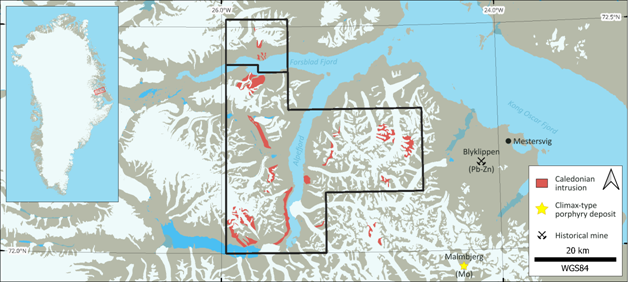
Figure 1: Location map of new Eleonore North licences in East Greenland with prospective Caledonian intrusions.
HIGHLIGHTS
· Multiple intrusion-related gold targets identified in two new licences covering ~1,600 km². The Company has been exploring the Eleonore North Project for reduced intrusion-related gold systems (RIRGS) since 2024. These new licences build on a growing understanding of this deposit style in this region and secures prospective Caledonian intrusions untested by the RIRGS model.
· Gold assays up to 50 g/t previously reported. Gold-mineralised boulders and quartz veins hosted in granitic intrusions were found in 1975. After a brief site visit in 1983, detailed gold‑scheelite exploration was recommended, but none took place.
· Anomalous gold, silver, tungsten, and arsenic in regional sediment sampling corresponds to target intrusions. Caledonian intrusions and adjacent strata are shedding mineralised material into local streams. Despite strong results from the historic stream sediment sampling program, follow-up gold exploration never took place.
· Extensive evidence of tungsten mineralisation in the form of scheelite from stream sediment sampling. Tungsten is one of the foremost defence materials, widely used in high-strength applications and in armour-piercing ammunition. Tungsten is designated as a strategic raw material by the EU and a critical mineral by the US.
· Fieldwork is now complete, with first results expected this quarter. Reconnaissance sampling and mapping have tested the RIRGS model over the Caledonian intrusions within the new licences. This fieldwork was run in conjunction with exploration at the existing Eleonore North licences (refer to announcement dated 22 July 2026).
· 160 km-long mineralised structural corridor. 60 km to the southeast of the licenced Caledonian intrusions, the Malmbjerg Climax-type molybdenum porphyry deposit straddles the same fault system. 100 km to the north, the structural system passes through the Company’s other licences which host the North Margeries Sb-W and South Margeries W historical deposits and the Noa Pluton Sb-Au-W prospect.
GreenX CEO, Mr Ben Stoikovich, commented: “Securing 1,600 km² of new gold and critical minerals tenure takes our Eleonore North portfolio to approximately 2,100 km² across four licences and gives us exclusive rights to a suite of Caledonian intrusions that have never been tested against the reduced intrusion-related gold model. Documented gold and scheelite anomalism have sat in the public record here since the 1980s without follow-up. We have teams on the ground testing these intrusions this season, with a clear and disciplined program of work through 2026.”
HISTORICAL GOLD RESULTS
In 1975, Nordisk Mineselskab A/S (Nordmine) collected gold-mineralised boulders and veins from the area now covered by the new licences (Table 1). Follow-up exploration involved stream sediment sampling throughout the region in 1979 and 1980. Heavy mineral concentrates from the earlier surveys were analysed in 1983. Gold, scheelite, and other indicator elements were detected within the licence areas. In 1983, geologists visited the site and recommended detailed follow-up exploration for gold and scheelite; however, no further exploration was conducted. Nordmine held an exclusive mineral licence covering 100,000 km2 in East Greenland until its liquidation in 1992.
|
Sample # |
Au (g/t) |
Company |
Longitude |
Latitude |
Year |
|
7512078/5 |
50 |
Nordmine |
-25.79437 |
72.43450 |
1975 |
|
8313013/B |
26 |
Nordmine |
-25.80941 |
72.44610 |
1983 |
|
7505590 |
12.7 |
Nordmine |
-25.81334 |
72.43415 |
1975 |
|
8313011/D |
5.4 |
Nordmine |
-25.80574 |
72.44088 |
1983 |
|
8313012/A |
4.6 |
Nordmine |
-25.80448 |
72.44385 |
1983 |
|
7910508 |
2.0 |
Nordmine |
-25.69453 |
72.44298 |
1979 |
Table 1: Selected historical grab sample results sourced from a publicly available Greenland government database.
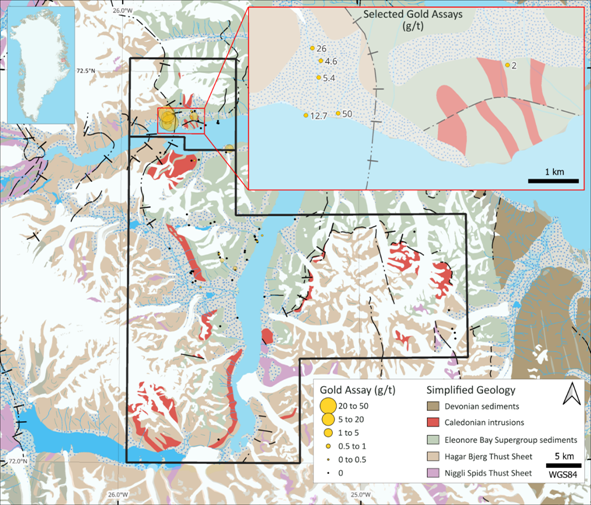
Figure 2: Simplified geological map with historical Nordmine grab sample gold results. The inset map shows the location of selected historical high-grade grab samples from Table 1. All results are available in Appendix 1.
Geology – GOLD AND CRITICAL MINERALS POTENTIAL
The geological setting of the area is characterised by gneissic basement rocks and Proterozoic metasediments (Figure 2), separated by a major north-south thrust fault extending for 400 km (Figure 4). Thrusting and folding during the Caledonian orogeny juxtaposed the different rock packages. This major structure likely provided conduits for magma and later mineralised fluids. Caledonian intrusions are today found adjacent to fault zones in Eleonore Bay Supergroup sediments.
RIRGS deposits feature a geochemical zonation that changes with distance from the causative intrusion. Metal enrichments proximal to gold mineralisation typically include tungsten (W) and antimony (Sb). Geochemical signatures distal to gold mineralisation include enrichments in silver (Ag), copper (Cu), lead (Pb), and zinc (Zn). At the regional scale, arsenic (As) is a useful indicator for vectoring towards RIRGS-mineralised intrusions.
Regional stream sediment sampling included panning for heavy mineral concentrates. Analysis of the concentrate included counting grains of the tungsten-bearing mineral, scheelite. Figure 3 below shows the scheelite grain count in panned heavy mineral concentrates. There is a strong association between the Caledonian granites and high scheelite grain counts. The spatial association also applies to Au, Ag, Cu, Pb, Zn, and As in panned heavy mineral concentrates.
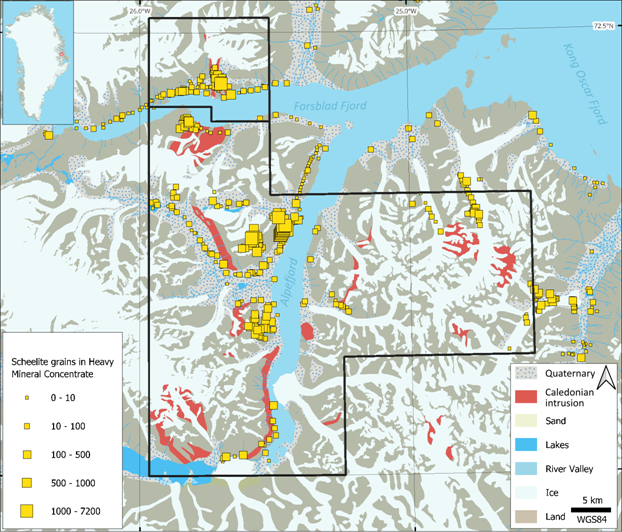
Figure 3: Scheelite grain count in historical panned heavy mineral concentrate samples.
CRITICAL MINERALS
Tungsten is designated as a Strategic Raw Material by the EU and a critical raw mineral by the US. Tungsten is one of the foremost defence materials, widely used in high-strength applications and ammunition. It is also suitable for high-temperature applications, such as supersonic and hypersonic vehicles. Tungsten’s density makes it ideal for armour-piercing ammunition and counterweights in spacecraft. Commercially, it is mainly used when high strength is required, such as for cutting and construction tools. Global strategic interest in tungsten increased significantly in February 2025, when China announced sweeping export controls targeting tungsten and four other metals used across defence, clean energy and other industries. China’s export controls were announced minutes after an additional 10% tariff on Chinese goods imposed by the U.S. President came into effect.
About 90% of global tungsten comes from Russia, China and North Korea, with China alone accounting for about 80% of the world’s tungsten output. The US has not had domestic tungsten production since 2015.
Work Programs
GreenX’s land tenure at Eleonore North now includes four licences (Figure 4). Prior to the summer fieldwork, the Company re-logged and re-assayed archive drill core from the historical North Margeries Sb-W and South Margeries W deposits. Additionally, historical airborne hyperspectral survey data covering the Margeries deposits was reprocessed (refer to announcement dated 14 May 2026). That data provided new targets which were visited during the field season. Results from the July 2026 fieldwork are expected in the coming months.
Table 2: Summary of work at each Eleonore North licence.
|
Licence Code |
Target |
2026 Work Program |
|
MEL-S 2026-120 & MEL 2026-124 |
Caledonian Intrusions |
· Reconnaissance sampling and mapping at target intrusions (July 2026). |
|
MEL 2023-39 |
Noa Pluton |
· Sampling and mapping at the Noa Pluton Sb-Au-W prospect (July 2026). |
|
MEL 2018-19 |
North and South Margeries |
· Bulk sampling Sb and W material from the Margeries deposits for sighter metallurgical test work (July 2026). · Re-processing airborne hyperspectral survey data (May 2026). · Core re-logging and re-sampling (May 2026). |
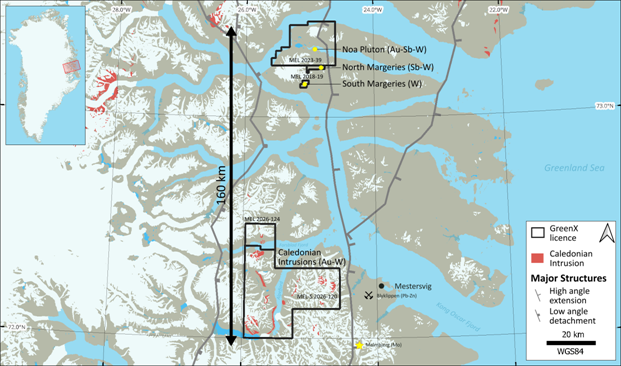
Figure 4: GreenX’s Eleonore North Project now comprises a portfolio of four exploration licences in East Greenland.
ISSUE OF SHARES
In accordance with the revised commercial terms of the option agreement under which GreenX acquired the Eleonore North Project (refer to announcement dated 15 July 2024), the grant of exploration licence MEL 2026-124 requires GreenX to issue the original vendor of Eleonore North GreenX shares with a value of A$250,000, calculated using the five-trading-day VWAP prior to the date of this announcement.
ENQUIRIES
|
Ben Stoikovich Chief Executive Officer
+44 207 478 3900 |
Kazimierz Chojna Investor Relations – Poland
Kim Eckhof Investor Relations – UK / Germany |
GreenX Metals #GRX – 2026 Fieldwork Underway At Eleonore North

GreenX Metals Limited (ASX:GRX, LSE:GRX, GPW:GRX, Germany-FSE:A3C9JR) (GreenX or the Company) is pleased to announce that fieldwork has commenced at its Eleonore North project in East Greenland (Eleonore North or Project). The exploration program is targeting gold (Au), tungsten (W), and antimony (Sb).
HIGHLIGHTS
· Active exploration underway at the Eleonore North Project, located in East Greenland. The field team are following up high-priority gold, tungsten, and antimony targets, including known prospects and newly generated targets.
· A Reduced Intrusion-related Gold System specialist will evaluate the Noa Pluton prospect as well as untested targets.
· Bulk sampling of tungsten and antimony-mineralised material at North and South Margeries deposits is expected to support scoping study level metallurgical sighter test work.
· Archive core from North and South Margeries deposits was sampled prior to fieldwork commencing and is currently being assayed, with results expected in the coming months.
· Tungsten and antimony are both listed as critical raw materials by the European Union and the United States, with global supply heavily concentrated in China; the Eleonore North Project hosts high-grade occurrences of both in a stable Western jurisdiction.
GreenX’s Chief Executive Officer, Mr Ben Stoikovich, commented: “Greenland is an exciting frontier for GreenX, and this program advances a portfolio of gold, tungsten and antimony targets that has seen very little modern exploration.
Tungsten and antimony are critical raw materials for both the European Union and the United States, and Eleonore North gives us high-grade occurrences of both in a stable Western jurisdiction at a time when supply is heavily concentrated in China. Importantly, the tungsten and antimony mineralisation has a surface expression, which allows us to make rapid progress in expanding the known mineralisation and generating additional targets.
This year we are in the field to advance our existing prospects, including the Noa Pluton gold-antimony target and the North and South Margeries deposits. At the same time, our growing understanding of intrusion-related gold systems in the region has enabled us to identify a number of new targets.”
|
|
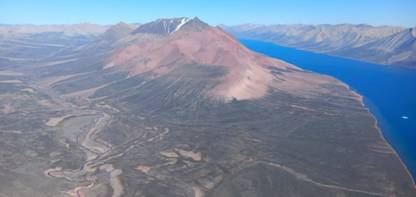
Photo 1: Helicopter view of southern Ymer Island en route to Eleonore North.
|
|
|
Photo 2: Field team at South Margeries (W). |
|
|
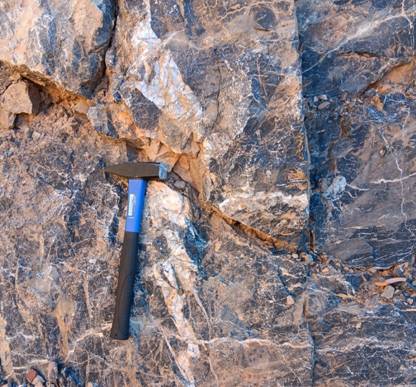
Photo 3: Vein mineralisation at North Margeries (Sb-W).
In relation to the disclosure of visual information and rock chip descriptions, the Company cautions that the images displayed are for general illustrative purposes only, and that the samples displayed, and visual methods of any visible mineral identification and estimation of mineral abundance should not be considered as a proxy for laboratory analysis, and that laboratory analysis is required to determine the grades of the rock chip samples. Visual information also potentially provides no information regarding impurities or deleterious physical properties relevant to valuations. The rock chip samples are point samples (typically 5-15cm in diameter) taken in the field and do not represent true trends or widths of mineralisation. The Company will update the market when the laboratory samples are received. |

Summer Work PROGRAM
Fieldwork at the Eleonore North Project this year covers multiple objectives. At Noa Pluton, a Reduced Intrusion-related Gold System (RIRGS) specialist will conduct mapping and sampling to evaluate antimony and intrusion-related gold potential, and identify potential drill targets. At both North (Sb-W) and South Margeries (W), the team will collect 50 kg to 100 kg bulk samples of mineralised material for scoping study level sighter test work. Recent hyperspectral analysis and prospectivity mapping have also highlighted alteration anomalies along strike and adjacent to both deposits (refer to announcement dated 14 May 2026). These untested hyperspectral anomalies have the potential to be satellite discoveries.
The field team will also visit newly generated RIRGS targets in the broader region for reconnaissance style prospecting, as approved by the Greenland Mineral Resource Authority.
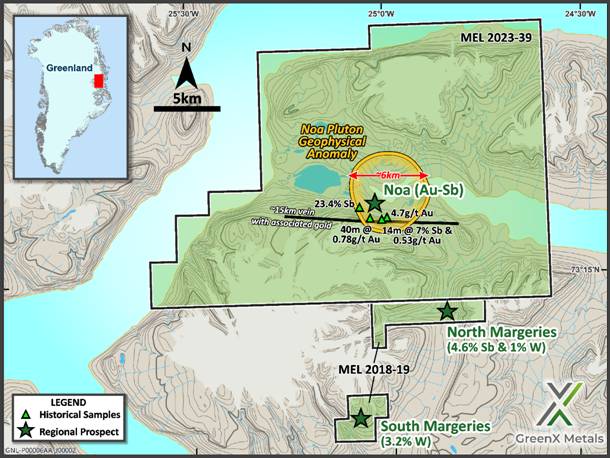
Figure 1: Summer fieldwork is taking place at the Eleonore North licence package on Ymer Island, East Greenland.
Next Steps
North and South Margeries
Rock samples collected during the program will be sent for multi-element analysis while bulk material will undergo metallurgical sighter test work. This test work is designed to provide scoping study level insights into the metallurgy and processing characteristics. Extensional and infill drilling could be warranted if the sighter test work is positive, particularly if the hyperspectral anomalies previously identified along strike are confirmed as antimony and tungsten mineralisation.
All results are expected in the coming months.
Noa Pluton
Results from Noa Pluton will be evaluated by our RIRGS specialist with additional gold and antimony sampling to form the basis for follow-up exploration programs, including the potential to identify drill targets for future field seasons.
ENQUIRIES
|
Ben Stoikovich Chief Executive Officer |
Kazimierz Chojna Investor Relations – Poland
|
|
+44 207 478 3900 ir@greenxmetals.com |
Kim Eckhof Investor Relations – UK/Germany
|
Forward Looking Statements
This release may include forward-looking statements, which may be identified by words such as “expects”, “anticipates”, “believes”, “projects”, “plans”, and similar expressions. These forward-looking statements are based on GreenX’s expectations and beliefs concerning future events. Forward looking statements are necessarily subject to risks, uncertainties and other factors, many of which are outside the control of GreenX, which could cause actual results to differ materially from such statements. There can be no assurance that forward-looking statements will prove to be correct. GreenX makes no undertaking to subsequently update or revise the forward-looking statements made in this release, to reflect the circumstances or events after the date of that release.
Competent Persons Statement
The information in this report that relates to previous exploration results were extracted from the ASX announcements dated 15 July 2024 and 27 November 2024, which are available to view at www.greenxmetals.com. GreenX confirms that (a) it is not aware of any new information or data that materially affects the information included in the original announcements; (b) all material assumptions and technical parameters underpinning the content in the relevant announcements continue to apply and have not materially changed; and (c) the form and context in which the Competent Person’s findings are presented have not been materially modified from the original announcements
GreenX Metals #GRX – Exploration Target highlights potential for large-scale copper-silver project in Germany

GreenX Metals Limited (ASX:GRX, LSE:GRX, GPW:GRX, Germany-FSE:A3C9JR) (GreenX or the Company) is pleased to announce an Exploration Target at the Tannenberg Copper Project (Tannenberg or the Project), in Germany. The estimated range of potential mineralisation in the Exploration Target is: 144 – 279 Mt at 0.9% – 1.4% Cu and 15 – 21 g/t Ag for 1.3 – 3.9 Mt Cu and 69 – 188 Moz Ag.
HIGHLIGHTS
· Exploration Target demonstrates potential for globally significant copper endowment at Tannenberg Copper Project, Germany.
· Exploration Target captures hanging wall and footwall mineralisation above and below the Kupferschiefer shale: a modern view of the deposit that the 1940 historical estimate did not contemplate.
· Validated by Kupferschiefer mining in Poland, where up to 95% of mineable copper at KGHM Polska Miedź S.A’s operations is hosted in the same footwall sandstone and hanging wall limestone units that host the Tannenberg Exploration Target.
· Built on validated historical foundations: Exploration Target builds on the 1940 National Socialist historical estimate area; the 1984 St Joe historical estimate; validation via resampling and logging of 1980’s core by GreenX and digitised archive material collected since August 2024.
· An inflection point for the Project: With the Exploration Target estimated, GreenX now transitions from archive synthesis to active exploration, including accessing historical underground mines for Scoping Study-level metallurgical test work, seismic survey evaluation and commencement of an initial drill program.
Cautionary Statement: The Exploration Target has been reported in accordance with the 2012 edition of the JORC Code (JORC Code). The potential quantity and grade of the Exploration Target is conceptual in nature. There has been insufficient exploration to estimate a Mineral Resource for the reported target areas. It is uncertain if further exploration will result in the estimation of a Mineral Resource.
|
Table 1: Exploration Target for Tannenberg |
|||||
|
Prospect |
Tonnes Range |
Cu Grade Range |
Ag Grade Range |
Contained Cu Range |
Contained Ag Range |
|
Zone 1 |
8 to 16 Mt |
0.9 to 1.4% Cu |
15 to 21 g/t Ag |
0.1 to 0.2 Mt Cu |
3.9 to 10.8 Moz Ag |
|
Zone 2 |
40 to 78 Mt |
0.4 to 1.1 Mt Cu |
19.3 to 52.7 Moz Ag |
||
|
Zone 3 |
96 to 186 Mt |
0.9 to 2.6 Mt Cu |
46.3 to 125.6 Moz Ag |
||
|
Total |
144 to 279 Mt |
1.3 to 3.9 Mt Cu |
69.4 to 188.4 Moz Ag |
||
GreenX’s Chief Executive Officer, Mr Ben Stoikovich, commented: “Today’s Exploration Target at Tannenberg is a result of 18 months of archive data search and synthesis. It also marks an inflection point where we transition from searching for archive data to ramping up our own exploration programs. The modern understanding of the Kupferschiefer system, demonstrated by the scale of Kupferschiefer mining operations in Poland today, shows that economic copper mineralisation extends well beyond the thin shale horizon that historical German exploration focused on. The size of the potential copper endowment at Tannenberg in Hessen, Germany, in the same geological formation of the world-class Polish deposits, justifies continued investment and exploration”.
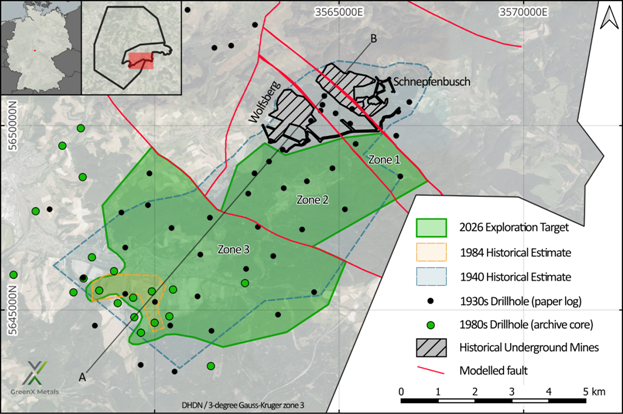
Figure 1: Outline of the Exploration target and its relationship to previous historical estimates and historical underground mining operations at Tannenberg. Section A-B is shown in Figure 4.
EXPLORATION TARGET
The Exploration Target provides a modern view of the copper potential at Tannenberg. Unlike the 1940 Historical Estimate, which assessed only the thin Kupferschiefer shale horizon (refer to announcement dated 20 October 2025), the Exploration Target captures mineralisation in the hanging wall above and footwall below the shale. This is consistent with the modern understanding of Kupferschiefer deposits as evidenced at KGHM Polska Miedź S.A’s (KGHM) mining operations in Poland. The sections below set out the historical foundations, the modern thickness model and the supporting work that underpin the Exploration Target.
Cautionary Statement: The Exploration Target has been reported in accordance with the JORC Code. The potential quantity and grade of the Exploration Target is conceptual in nature. There has been insufficient exploration to estimate a Mineral Resource for the reported target areas. It is uncertain if further exploration will result in the estimation of a Mineral Resource.
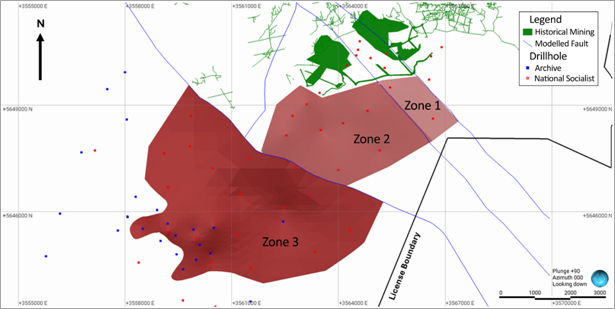
Figure 2: Top-down view of the Exploration Target wireframe at Tannenberg.
From historical mining district to Exploration Target
The Tannenberg Project has a long-documented history of drilling, mining, and estimation work, providing well-defined and historically validated copper-silver mineralisation that underpins today’s Exploration Target.
A 95-hole drilling campaign was completed by the National Socialist Government between 1935 and 1938 across the Richelsdorf Mining District. This dataset formed the geological basis for the construction of three Kupferschiefer copper mines within the Tannenberg licence area, Reichenberg, Wolfsberg and Schnepfenbusch. These mines operated between the late 1930’s and in some cases up to the mid 1950’s. GreenX has digitised and integrated this drillhole database into its geological models (refer to announcement dated 11 September 2025).
The 1940 historical estimate, produced by Mansfeldsche Kupferschieferbergbau AG (Mansfeld AG), is based on a spatially relevant subset of 18 holes from the 95-hole database and established 728,000 tonnes of contained copper* at an average grade of 2.6% copper (in the narrow Kupferschiefer shale only) between the Wolfsberg and Schnepfenbusch mines in the north and the Ronshausen area in the south (see Figure 1). The historical estimate covers mineralisation from a depth of 100 m in the north to 400 m in the southern end area near Ronshausen (refer to announcement dated 20 October 2025).
A later historical estimate from 1984 was produced by St Joe Explorations GmbH (St Joe), based on limited drilling between 1980 and 1984 (refer to announcements dated 2 August 2024 and 28 April 2025). The St Joe historical work estimated (20 October 2025) 169,000 tonnes of contained copper and 6.5 million ounces of contained silver within the small section of zone 3. St Joe assayed wider intersections and found that the mineralisation was up to 3.45 m thick. This is considerably thicker than the narrow Kupferschiefer shale assayed and estimated by Mansfeld AG in 1940. St Joe provided the first modern indication that economic mineralisation extends beyond the Kupferschiefer shale itself.
Cautionary statement for historical estimates: The historical estimates referenced in this announcement are not reported in accordance with the JORC Code. A competent person has not done sufficient work to classify the historical estimates as a mineral resource or ore reserve in accordance with the JORC Code. It is uncertain that following evaluation and/or further exploration work that the historical estimates will be able to be reported as a mineral resource or ore reserve in accordance with the JORC Code.
Modern thickness model
The modern understanding of the Kupferschiefer deposit model, as evidenced at KGHM’s Polish mining operations on the same geological setting as Tannenberg, shows that up to 95% of mineable copper can be hosted in the footwall sandstone and hanging wall limestone, with mineralisation often occurring up to 30 m above and 60 m below the Kupferschiefer shale horizon.
Applying the thick mineralisation concept to the historically defined Tannenberg footprint produces a statistically-derived mineralised thickness of 1.7 m – 3.3 m, compared with the 20 cm – 60 cm (shale-only) thickness used in the 1940 historical estimate. The 1.7 m – 3.3 m thickness is consistent with the wider intercepts confirmed by St Joe in the 1980s and has now been independently validated by GreenX’s resampling of available archived core.
COMPLETION OF ARCHIVE CORE logging and sampling
After relogging a total of 4,389 m of archived core and taking 2,368 new samples, GreenX has now brought its work on the archived core to a close. This program was initiated after the discovery that drill core had been retained in the archives of the Hessisches Landesamt für Naturschutz, Umwelt und Geologie (HLNUG) for over 40 years since drilling. This new logging and sampling has been conducted in accordance with industry standard practices and has facilitated the estimation of the Exploration Target ranges. In addition to the validation of the historical copper and silver grades around the historical mining areas (see announcement date 20 November 2025), the data has demonstrated that the copper and silver mineralisation persists many kilometres away from the historical copper mines (Wolfsberg, Schnepfenbusch, and Reichenberg).
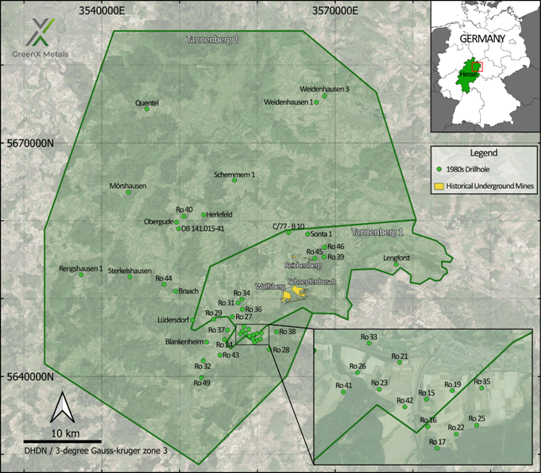
Figure 3: Location map of 1980s Archive drillholes recently logged and assayed by GreenX.
Upcoming and ONGOING Work Programs
GreenX is advancing a coordinated suite of exploration activities which will test the validity of the Exploration Target identified at Tannenberg, including:
· Mineralogical and desktop metallurgical analysis of material collected from archive core – Q2 2026;
· Accessing historical underground mines for scoping study-level metallurgical test work, chip sampling, as well as mapping and surveying for 3D modelling – 2H 2026;
· Collation and digitisation of historical geological, mine development, and production data – ongoing;
· Analysis of the use of seismic surveys to aid future drilling campaigns including collecting petrophysical measurements for seismic forward modelling – Q2 2026;
· Seismic survey, if appropriate – commencement H2 2026; and
· Initial drill program – commencement late 2026.
Exploration target: Drillhole database audit and verification
GreenX logged, sampled, and assayed available archive core at Tannenberg (Archive). The work was done by Palsatech in a specialist logging facility in Sweden. MSA Mining Consulting UK Ltd’s (MSA-UK) independent competent person visited the facility while Archive core was being processed. All intercepts with significant Cu-Ag mineralisation were drilled by St Joe’s during their 1980s exploration drilling.
The 1930s National Socialist drillhole database was compiled by GreenX geologists, transcribed from hard copy, historical records. An independent audit and verification of the data against these records was not undertaken by MSA-UK. Given that the intention is to declare an Exploration Target, this is not considered a material risk by MSA-UK.
Data validation was undertaken during the import routine in the form of correcting issues such as from/to errors and preparing the data in a format that can readily be imported into three-dimensional modelling software.
Exploration target: Geological Modelling
A geological model was constructed in Leapfrog Geo. Although a number of mapped faults cross the area, only five, relevant fault structures were considered in the model (Figure 1). Four stratigraphic units, namely the Basement, Rotliegend, Zechstein and Buntsandstein were modelled. Due its narrowness and the lateral scale of the model, which spans several kilometres, the Kupferschiefer layer was modelled only as the contact between the Rotliegend and Zechstein. Displacement by faulting is data driven, where the relative position of the stratigraphic units on either side of the fault determines the vertical displacement (Figure 4).
A conceptual mineralisation model was constructed from the drillhole data using a threshold value of 0.30 % Cu. This value was based on the log-probability plot for the combined dataset (Figure 5), which shows a break in the grade population around this threshold. This is a reasonable value, as it incorporates mineralisation in the footwall Rotliegend, the Kupferschiefer and the hanging wall Zechstein.
In addition to the grade threshold, a minimum thickness of 1.5 m was applied during the modelling process, based on regulation and practise at copper mines in Poland Where necessary, low-grade samples falling below the threshold were incorporated into the mineralised zone to achieve the minimum thickness, provided the full composite grade satisfied the threshold value. Due to the sampling bias in the National Socialist dataset, only data generated from 1980s era drilling was used to constrain the thickness of the mineralisation model.
However, the National Socialist data was used to infer lateral continuity of the mineralisation. In order to not overstate tonnages, the mineralisation was truncated against the modelled faults, extrapolated no more than 500 metres beyond the data and limited within the Tannenberg license boundary. Furthermore, mined out areas where discounted from the mineralisation model.
Three areas were considered, a larger area to the southwest, Zone 3, where the model is informed by a combination of Archive and National Socialist data and two smaller areas across fault boundaries towards the northeast, Zone 1 and Zone 2, as shown in Figures 1 and 2.
Zone 3 has an areal extent of approximately 6 km by 3.5 km. The mineralisation thins out towards the southwest and northwest where drillholes tend to have low-grade copper intercepts that do not meet the minimum thickness criteria, therefore being excluded from the model. Towards the northeast, the mineralisation terminates against a northwest-southeast running fault. Zone 2 is located adjacent to Zone 3 on the northeast side of the bounding fault, with an extent of 3.1 km in the northwest to southeast direction and 2.8 km in the northeast direction. Zone 1 is narrow, bound by two parallel faults and has an areal extent of 1.8 km by 900 m. Both Zones 1 and 2 have been restricted in extent from known mined out areas to the north.
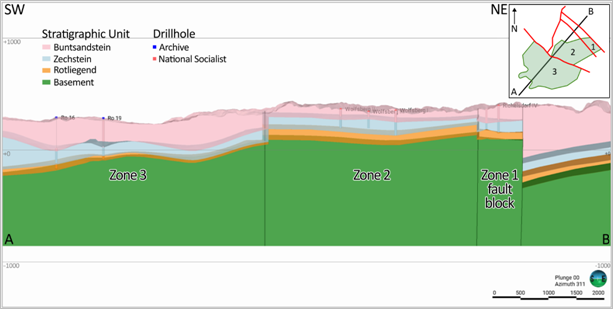
Figure 4: Pseudo 3D cross section of modelled stratigraphic units and zones of the Exploration Target estimate. Section (A-B) is also shown in Figure 1. Modified from MSA-UK.
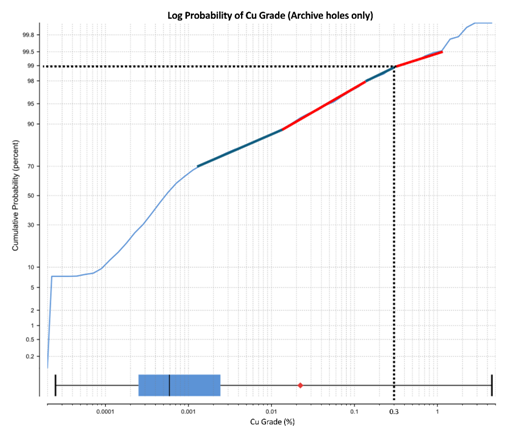
Figure 5: Log probability plot of the copper grades from Archive database. Modified from MSA-UK
Exploration target: GRADE AND THICKNESS ESTIMATION
As per the requirements for declaring an Exploration Target, grade and tonnages need to be expressed in ranges. The lateral extent of the mineralised zones is restricted by structural features and the license boundary, with little room for extrapolation. Therefore, tonnage ranges are given by assuming a variable thickness of the mineralised zones, which is supported by the dataset. Only the Archive data was used to derive grade and thickness ranges as it provides a complete vertical profile through the mineralised zone. Samples captured within the Zone 3 mineralised area were selected and composited to full thickness, resulting in ten composite samples. Full thickness composites were used to derive both grade and thickness ranges for the Exploration Target because this approach minimises the variability of the smaller sample intervals, thus reducing sampling bias and avoiding artificially inflated grades when estimating grade ranges. An additional drillhole, Ro 45, located to the north outside of the area of interest was also used to supplement the data. This hole was included as it is the only Archive drillhole outside of the modelled area that meets the minimum criteria and was incorporated to support the statistical analysis given the limited number of available data points. The remaining Archive holes were not considered as they fall outside the modelled extents of the mineralisation.
The list of drillholes, copper and silver grades and accumulated grades are shown in Table 2 below.
|
Table 2: List of full thickness composites for grade and thickness estimation |
|||||||
|
Hole ID |
From |
To |
Thickness (m) |
Cu (%) |
Ag (g/t) |
Accumulated Copper Grade Cu % per metre |
Accumulated Silver Grade Ag g/t per metre |
|
Ro 15 |
285.6 |
289.3 |
3.7 |
1.19 |
16.6 |
4.41 |
61.5 |
|
Ro 17 |
481.25 |
483 |
1.75 |
0.89 |
18.2 |
1.56 |
31.9 |
|
Ro 18 |
209 |
210.76 |
1.76 |
3.00 |
28.7 |
5.28 |
50.6 |
|
Ro 19 |
339 |
342 |
3 |
1.38 |
16.2 |
4.13 |
48.5 |
|
Ro 20 |
377 |
378.68 |
1.68 |
1.33 |
14.6 |
2.24 |
24.5 |
|
Ro 22 |
435.76 |
439.4 |
3.64 |
0.94 |
16.0 |
3.43 |
58.1 |
|
Ro 23 |
366 |
367.5 |
1.5 |
2.69 |
55.3 |
4.04 |
83.0 |
|
Ro 25 |
533.38 |
534.89 |
1.51 |
1.32 |
27.9 |
2.00 |
42.2 |
|
Ro 35 |
379.15 |
381 |
1.85 |
0.35 |
10.5 |
0.65 |
19.5 |
|
Ro 38 |
536.25 |
539.5 |
3.25 |
0.56 |
11.4 |
1.83 |
37.2 |
|
Ro 45 |
268.34 |
270.37 |
2.03 |
1.62 |
20.5 |
3.29 |
41.7 |
|
Source: MSA-UK |
|||||||
Statistics were derived for the length-weighted copper and silver grades and composite sample lengths as shown in Table 3.
|
Table 3: Summary statistics of mineralised drillhole composites |
|||||||
|
Variable |
Minimum |
Maximum |
Mean |
Median |
Lower Quartile |
Upper Quartile |
Coefficient of Variation |
|
Thickness (m) |
1.50 |
3.70 |
2.33 |
3.00 |
1.68 |
3.25 |
0.37 |
|
Cu grade (%) |
0.35 |
3.00 |
1.28 |
1.19 |
0.89 |
1.38 |
0.63 |
|
Ag grade (g/t) |
10.5 |
55.3 |
19.4 |
16.2 |
14.6 |
20.5 |
0.65 |
|
Source: MSA-UK |
|||||||
An attempt was made to derive grade and thickness ranges using a two-sided confidence interval method on the dataset however this statistical approach resulted in very narrow ranges which are not representative of the inherent variability of the data. Therefore, the interquartile range (IQR) was used instead to define the lower and upper grade and thickness ranges. In this case, the IQR is considered appropriate for this small dataset, as it provides a measure of dispersion around the median, thus reducing the influence of grade and thickness outliers. The resultant ranges are therefore a more realistic representation of the dataset (Table 4).
|
Table 4: Exploration Target lower and upper ranges for grade and thickness |
||
|
Variable |
Lower Range |
Upper Range |
|
Thickness (m) |
1.7 |
3.3 |
|
Cu (%) |
0.9 |
1.4 |
|
Ag (g/t) |
15 |
21 |
|
Source: MSA-UK Note: Grade and thickness ranges rounded to one decimal place to reflect this is an estimate |
||
Density data is not currently available for the project, therefore average densities were sourced from available literature (Taylor, R.D and Anderson, E.D., 2010). An assumption was made for a three metre thick mineable width with the Kupferschiefer shale representing 0.40 m of the total thickness, while the Zechstein and Rotliegend have assumed thicknesses of 1.30 m. Average densities were assigned as shown in Table 5.
|
Table 5: Assumed average densities per stratigraphic unit |
|||
|
Stratigraphic Unit |
Rock Type |
Thickness (m) |
Density (t/m3) |
|
Zechstein |
Limestone |
1.30 |
2.75 |
|
Kupferschiefer |
Shale |
0.40 |
2.40 |
|
Rotliegend |
Sandstone |
1.30 |
2.55 |
|
Source: Taylor, R.D and Anderson, E.D., 2010 |
|||
A weighted, average relative density for the three-metre-thick mineralised zone is calculated as 2.62 t/m3.
Exploration target: ESTIMATION
According to the JORC Code, an Exploration Target is “a statement or estimate of the exploration potential of a mineral deposit in a defined geological setting where the statement or estimate, quoted as a range of tonnes and a range of grade (or quality), relates to mineralisation for which there has been insufficient exploration to estimate a Mineral Resource”. The code states that the terms “Resource” and “Reserves” must not be used in this context to refer to the potential quantity and grade of the target.
The base case for the mineralisation is based on the areal extent of copper mineralisation, above a threshold of 0.30 % Cu, that meets a minimum thickness criteria of 1.50 m. Surfaces created in Leapfrog Geo were used to model lateral continuity of the mineralised zones and derive areas for three zones. Thickness ranges were derived from the Archive data and using an assumed average density of 2.62 t/m3, lower and upper ranges of tonnages were calculated as shown in Table 6.
|
Table 6: Tonnage ranges for each zone |
||||||
|
Zone |
Area (m2) |
Thickness (m) |
Density (t/m3) |
Tonnage (Mt) |
||
|
Lower |
Upper |
Lower |
Upper |
|||
|
Zone 1 |
1,800,000 |
1.7 |
3.3 |
2.62 |
8 |
16 |
|
Zone 2 |
9,000,000 |
40 |
78 |
|||
|
Zone 3 |
21,500,000 |
96 |
186 |
|||
|
Total |
43,000,000 |
144 |
279 |
|||
|
Source: MSA-UK. Note: m2 = square metres; m = metres; t/m3 = tonnes per cubed metre; Mt = Million Tonnes Areas are rounded to the nearest 100,000 m2 to reflect this is an estimate Tonnages are rounded to the nearest 1,000,000 tonne to reflect this is an estimate Grade and thickness ranges rounded to one decimal place to reflect this is an estimate |
||||||
Full thickness composite grade data was used to derive grade ranges for copper, with the estimated contained copper ranges shown in Table 7.
|
Table 7: Copper grade and contained metal ranges for each Zone |
||||||
|
Zone |
Tonnage (Mt) |
Cu Grade (%) |
Contained Cu (Mt) |
|||
|
Lower |
Upper |
Lower |
Upper |
Lower |
Upper |
|
|
Zone 1 |
8 |
16 |
0.9 |
1.4 |
0.1 |
0.2 |
|
Zone 2 |
40 |
78 |
0.4 |
1.1 |
||
|
Zone 3 |
96 |
186 |
0.9 |
2.6 |
||
|
Total |
144 |
279 |
1.3 |
3.9 |
||
|
Source: MSA-UK Note: Mt = Million Tonnes. Tonnages are rounded to the nearest 1,000,000 tonne to reflect this is an estimate Grade and thickness ranges rounded to one decimal place to reflect this is an estimate |
||||||
Similarly, silver grade ranges were used to derive contained silver lower and upper scenarios for each zone as shown in Table 8.
|
Table 8: Silver grade and contained metal ranges for each Zone |
||||||
|
Zone |
Tonnage (Mt) |
Ag Grade (g/t) |
Contained Ag (Moz) |
|||
|
Lower |
Upper |
Lower |
Upper |
Lower |
Upper |
|
|
Zone 1 |
8 |
16 |
15 |
21 |
3.9 |
10.8 |
|
Zone 2 |
40 |
78 |
19.3 |
52.7 |
||
|
Zone 3 |
96 |
186 |
46.3 |
125.6 |
||
|
Total |
144 |
279 |
69.4 |
188.4 |
||
|
Source: MSA-UK Note: Mt = Million Tonnes; Moz – million troy ounces g/t – gram per metric tonne; Tonnages are rounded to the nearest 1,000,000 tonne to reflect this is an estimate Ounces are rounded to the nearest 100,000 troy ounce to reflect this is an estimate Grade and thickness ranges rounded to one decimal place to reflect this is an estimate 1 troy ounce (oz) = 31.1034768 grams |
||||||
The Exploration Target for the combined Tannenberg mineralisation is shown in Table 9. As per the JORC Code, it must be stated that the potential quantity and grade of the Exploration Targets are conceptual in nature, that there has been insufficient exploration to estimate Mineral Resources and that it is uncertain if further exploration will result in the estimation of Mineral Resources.
|
Table 9: Tannenberg Combined Exploration Target |
|||||||||
|
Tonnages (Mt) |
Cu (%) |
Ag (g/t) |
Contained Cu (Mt) |
Contained Ag (Moz) |
|||||
|
Lower |
Upper |
Lower |
Upper |
Lower |
Upper |
Lower |
Upper |
Lower |
Upper |
|
144 |
279 |
0.9 |
1.4 |
15 |
21 |
1.3 |
3.9 |
69.4 |
188.4 |
|
Source: MSA-UK. Note: Mt = Million Tonnes; Moz – million troy ounces; g/t – gram per metric tonne; Tonnages are rounded to the nearest 1,000,000 tonne to reflect this is an estimate Contained copper and silver ounces are rounded to the nearest 100,000 troy ounce to reflect this is an estimate Grade and thickness ranges rounded to one decimal place to reflect this is an estimate 1 troy ounce (oz) = 31.1034768 grams |
|||||||||
INCENTIVE SECURITIES
In order to incentivise management and align their interests with shareholders, the Company will issue incentive options which will only vest if the following project milestone at Tannenberg is achieved:
· Class C: the public announcement by GreenX of an independently assessed JORC Code inferred resource of at least 1,500,000 tonnes of contained copper equivalent at a minimum resource grade of 1% Cu Equivalent** (or equivalent, with a cut-off grade of 0.3% Cu equivalent).
|
Holder |
Class C |
|
Mr Benjamin Stoikovich (subject to shareholder approval) |
1,500,000 |
|
Mr Mark Pearce (subject to shareholder approval) |
600,000 |
|
Other key employees and consultants (to be issued under the Company’s shareholder approved equity incentive plan) |
5,600,000 |
**Cu Equivalent means any combination of Cu, Ag, Ni, Co, Cr, Pt, Pd, Au, Rh, Ru, Ir, Os, Zn and/or Pb.
ENQUIRIES
|
Ben Stoikovich Chief Executive Officer |
Kazimierz Chojna Investor Relations – Poland
|
|
+44 207 478 3900 ir@greenxmetals.com |
Kim Eckhof Investor Relations – UK/Germany |
GreenX Metals #GRX – Targeting Gold, Tungsten & Antimony at Eleonore North Project in Greenland
GreenX Metals Limited (ASX:GRX, LSE:GRX, GPW:GRX, Germany-FSE:A3C9JR) (GreenX or Company) is pleased to announce that following an extensive analysis of new and existing exploration data for the Eleonore North Project (ELN or Eleonore North) in Greenland since July 2024, GreenX now intends to issue the deferred consideration for the Eleonore North Project, being A$1 million in value of GreenX shares (escrowed for 12 months), and thereby GreenX retaining a 100% interest in the Project.
HIGHLIGHTS
- Outcropping gold and high-grade antimony mineralisation now confirmed at the Noa Prospect within the Eleonore North Project in East Greenland
- High-grade tungsten and antimony mineralisation also identified in Historical Estimate at the Margeries Prospects within the Eleonore North Project:
- 83kt of mineralised rock with a mean grade of 4.6% Sb at North Margeries
- 58kt of mineralised rock grading at 3.2% W at South Margeries
- 32kt of mineralised rock grading at 1% W at North Margeries
- Potential to identify large scale deposits in new underexplored province with gold mineralisation associated with quartz veining at surface over a length of up to 15 km
- Field activities initially focusing on the shallow gold and high-grade tungsten and antimony potential are currently being finalised for 2026
- GreenX will issue the deferred consideration (A$1 million in value of GreenX shares, escrowed for 12 months) in due course for the Eleonore North Project to retain a 100% interest in the Project
- Cautionary statement: The Historical Estimates in this announcement are not reported in accordance with the JORC Code (2012) (JORC Code). A competent person has not done sufficient work to classify the Historical Estimate as a mineral resource or ore reserve in accordance with the JORC Code. It is uncertain that following evaluation and/or further exploration work that the Historical Estimate will be able to be reported as a mineral resource or ore reserve in accordance with the JORC Code.
GreenX’s Chief Executive Officer, Mr Ben Stoikovich, commented: “We have been able to identify a number of potentially high value gold, tungsten and antimony targets at Eleonore North, which warrant further exploration. Tungsten and antimony are listed as critical minerals for the European Union and the U.S., and with gold at record prices, we are providing shareholders with exposure to a large and underexplored region for highly sought after minerals.
Over the coming months we will finalise the Eleonore North Project exploration programme for 2026, to further define and prioritise potential drill targets.”
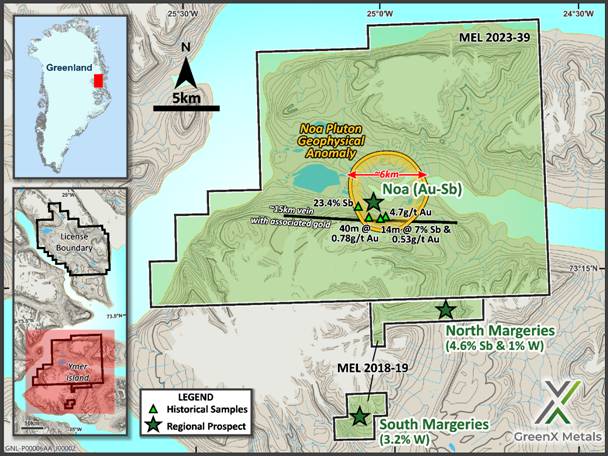
Figure 1: Overview of gold and critical metal prospects within Eleonore North.
NOA PROSPECT- POTENTIALLY LARGE-SCALE BULK TONNAGE GOLD/ANTIMONY
The Noa Prospect is located within the ELN Project on exploration licence MEL 2023-39 and has the potential to host a “reduced intrusion-related gold system” (RIRGS), analogous to large bulk-tonnage deposit types found in Canada including Donlin Creek, Fort Knox and Dublin Gulch.
- Gold and antimony mineralisation documented at the high-priority Noa Prospect within Eleonore North2
- Geophysical “bullseye” anomaly 6 km wide co-incident with elevated gold and antimony mineralisation from historical geochemical sampling
- Anomalous gold mineralisation associated with quartz veining exposed at surface over a length of up to 15 km1
- Historical individual specimens grading up to 23% antimony (Sb), and other samples up to 4g/t gold (Au)1
- Previously reported historical data confirmed the presence of gold and high-grade antimony in outcropping veins at ELN including:
- 14 m long chip sample grading 7.2% Sb and 0.53g/t Au2
- 40 m chip line with a length weighed average of 0.78g/t Au2
- Antimony mineralisation has been identified along a ~4km trend in veins and structures, that broadly aligns with previously identified gold veining at surface within a 15 km trend1.
Eleonore North hosts antimony- and gold-bearing veins in an area sitting above a geophysical anomaly at Noa interpreted to be a pluton (Figure 2). A passive seismic survey in 2023 showed evidence for multiple blind intrusions rising to just beneath the surface3. Geological features such as the metal association and mineralisation style provide additional evidence for a RIRGS being active at the Noa prospect.
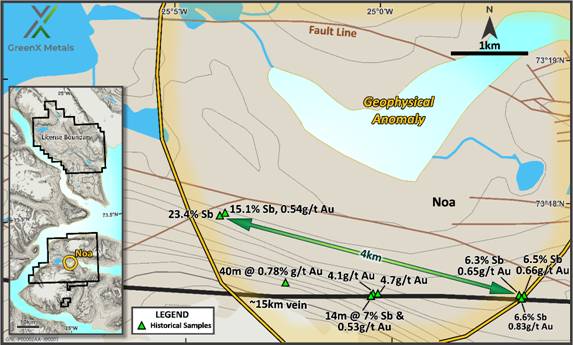
Figure 2: Historical results show evidence for high-grade antimony and gold mineralisation above the interpreted pluton at Noa.
Previous exploration was focused on orogenic gold mineralisation meaning that RIRGS targets have been overlooked. GreenX believes that the antimony-gold mineralisation above the pluton at Noa could be analogous to Perpetua Resources’ Stibnite Gold Project in Idaho, USA. There, RIRGS and orogenic gold mineralisation styles overprint each other.
During the 2023 field season, a passive seismic survey was undertaken above the pluton at Noa within ELN. Processing the results in 3D identified multiple blind plutons within the survey area. These 1 to 2 km-wide elongated plutons make ideal hosts for RIRGS mineralisation and are priority targets.
MARGERIES PROSPECTS – HIGH GRADE TUNGSTEN & ANTIMONY HISTORICAL ESTIMATE
The Margeries Prospects also are located within the ELN Project on exploration licence MEL 2018-19, where high-grade tungsten mineralisation and antimony mineralisation has been identified as follows, as historical estimates:
- 83kt of mineralised rock with a mean grade of 4.6% Sb at North Margeries
- 58.1kt of mineralised rock grading at 3.2% W at South Margeries
- 32kt of mineralised rock grading at 1% W at North Margeries
- Cautionary statement: The Historical Estimates in this announcement are not reported in accordance with the JORC Code. A competent person has not done sufficient work to classify the Historical Estimate as a mineral resource or ore reserve in accordance with the JORC Code. It is uncertain that following evaluation and/or further exploration work that the Historical Estimate will be able to be reported as a mineral resource or ore reserve in accordance with the JORC Code.
- Over 2,000m of historical drilling completed with core still available in Greenland, as well as sighter metallurgical test work on the tungsten, both of which will be revisited and re-analysed by the Company’s geologists to aim to conform with JORC requirements
- Both tungsten and antimony are on the USA and EU critical raw materials list, both experiencing dramatic price increases over the last year due to Chinese restriction of exports with both commodities critical to defence and the energy transition
- The mineralisation is hosted within a >10 km strike length underexplored sulphide bearing hydrothermal vein system and east to west fault systems
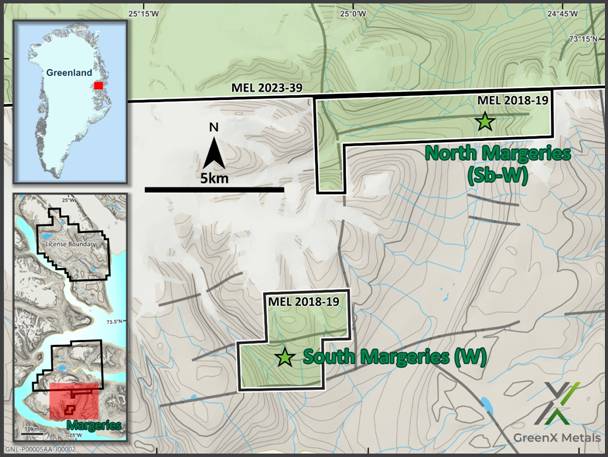
Figure 3: Location map for the Margeries Prospects within MEL 2018-19.
Both the North and South Margeries targets host Historical Estimates including tungsten (W). North Margeries additionally includes an antimony (Sb) Historical Estimate. North and South Margeries are both within 10 km of fjords allowing ready shipping access. The region is mountainous with locally ice-covered plateaus and deep U-shaped valleys.
Previous Tungsten-Antimony Exploration
The first commercial exploration in the area was carried out by Nordisk Mineselskab A/S (Nordisk) who began their initial investigations in the western part of Ymer Island in the 1950s. Nordisk was dissolved in 1991 and the permit covering the North and South Margeries prospects was taken over by NunaOil A/S (NunaOil) in 1992. NunaOil later became (NunaMinerals). NunaMinerals held the licence until 2016 when the company went into liquidation.
Based on the historical data that the Company has now reviewed, exploration work by Nordisk began on Ymer Island in the 1950s after galena-bearing veins had been identified in the Noa area (Harpøth, 1986). Pan samples collected in streams of western Ymer Island in the 1970s led to the discovery of North Margeries and South Margeries.
These targets were drilled in 1981 and 1983 by Nordisk with a total of 35 holes for 2,240m. Shallower holes were drilled in 1981 using a diamond drill rig, while in 1983 deeper, percussion holes were drilled. In 1992, NunaOil took 137 stream samples. Between 2008 and 2014, NunaMinerals flew heliborne magnetics and electromagnetics surveys over Noa and Margeries valleys. The Company will revisit and re-analyse the historic drilling data with an aim to report it in accordance with the JORC Code.
Historic Metallurgical Test Work
Scoping level metallurgical test work by SGS Mineral Services UK in 2012 on a bulk sample from South Margeries has been obtained by the Company.
GreenX’s technical team will continue to review and verify the historical metallurgical test work, whilst assessing the opportunity to take samples from historic core for modern day mineralogical analysis and to obtain additional bulk samples for both tungsten and antimony metallurgical sighter test work, with an aim to be reported in accordance with the JORC Code.
Historical Estimate
In 1984, a Historical Estimate was prepared by Nordisk for North and South Margeries using the data collected during the drilling programs of 1981 and 1983.
At South Margeries, the mean value of the Historical Estimate is 58.1kt of mineralised rock grading at 3.2% W. At North Margeries, the Historical Estimate is 83kt of antimony-mineralised rock with a mean grade of 4.6% Sb and 32kt of tungsten-mineralised rock grading at 1% W.
The Historical Estimates were calculated by Nordisk using the original data collected by the same company.
No modern resource estimation compliant with current industry reporting codes such as JORC has been undertaken in the project area.
Cautionary statement: The Historical Estimates in this announcement are not reported in accordance with the JORC Code. A competent person has not done sufficient work to classify the Historical Estimate as a mineral resources or ore reserves in accordance with the JORC Code. It is uncertain that following evaluation and/or further exploration work that the Historical Estimate will be able to be reported as a mineral resources or ore reserves in accordance with the JORC Code.
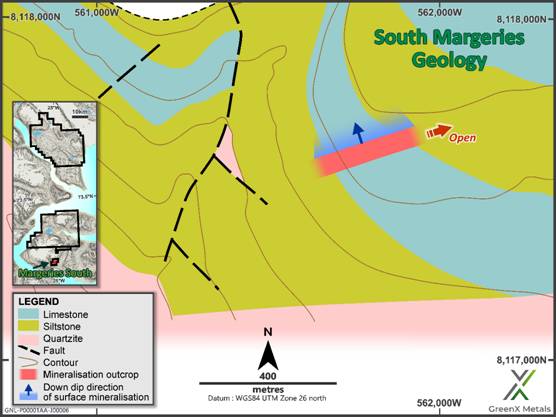
Figure 4: Geological map for the South Margeries target within MEL 2018-19. The mineralisation is open to the east and dips to the north.
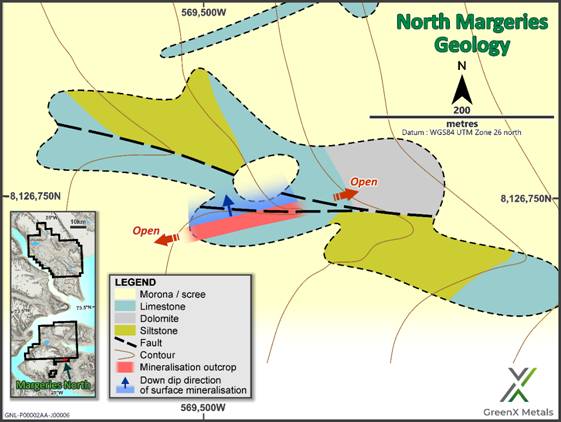
Figure 5: Geological map for the North Margeries target within MEL 2018-19. The mineralisation is open along strike and dips to the north.
Critical Raw Materials
Both tungsten and antimony are on the USA and EU critical raw materials lists, with both recently experiencing dramatic supply constraints due to China announcing restriction of exports between late 2023 and February 2025, with both commodities being critical to defence, the energy transition and other industries.
ANTIMONY: Global strategic interest in antimony has significantly increased over the last 18 months due to several factors:
- China controls ~50% of global antimony mining, most downstream processing and 32% of global resources according to the Lowy Institute.
- China’s previously announced export ban on antimony has caused market disruption.
- Antimony is a crucial material in the defence supply chain, used in various military applications including ammunition, flame retardants, and smart weaponry.
- Antimony is essential in renewable energy technologies including more-energy-efficient solar panel glass containing and in preventing thermal runaway in batteries.
The antimony price has now climbed to US$60,000/t from historical prices of ~US$5,000 – 10,000/t. The strategic importance of antimony is such that during 2025 the US government has facilitated development of an investment in US antimony assets. In September 2025, the DLA awarded U.S. Antimony Corp an exclusive, sole-source contract for up to US$245 million to supply antimony metal ingots for the national defence stockpile.
In January 2025, the US government issued final permitting for Perpetua Resources’ Stibnite gold/ antimony project in Idaho. The Pentagon has committed nearly US$60 million to the project through the Defence Production Act. In October 2025 JPMorgan Chase (JP Morgan) announced that it will invest $75 million of its own funds for a ~3% stake in Perpetua from its recently announced $1.5 trillion investment fund for U.S. national security, a move underscoring the Perpetua’s key role in producing a metal which is used to make bullets and other weaponry.
TUNGSTEN: Global strategic interest in tungsten significantly increased in February 2025 when China announced sweeping export controls targeting tungsten and four other metals used across defence, clean energy and other industries. China’s export controls were announced minutes after an additional 10% tariff on Chinese goods imposed by U.S. President Donald Trump came into effect.
About 90% of global tungsten comes from Russia, China and North Korea, with China alone accounting for about 80 per cent of the world’s tungsten output. The US has not had domestic tungsten production since 2015.
Geology
The Project is centred around the >10 km thick, unmetamorphosed Late Precambrian Eleonore Bay Group (EBG) sedimentary package. Replacement type tungsten-antimony-gold mineralisation is hosted within wide sulphide-bearing hydrothermal veins and east to west fault systems (>10 km in length) which cuts sandstones, siltstones and shales of the Quartzitic Series of the EBG at Noa. The multicoloured series of the EBG (limestone, dolomite and dolomitic shale) hosts separate, high grade lenses of scheelite (tungsten) and stibnite (antimony) mineralisation at South Margeries and North Margeries, respectively.
The tungsten and antimony mineralisation in the Margeries Prospects occurs in silicified lensoid breccia zones in the central portions of graben like fault structures associated with E-W faults. The very high grades of tungsten and antimony and their restriction to discrete strata within the EBG is inferred to result from chemical traps offered by the availability of calcium within limestones and dolomites (scheelite mineralisation) and similarly the high concentrations of sulphur within the dolomite-shales (stibnite mineralisation). The vertical expression of the hydrothermally zoned mineralised system is upwards of 1,500 metres.
Exploration Potential
In 2008, NunaMinerals commissioned SkyTEM to conduct a helicopter-borne combined time domain electromagnetic (EM) and magnetic geophysical survey, comprising of 2,250 line kilometres. This resulted in the delineation of several significant geophysical targets within the area, many of which may correspond to known geochemical sediment anomalies. Hyperspectral surveying by NunaMinerals could potentially identify a unique spectral signature occurring with the structures hosting further mineralisation. This could be an important dataset for delineating the strike continuity of existing targets and the potential identification of additional mineralisation within the region (although no forecast is made of whether that may occur).
GreenX has acquired the historical hyperspectral data from the Danish and Greenlandic Geological Survey (GEUS) in Copenhagen and will appoint a geophysics contractor to process the data.
Drill core from the Historical Estimate at the Margeries Prospects exists in government archives and is available for inspection and sampling.
NEXT STEPS FOR THE ELEONORE NORTH PROJECT
Noa Prospect:
- Process the historical hyperspectral survey;
- Field mapping and sampling to ground-truth RIRGS targets and identify drill targets.
Margeries Prospects:
- Collect bulk sample material for both tungsten and antimony metallurgical sighter test work;
- Inspect the archive core with a view to obtaining samples for re-analysis and metallurgical sighter test work.
- Reprocessing of historic geophysics / hyperspectral data and field mapping to identify drill targets.
ELN COMMERCIAL TERMS
As announced on 15 July 2024 regarding the revised commercial terms for GreenX to acquire the Eleonore North Project, a final payment of A$1,000,000 in cash or GreenX shares was required for GreenX to retain the ELN Project after 31 December 2025.
GreenX now intends to retain its interest in ELN and accordingly will issue A$1,000,000 in value of GreenX shares (subject to 12 months escrow and based on the 5 trading day VWAP to 1 January 2026) in due course, but no later than 31 January 2026.
ARCTIC RIFT COPPER PROJECT (ARC) AND JOINT VENTURE
Given the prospectivity and focus on the Tannenberg Copper Project in Germany and at Eleonore North, and following a review of its portfolio of projects and the most efficient and effective use of the Company’s resources, GreenX has decided to withdraw from the ARC Joint Venture, which in accordance with the terms of the Earn-in and Joint Venture Agreement (JVA) between GreenX Metals Limited, its wholly owned subsidiary Mineral Investments Pty Ltd, and Greenfields Exploration Limited (GEX) dated 6 October 2021, will become effective in 90 days. As a result of the withdrawal from the JVA, the Company will recognise an impairment expense of A$7.77 million relating to the impairment of the exploration and evaluation asset previously recognised in relation to the ARC project.
ENQUIRIES
|
+44 207 478 3900 ir@greenxmetals.com |
Sapan Ghai Chief Commercial Officer – UK
|
|
Kim Eckhof Investor Relations – UK / Germany
|
Kazimierz Chojna Investor Relations – Poland |
GreenX Metals #GRX – Modern Assays Validate Historical Copper Grades at Tannenberg
 GreenX Metals Limited (ASX:GRX, LSE:GRX, GPW:GRX, Germany-FSE:A3C9JR) (GreenX or Company) is pleased to announce the first batch of assay results from its historical core logging and sampling program at the Tannenberg Copper Project (Tannenberg or Project) in Germany. These results further validate historical exploration data from the 1980s and confirm that mineralisation widths are thicker than those used in the 1940 Historical Estimate (refer to ASX announcement dated 20 October 2025).
HIGHLIGHTS
· High-grade copper intercepts confirmed: Modern assays from six (of 47) archived drill cores confirm historical grades with intercepts of 1.0-3.7 m at 0.7-2.7% copper and 10-55 g/t silver
o Ro 23: 1.5 m at 2.7% copper and 55 g/t silver.
o Ro 45: 2.4 m at 1.4% copper and 18 g/t silver.
o Ro 25: 1.0 m at 2.0% copper and 41 g/t silver.
o Ro 17: 1.3 m at 1.2% copper and 24 g/t silver.
o Ro 15: 3.7 m at 1.2% copper and 17 g/t silver.
o Ro 38: 1.8 m at 0.7% copper and 15 g/t silver.
· Mineralisation thicker than 1940 historical estimate: New intercepts demonstrate widths of 1.0‑3.7 m, significantly exceeding the maximum thickness used in the 1940 Historical Estimate (refer to announcement dated 20 October 2025)
· First Modern Assays for over 40 years: Results from re-sampling of 1980s drill core from holes located up to 12 km apart show comparable or higher grades and thicker intercepts than original analysis, validating historical work and demonstrating resource upside and scale potential
· Confirms GreenX epigenetic model: Results confirm that mineralisation extends beyond the narrow Kupferschiefer shale horizon into the footwall and hanging wall, consistent with KGHM’s Polish operations (589,000tpa copper production) located on the same basement architecture
· Quality assured program: All samples meet strict QAQC standards, including >90% core recovery, with analysis by ISO/IEC 17025 accredited laboratory
· Significant program ahead: Initial assay results from six of 47 archived cores now reported, with the historical core re-sampling program and results reporting to continue through to Q1 2026
GreenX’s Chief Executive Officer, Mr Ben Stoikovich, commented: “These initial results are very pleasing, with the grades, including 2.7% copper intercept at Ro 23, consistent with or slightly better than the historical results; the thicker widths, including 3.7 metres at Ro 15, being in line with our geological model and understanding of Kupferschiefer systems; and lastly the scale, with these initial drill holes located up to 12 kilometres apart.
As previously announced to the market, a large amount of historical exploration data is already available for the Project, and these initial results are an important first step in applying modern techniques to validate and build on the historical exploration as we begin to fully define the Project’s scale and importance.
With the majority of the core program still ahead of us, and the potential for new discoveries in 18 previously unassayed holes, we’re building a compelling case for a significant copper resource in one of Europe’s most accessible mining districts.”
EXPLORATION HISTORY AT TANNENBERG AND PROJECT RATIONALE
The Richelsdorf Mining District has been subject to significant historical drilling, with a 95-hole drilling program completed in the mid-1930s by the National Socialist Government. GreenX discovered the drill database from this program in various German archives (refer to announcement dated 11 September 2025). Subsequent exploration from the 1970s onwards included copper and oil exploration, with 47 relevant archived cores now available for modern analysis (Figure 1). Of the 47 archived cores in the program, 18 holes have no recorded historical assays, representing targets for potentially new mineralisation discovery. The remaining 29 holes have limited historical assaying, typically focused on a narrow 5 m-wide interval across the Kupferschiefer shale, with the true extent of the potential mineralised interval untested.
Historical exploration was constrained by the prevailing geological model, which assumed copper mineralisation was syngenetic and restricted to the thin Kupferschiefer shale. This limitation meant sampling focused on a narrow interval, typically only 5 m around the Kupferschiefer horizon, rather than the up to 90 m intervals that characterise economic Kupferschiefer deposits in Poland today.
The modern understanding of Kupferschiefer copper systems, as demonstrated by KGHM Polska Miedz (KGHM) operations in Poland, supports GreenX’s epigenetic model. KGHM produces over 589,000 tonnes of copper per annum (Source: KGHM Annual Report 2024) from deposits similar to those at Tannenberg, with mineralisation often occurring up to 30 m above and 60 m below the Kupferschiefer shale horizon. KGHM’s operations are located on the same basement architecture as the Tannenberg Project.

Figure 1: Map of reported assay results where greater than 90% of the historical core over the target interval was available from the archived core.
2025 CORE SAMPLING RESULTS
The results announced here are historical core assay results where over 90% of historical core was available over the target sample interval from an initial six of the total 47 holes that form part of the program. The results have confirmed that mineralisation is present in widths which are thicker than just the narrow Kupferschiefer shale. In this program, mineralisation widths range from 1.0 to 3.7 meters. These results show that the mineralisation is thicker than only the Kupferschiefer strata included in the 1940 Historical Estimate. Not only do these results confirm that the analyses performed by St Joe in the 1980s were accurate, but also that the concept of syngenetic mineralisation restricted to the narrow Kupferschiefer is geologically incorrect. The results are consistent with the expectation that considerably more mineralisation exists at the Tannenberg project than reflected in the 1940 Historical Estimate, which was restricted to reporting mineralisation in the Kupferschiefer shale only (refer to announcement dated 20 October 2025).
Table 1: Results of the 2025 relogging and sampling campaign.
|
Locality |
Hole ID |
Intersect (m) |
Cu |
Ag |
Core Recovery |
||
|
|
|
From |
To |
Interval |
|
|
|
|
Ronshausen |
Ro 15 |
285.60 |
289.30 |
3.70 |
1.2 |
17 |
96% |
|
Ro 17 |
481.25 |
482.55 |
1.30 |
1.2 |
24 |
92% |
|
|
Ro 23 |
366.00 |
367.50 |
1.50 |
2.7 |
55 |
93% |
|
|
Ro 25 |
533.38 |
534.39 |
1.01 |
2.0 |
41 |
100% |
|
|
Ro 38 |
536.25 |
538.00 |
1.75 |
0.7 |
15 |
100% |
|
|
Nentershausen |
Ro 45 |
268.00 |
270.37 |
2.37 |
1.4 |
18 |
100% |
Most holes for the six sets of assay results reported are located in the Ronshausen area, where the 1940 Historical Estimate was subsequently validated by the 1980’s Historical Estimate produced by St Joe (refer to announcement dated 20 October 2025). One of the assay results is from hole Ro 45 located near Nentershausen to the north of the area covered by the 1940 Historical Estimate, in the vicinity of the Reichenberg mine.
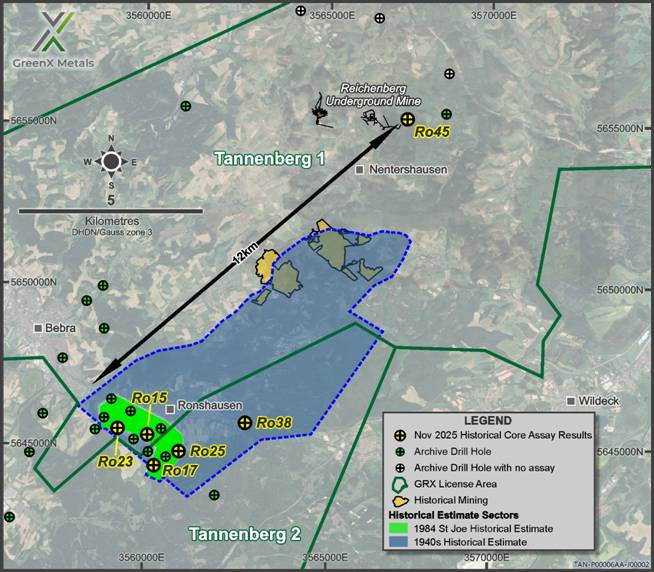
Figure 2: The locations of the historical estimates and the reported assay results from the initial batch of six holes where greater than 90% of the historical core over the target interval was available from the archived core.
RELOGGING AND RESAMPLING PROCESSES
The core program currently underway involves re-logging, re-assaying, hyperspectral scanning and the collection of petrophysical measurements for historical core from 47 drillholes completed from the 1980s. Where appropriate, assaying and hyperspectral scanning will cover up to 30 m above and 60 m below the Kupferschiefer shale. The core was logged and sampled in accordance with modern industry best practices at Palsatech Sala (Sweden). Analysis of the samples was performed at SGS in Ankara (Türkiye) who are part of the well-respected SGS testing, inspection and certification company. The laboratory is accredited to ISO/IEC 17025 standard. GreenX further validated the process using its own Quality Assurance and Quality Control program.
The core used in the program had been stored for 40 years by the Hessisches Landesamt für Naturschutz, Umwelt und Geologie (HLNUG). This Hessen state authority is responsible for preserving assets such as these for explorers and interested parties in future decades. The core was stored in suitable facilities and was found to be in excellent condition. HLNUG permitted GreenX to transport, analyse, and sample the core under strict conditions, ensuring the quality of the work and requiring that some core be left for future users. The core will be returned to the archives upon completion of the program.
The core was processed at a specialist mining industry facility in Sala (Sweden) that utilises specialist equipment and personnel, and where industry best practice procedures are already established. GreenX reports all exploration results in accordance with the JORC Code (2012) (JORC Code). To achieve appropriate Quality Assurance and Quality Control standards, sampling requires appropriate systems to be used.
|
|
|
|
|
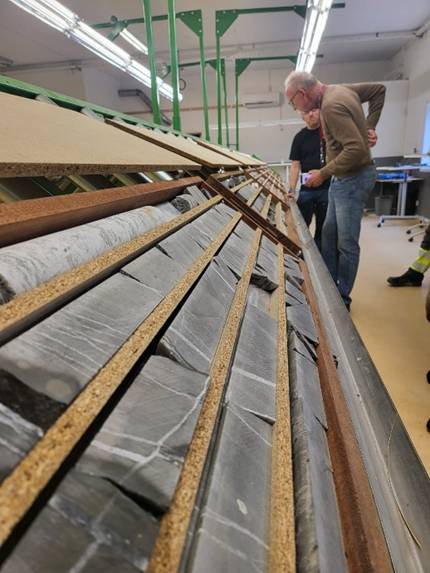
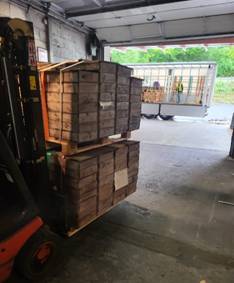
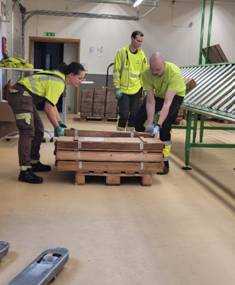
Figure 3 (Left to Right, Clockwise): Owner‘s team training and evaluation (hole Ro 45, Assays for the visual core above have been reported in this announcement) by GreenX, including Dr Prof Gregor Borg in Sala (Sweden); Core transportation from the HLNUG archive; and core handling in Sala (Sweden).
UPCOMING WORK PROGRAMS
These results are the first assays to be released as part of GreenX’s ongoing archive core logging and sampling campaign, which is part of a broader exploration program at Tannenberg, which includes:
· Logging, assaying, and hyperspectral scanning of remaining historical core (ongoing);
· Reprocessing and analysis of historical geophysical data (ongoing);
· Collation and digitisation of historical geological, mine development, and production data (ongoing); and
· Twin drilling to verify historical estimates and establish a mineral resource estimate in accordance with the JORC Code.
EXERCISE OF OPTION OVER TANNENBERG
As a result of the progress made on the Project to date, GreenX intends to acquire 90% of the fully diluted share capital of Group 11 Exploration GmbH (Group 11), a private German company which holds the Tannenberg exploration licences, pursuant to the terms of the Joint Venture and Earn-in Agreement (Agreement) as announced on 2 August 2024. Under the terms of the Agreement, GreenX can elect to acquire 90% of the fully diluted share capital of Group 11 on or before 31 December 2025.
On electing to acquire 90% of Group 11, GreenX will be required to pay A$3,000,000 to the vendors in GreenX shares (based on the higher of the 10-day VWAP or A$0.30 per Share). The vendors’ 10% interest in Group 11 will then be free carried until the completion of a feasibility study by Group 11 or GreenX. For further details, please refer to the announcement dated 2 August 2025.
To watch an interview by Mr Ben Stoikovich, GreenX’s CEO, relating to this announcement, please visit https://www.voxmarkets.com/articles/interview-with-greenx-metals-ceo-ben-stoikovich-218474a
ENQUIRIES
|
+44 207 478 3900 ir@greenxmetals.com |
Sapan Ghai Chief Commercial Officer – UK
|
|
Kim Eckhof Investor Relations – UK / Germany
|
Kazimierz Chojna Investor Relations – Poland
|
COMPETENT PERSON STATEMENT
The information in this announcement that relates to Exploration Results is based on information compiled by Dr Matthew Jackson, a Competent Person who is a Member of the Australian Institute of Mining and Metallurgy. Dr Jackson is a Technical Consultant for GreenX and is a holder of unlisted options in the Company. Dr Jackson has sufficient experience that is relevant to the style of mineralisation and type of deposit under consideration and to the activity being undertaken, to qualify as a Competent Person as defined in the 2012 Edition of the ‘Australasian Code for Reporting of Exploration Results, Mineral Resources and Ore Reserves’. Dr Jackson consents to the inclusion in this announcement of the matters based on his information in the form and context in which it appears
FORWARD LOOKING STATEMENTS
This release may include forward-looking statements, which may be identified by words such as “expects”, “anticipates”, “believes”, “projects”, “plans”, and similar expressions. These forward-looking statements are based on GreenX’s expectations and beliefs concerning future events. Forward looking statements are necessarily subject to risks, uncertainties and other factors, many of which are outside the control of GreenX, which could cause actual results to differ materially from such statements. There can be no assurance that forward-looking statements will prove to be correct. GreenX makes no undertaking to subsequently update or revise the forward-looking statements made in this release, to reflect the circumstances or events after the date of that release.
In relation to the disclosure of visual information/estimates, GreenX cautions that the images displayed are for general illustrative purposes only, and that the samples displayed, and visual methods of mineralisation identification and estimation of mineral abundance should not be considered as a proxy or substitute for laboratory analysis. Laboratory analysis would be required for the grades of mineralisation. Visual information also potentially provides no information regarding impurities or deleterious physical properties relevant to valuations. Assays for the visual core above have been reported in this announcement.
The information contained within this announcement is deemed to constitute inside information as stipulated under the Regulation 2014/596/EU which is part of domestic law pursuant to the Market Abuse (Amendment) (EU Exit) Regulations (SI 2019/310) (“UK MAR”). By the publication of this announcement via a Regulatory Information Service, this inside information (as defined in UK MAR) is now considered to be in the public domain.
Link here for Appendix
GreenX Metals #GRX – Aeromag Results Identify Primary Copper Source Below Historical Tannenberg Mines
GreenX Metals Limited (ASX:GRX, LSE:GRX, GPW:GRX) (GreenX or Company) is pleased to announce significant results from its Tannenberg Copper Project (Tannenberg or Project) in Germany, with new geophysical data identifying that the likely deep source of copper mineralisation beneath one of Europe’s most prolific historic mining districts is present under the Tannenberg licence area.
HIGHLIGHTS
- Successful completion of 58km2 airborne magnetic and radiometric survey over the Tannenberg Project in Germany, covering the brownfields Richelsdorf copper district, which produced 416,500 tonnes of copper at grades of between 0.8 and 1.2%* (1800s to 1950s)
- Major geological insight gained with identification of deep metal source structures directly below the historic Richelsdorf mines, following the first modern exploration in 40 years.
- Mid-European Crystalline Zone (MECZ) identified beneath the Richelsdorf mining district – the same geological structure understood to be the primary source of copper in the Kupferschiefer deposits across the European Copperbelt in Germany and Poland
- Large-scale anomalies extend beyond survey area into the Tannenberg 2 licence, significantly increasing exploration potential
- Comprehensive exploration program integrating geophysical results with core relogging, geological modelling and historical data to guide next phase of exploration
- BHP Xplor funded 100% of survey with geological concept build-out and exploration timeframe being expedited in collaboration with BHP
The recently completed airborne magnetic and radiometric survey represents the first major exploration work at Tannenberg in four decades. Combined with reprocessed gravity data, these results have revealed large-scale geological structures directly below the historic Richelsdorf copper mines, providing crucial insights into the source of mineralisation that produced 416,500 tonnes of copper from these historic mining operations.
Most significantly, the survey has identified the presence of the Mid-European Crystalline Zone (MECZ) beneath the mining district. This geological structure is considered the primary source of copper for all major deposits along the European copper belt spanning Germany and Poland. The presence of this same structure beneath Tannenberg provides a strong geological rationale for the potential of significant copper mineralisation (referred to as “Kupferschiefer”) in the project area and supports extensive further exploration.
GreenX CEO, Mr Ben Stoikovich, commented: “After 40 years without modern exploration, we have identified several previously unknown geological features below the historic Richelsdorf mines that will form a fundamental part of our understanding of the mineral system. Our historic archive review is progressing at pace, and with the combined interpretation of the geophysics results, continues to contribute to our confidence in the value of this project. With our expanded 1,900 km2 licence package, we have a large, relatively shallow and potentially high-grade copper brownfields exploration project, with copper being of a highly strategic commodity for both Germany and the EU.”
AIRBORNE GEOPHYSICAL SURVEY
Survey Area
The 58km2 airborne survey area (Figure 1) was flown using a helicopter-mounted magnetic and radiometric system, covering 660 line-kilometres with high-resolution data collection at 100-metre line spacing.
Advanced processing techniques, including analytic signal, tilt derivative and reduced-to-pole transforms, were applied to extract maximum geological information from the dataset.
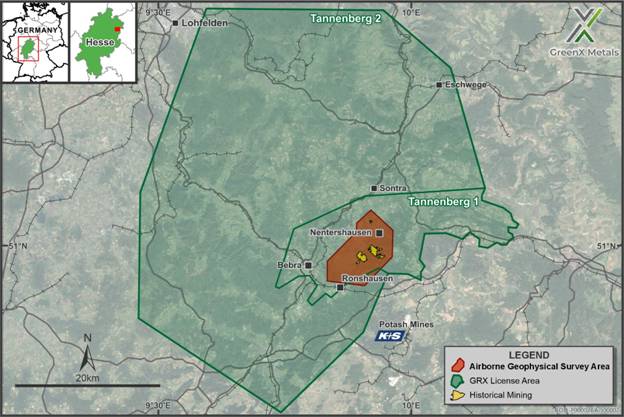
Figure 1: Expanded Tannenberg Project Area with historical mine workings, showing the airborne geophysical survey area and historical underground workings.
Key Findings
The magnetic data shows two large amplitude anomalies, which have been interpreted alongside recent magnetic susceptibility measurements from drill core. The only explanations for the anomalies are deep volcanic rocks within an uplifted basement block deep below the historic mines. Consistent with the magnetic data, the reprocessed residual gravity data shows a northeast-southwest striking residual gravity high which is interpreted as an uplifted basement block. These magnetic and gravity anomalies lead to the conclusion that the MECZ underlies the historic mines.
The MECZ is a belt of very old rocks that runs across central Germany and into Western Poland (Figure 2). These rocks include ancient granites, volcanic rocks, and sediments that were later changed by metamorphism during a mountain-building event called the Variscan orogeny about 300 million years ago. Today, the zone can be seen at surface in areas like the Odenwald (south of Frankfurt), while in other places like the Tannenberg project it is buried under much younger sediments. When a mineral deposit is formed, a source of metals is required through which fluids move to scavenge the copper, these fluids then redeposit the metals higher up within sedimentary rocks.
The consensus in European Kupferschiefer research is that the MECZ of the basement as well as intra-basinal volcanic rocks are the source and as such have contributed the copper and other metals to these mineral deposits (Rentzsch & Franzke 1997, Borg et al. 2012).
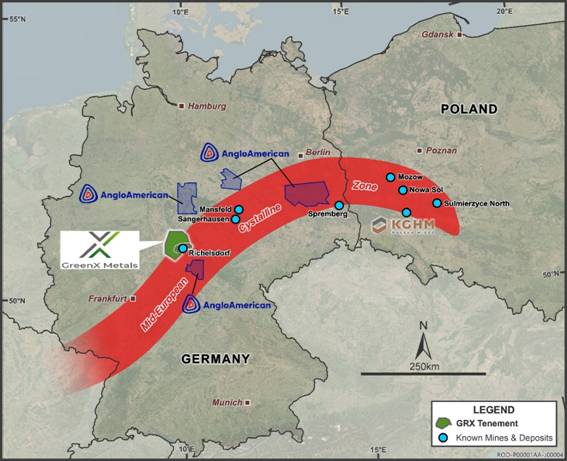
Figure 2: Extent and location of the wider Mid-European Crystalline Zone (schematic) in Germany and Poland (after Bankwitz 1994) in relation to the locations of key historical and currently operating mines, mineral deposits, and tenements.
While the major geophysical anomalies identify the source of the copper, other patterns in the magnetic data can be explained by faulting that could have provided pathways for the upwards movement of the metal bearing fluids that formed the mineral deposits. These anomalies and faults are hidden below the deepest drilling data so far known and represent an important advancement in the understanding of the deep geological and structural architecture and gives important guidance of how new mineral deposits can be found.
The anomalies and faults extend well out of the boundaries of the survey area and towards the east into and beyond Tannenberg 1 and towards both the north and southwest into the new and larger Tannenberg 2 licence area (Figure 3 and Figure 4). Not only do these results highlight the prospectivity of the wider Tannenberg licence package, but they show that deep-reaching, low-impact and low-cost exploration methods such as ground gravity and airborne magnetic surveys can contribute considerably to the discovery of new mineralisation and ore deposits.
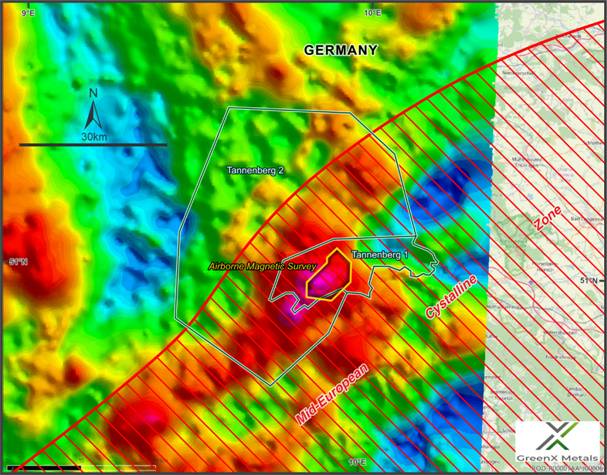
Figure 3: Residual gravity anomaly within the Tannenberg 1 and Tannenberg 2 licences. Showing the gravity high (red) feature interpreted as Mid-European Crystalline Zone.
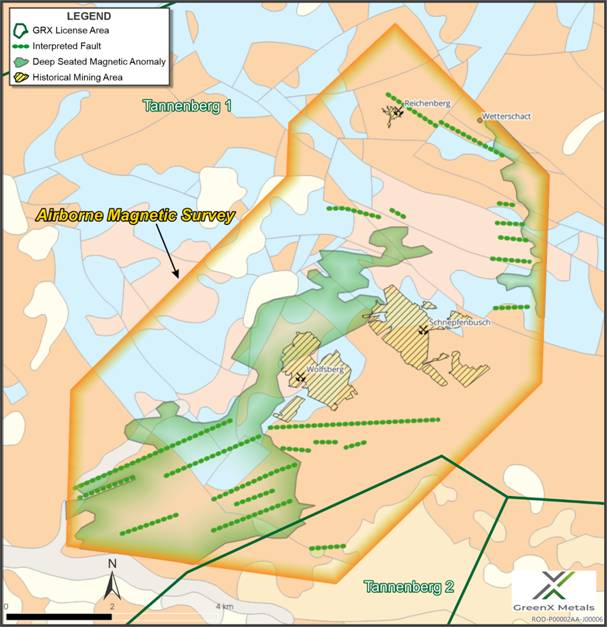
Figure 4: Location of the magnetic anomaly associated with deep-seated geological structures (green) seen at depth below and adjacent to the Tannenberg historic mining areas. The image also shows the proximity to historic mines and related outcropping geology as well as fault structures. The helicopter surveyed the area by flying between north and south along lines 100m apart.
SURVEY METHODOLOGY
The airborne magnetic survey was conducted by Terratec Geophysical Services GmbH & Co KG between 19 and 22 May 2025 and comprised 660 line-kilometres of total field magnetic and radiometric data collection, flown at 100-metre line spacing with 1,000-metre tie-lines. A helicopter-mounted Scintrex Cs-I magnetometer and MEDUSA radiometric system were used in a nose-boom configuration to minimise noise and improve resolution. The survey area was designed to be a test over known historic mining other areas with exploration potential (Figure 4).
Data processing included magnetic compensation, diurnal and IGRF corrections, tie-line levelling, and advanced filtering (including analytic signal, tilt derivative and reduced-to-pole transforms). Radiometric datasets were fully calibrated, with potassium, uranium, thorium and total count grids produced.
In relation to the reprocessed gravity data, the input data originated from the Hessen State Bouguer anomaly dataset and was prepared by the Hessian State Agency for Nature Conservation, Environment and Geology (Hessisches Landesamt für Naturschutz, Umwelt und Geologie) in collaboration with Leibniz-Institut für Angewandte Geophysik (LIAG, Hannover). Gravity readings were collected at ground stations on a regular grid across the region, with precise elevation control from differential GPS to allow correction for latitude, elevation, and terrain effects. Subsequent residual gravity processing removed the broad, long-wavelength regional signal from Bouguer gravity data in order to isolate shorter-wavelength anomalies caused by local geological features. This has allowed Company geologists to more clearly identify the features directly related to mineralisation.
UPCOMING WORK PROGRAMS
The geophysical survey is part of a larger exploration work program planned in collaboration with and funded by the BHP Xplor program, which has been extended to 31 October 2025. Key features of GreenX’s 2025 exploration program at Tannenberg include:
· Logging, assaying, and hyperspectral scanning of historical core;
· Reprocessing and analysis of historical geophysical data; and
· Collation of historic exploration, mining and production data.
Following the highly successful trial aeromagnetic survey, the Company also is investigating possible additional data collection.
ENQUIRIES
|
Ben Stoikovich Chief Executive Officer
+44 207 478 3900 |
Sovereign Metals #SVML – Rio Tinto To Invest Additional A$18.5m via Option Exercise
 Sovereign Metals Limited (ASX: SVM; AIM: SVML) (Sovereign or the Company) is pleased to announce that Rio Tinto Mining and Exploration Limited (Rio Tinto) has notified the Company that it has exercised all its share options to increase its shareholding in Sovereign to 19.76%.
Highlights:
|
· |
Rio Tinto to invest A$18.5 million via the exercise of options, to increase its shareholding in Sovereign to 19.76% |
|
· |
Investment proceeds to be used to continue advancing the Kasiya Rutile-Graphite Project in Malawi |
|
· |
Rio Tinto’s further investment represents another significant step towards unlocking a major new supply of low-CO2-footprint natural rutile and flake graphite |
|
· |
Under the Investment Agreement between Sovereign and Rio Tinto, Rio Tinto continues to provide assistance and advice on technical and marketing aspects of Kasiya |
Rio Tinto has exercised 34,549,598 share options to acquire the same number of new fully paid ordinary shares (Shares) in Sovereign at A$0.535 per Share for proceeds of A$18,484,035.
The Company will use the proceeds from Rio Tinto’s additional strategic investment to continue advancing Sovereign’s Tier 1 Kasiya Rutile-Graphite Project (Kasiya or the Project) in Malawi. This includes progressing the current optimisation study for Kasiya which is focused on the development of a world-class mine capable of supplying critical minerals to the titanium pigment, titanium metal and lithium-ion battery industries. Under the Investment Agreement between Sovereign and Rio Tinto, Rio Tinto continues to provide assistance and advice on technical and marketing aspects of Kasiya.
Funds from the option exercise are expected to be received by Friday, 5 July 2024.
Sovereign’s Chairman, Ben Stoikovich, commented: “Rio Tinto’s further investment in Sovereign reaffirms Kasiya’s position as one of the most significant critical minerals projects globally. With Rio Tinto’s wealth of experience as one of the world’s largest and most accomplished global mining companies, Kasiya is well-positioned to potentially become a market leader in low-CO2-footprint natural rutile and graphite.”
Sovereign’s Managing Director, Frank Eagar, commented: “In collaboration with Rio Tinto, we have made significant progress in advancing Kasiya over the course of this year, including the successful launch of the pilot phase mining in May. We are excited about Rio Tinto’s further investment in Sovereign, which represents another significant step towards unlocking a major new supply of low-CO2-footprint natural rutile and flake graphite.”
BACKGROUND TO RIO TINTO’S STRATEGIC INVESTMENT
In July 2023, Rio Tinto agreed to initially subscribe for and purchase 83,095,592 Shares in Sovereign at a price of A$0.486 per Share for aggregate proceeds of A$40.4 million. Rio Tinto’s initial subscription price reflected a 10% premium to the 45-day volume weighted average price on the ASX as at close on 14 July 2023 and resulted in Rio Tinto holding approximately 15% of the ordinary shares of the Company.
The subscription also involved Rio Tinto being granted options to acquire 34,549,598 further Shares in Sovereign within 12 months of the initial subscription.
Sovereign and Rio Tinto also entered into an Investment Agreement pursuant to which a joint technical committee has been established between Sovereign and Rio Tinto to advance the development of Kasiya. Please refer to the Company’s announcement on 17 July 2023 for further details.
For acting as financial advisor and subject to receipt of exercise funds, an advisory fee of 3% is payable to SCP Resource Finance (SCP) on the amount of Rio Tinto’s exercise of options investment and, subject to shareholder approval, can be paid by way of the issue of ordinary shares to SCP, with 1,036,488 shares being issuable to SCP. A notice of meeting (and explanatory statement) will be sent out to shareholders in the coming weeks.
ENQUIRIES
|
Frank Eagar (South Africa/Malawi) +61(8) 9322 6322 |
Sam Cordin (Perth) +61(8) 9322 6322 |
Sapan Ghai (London) +44 207 478 3900
|
|
Nominated Adviser on AIM and Joint Broker |
|
|
SP Angel Corporate Finance LLP |
+44 20 3470 0470 |
|
Ewan Leggat Charlie Bouverat |
|
|
|
|
|
Joint Brokers |
|
|
Stifel |
+44 20 7710 7600 |
|
Varun Talwar |
|
|
Ashton Clanfield |
|
|
|
|
|
Berenberg |
+44 20 3207 7800 |
|
Matthew Armitt |
|
|
Jennifer Lee |
|
|
|
|
|
Buchanan |
+ 44 20 7466 5000 |
The information contained within this announcement is deemed by Sovereign to constitute inside information as stipulated under the Regulation 2014/596/EU which is part of domestic law pursuant to the Market Abuse (Amendment) (EU Exit) Regulations (SI 2019/310) (“UK MAR”). By the publication of this announcement via a Regulatory Information Service, this inside information (as defined in UK MAR) is now considered to be in the public domain. The person responsible for arranging for the release of this announcement on behalf of Sovereign is Mr Dylan Browne (Company Secretary).
Admission
Subject to receipt of exercise funds, an application to AIM will be made for the 34,549,598 Shares to be admitted to trading on AIM (the AIM Admission). It is expected that AIM Admission will take place and dealings will commence on AIM on or around 8.00 a.m. on 12 July 2024.
Total Voting Rights
Immediately following the AIM Admission, the Company’s issued share capital will be 597,552,999 Shares, with each share carrying the right to one vote. The Company does not hold any Ordinary Shares in treasury. The total voting rights figure immediately following the AIM Admission of 597,552,999 may be used by shareholders (and others with notification obligations) as the denominator for the calculations by which they will determine whether they are required to notify their interest in, or a change to their interest in, the Company under the Disclosure Guidance and Transparency Rules.
Forward Looking Statement
This release may include forward-looking statements, which may be identified by words such as “expects”, “anticipates”, “believes”, “projects”, “plans”, and similar expressions. These forward-looking statements are based on Sovereign’s expectations and beliefs concerning future events. Forward looking statements are necessarily subject to risks, uncertainties and other factors, many of which are outside the control of Sovereign, which could cause actual results to differ materially from such statements. There can be no assurance that forward-looking statements will prove to be correct. Sovereign makes no undertaking to subsequently update or revise the forward-looking statements made in this release, to reflect the circumstances or events after the date of that release.
GreenX Metals #GRX – Arbitration Hearing Regarding Claims Against Poland Now Completed
 GreenX Metals Limited (GreenX or the Company) is pleased to report the conclusion of the hearing for the international arbitration claims (Claim) against the Republic of Poland under both the Energy Charter Treaty (ECT) and the Australia-Poland Bilateral Investment Treaty (BIT) (together the Treaties). The hearing took place in London and lasted two weeks.
Highlights:
- Combined BIT and ECT arbitration hearing has now been completed in front of the Arbitral Tribunal under the UNCITRAL Arbitration Rules for GreenX’s claims against Poland
- Damages of up to £737 million (A$1.3 billion/PLN 4.0 billion) have been claimed including the assessed value of GreenX’s lost profits and damages related to both the Jan Karski and Debiensko projects, and accrued interest related to any damages
- The Company has funded the Claim proceedings under its US$12.3 million Litigation Funding Agreement
Following completion of the hearing, the Arbitral Tribunal will render an Award (i.e., the legal term used for a decision by the tribunal) in due course. There is no specified date for an Award to be rendered. As previously advised, the arbitration and hearing proceedings are required to be kept confidential.
Mr Stoikovich, Chief Executive Officer of GreenX commented: “We are pleased to have completed the arbitration hearing for both the BIT and ECT Claims. There has been an enormous amount of time and effort put into the Claim by our legal and management teams. We now look forward to the Arbitral Tribunal rendering the Award in due course. GreenX has claimed up to £737 million in damages following Poland’s acts against the Company which prevented it from being able to develop the Jan Karski and Debiensko projects.”
DETAILS OF THE CLAIM
The Company’s Claim against the Republic of Poland is being prosecuted through an established and enforceable legal framework, with GreenX and Poland agreeing to apply the United Nations Commission on International Trade Law Rules (UNCITRAL) rules to the proceedings. The arbitration claims are being administered through the Permanent Court of Arbitration in the Hague.
The evidentiary hearing phase of the arbitration proceedings has now been completed in front of the Arbitral Tribunal.With completion of the hearing, the Arbitral Tribunal will render an Award in due course. There is no specified date for an Award to be rendered. The Company’s claims for damages against Poland are in the amount of up to £737 million (A$1.3 billion/PLN4.0 billion), which includes a revised assessment of the value of GreenX’s lost profits and damages related to both the Jan Karski and Debiensko projects, and accrued interest related to any damages. The Claim for damages has been assessed by independent external quantum experts appointed by GreenX specifically for the purposes of the Claim.
In July 2020, the Company announced it had executed the Litigation Funding Agreement (LFA) for US$12.3 million with Litigation Capital Management (LCM). The facility is currently being drawn down to cover legal, tribunal and external expert costs as well as defined operating expenses associated with the Claim. The LFA is a limited recourse loan with LCM that is on a “no win – no fee” basis.
In September 2020, GreenX announced that it had formally commenced with the Claim by serving the Notices of Arbitration against the Republic of Poland. In June 2021, GreenX announced that it had formally lodged its Statement of Claim in the BIT arbitration, including the first assessed claim for compensation. The Company’s Statement of Reply, the last material filing to be made by the Company for the BIT arbitration proceedings, was submitted in July 2021. The Statement of Reply addresses various points raised by the Republic of Poland in their Statement of Defence. The Statement of Reply also contains a re-evaluation of the claim for damages based on responses to Poland’s Statement of Defence.
GreenX’s dispute alleges that the Republic of Poland has breached its obligations under the applicable Treaties through its actions to block the development of the Company’s Jan Karski and Debiensko projects in Poland which effectively deprived GreenX of the entire value of its investments in Poland.
In February 2019, GreenX formally notified the Polish Government that there exists an investment dispute between GreenX and the Polish Government. GreenX’s notification called for prompt negotiations with the Government to amicably resolve the dispute and indicated GreenX’s right to submit the dispute to international arbitration in the event of the dispute not being resolved amicably.
GreenX’s investment dispute with the Republic of Poland is not unique, with international media widely reporting that the political environment and investment climate in Poland has deteriorated since the change in Government in 2015. As a result, there are a significant number of International Arbitration claims being bought against Poland.
Sovereign Metals #SVML – Change of Director’s Interest Notice x4
 Sovereign Metals #SVML – Change in directors interests for Benjamin Stoikovich, Julian Stephens, Nigel Jones and Mark Pearce.
|
Name of entity SOVEREIGN METALS LIMITED |
|
ABN 71 120 833 427 |
We (the entity) give ASX the following information under listing rule 3.19A.2 and as agent for the director for the purposes of section 205G of the Corporations Act.
Name of Director |
Benjamin Stoikovich |
|
Date of last notice |
12 August 2022 |
Part 1 – Change of director’s relevant interests in securities
In the case of a trust, this includes interests in the trust made available by the responsible entity of the trust
Note: In the case of a company, interests which come within paragraph (i) of the definition of “notifiable interest of a director” should be disclosed in this part.
|
Direct or indirect interest |
Direct and Indirect
|
|
Nature of indirect interest (including registered holder) Note: Provide details of the circumstances giving rise to the relevant interest.
|
Selwyn Capital Limited (beneficial interest)
|
|
Date of change |
21 and 23 November 2022 |
|
No. of securities held prior to change |
(a) 3,590,000 (b) 360,000 (c) 480,000 |
|
Class |
(a) Ordinary Fully Paid Shares (b) Unlisted Performance Rights subject to the “Pre-Feasibility Study Milestone” expiring 30 September 2023 (Previously Definitive Feasibility Study Milestone” expiring 31 December 2023) (c) Unlisted Performance Rights subject to the “Definitive Feasibility Study Milestone” expiring 31 October 2025 (Previously “Decision to Mine Milestone” expiring 31 October 2025) |
|
Number acquired |
(a) Nil (b) 240,000 (c) 120,000 |
|
Number disposed |
Nil – see nature of change below |
|
Value/Consideration Note: If consideration is non-cash, provide details and estimated valuation
|
Not applicable – see nature of change below |
|
No. of securities held after change |
(a) 3,590,000 (b) 600,000 (c) 600,000 |
|
Nature of change Example: on-market trade, off-market trade, exercise of options, issue of securities under dividend reinvestment plan, participation in buy-back |
Issue of and variation to the terms of existing Performance Rights following shareholder approval. |
Part 2 – Change of director’s interests in contracts
Note: In the case of a company, interests which come within paragraph (ii) of the definition of “notifiable interest of a director” should be disclosed in this part.
|
Detail of contract |
Not applicable |
|
Nature of interest
|
Not applicable |
|
Name of registered holder (if issued securities)
|
Not applicable |
|
Date of change |
Not applicable |
|
No. and class of securities to which interest related prior to change Note: Details are only required for a contract in relation to which the interest has changed
|
Not applicable |
|
Interest acquired |
Not applicable |
|
Interest disposed |
Not applicable |
|
Value/Consideration Note: If consideration is non-cash, provide details and an estimated valuation
|
Not applicable |
|
Interest after change |
Not applicable |
Part 3 – +Closed period
|
Were the interests in the securities or contracts detailed above traded during a +closed period where prior written clearance was required? |
No |
|
If so, was prior written clearance provided to allow the trade to proceed during this period? |
Not applicable |
|
If prior written clearance was provided, on what date was this provided? |
Not applicable |
|
Initial notification/Amendment |
Initial |
|
LEI |
213800NSPXSASTENFQ34 |
|
Place of transaction |
Australian Securities Exchange (ASX) |
We (the entity) give ASX the following information under listing rule 3.19A.2 and as agent for the director for the purposes of section 205G of the Corporations Act.
Name of Director |
Julian Stephens |
|
Date of last notice |
23 June 2022 |
Part 1 – Change of director’s relevant interests in securities
In the case of a trust, this includes interests in the trust made available by the responsible entity of the trust
Note: In the case of a company, interests which come within paragraph (i) of the definition of “notifiable interest of a director” should be disclosed in this part.
|
Direct or indirect interest |
Indirect
|
|
Nature of indirect interest (including registered holder) Note: Provide details of the circumstances giving rise to the relevant interest.
|
One Way Trust (beneficial interest)
|
|
Date of change |
21 November 2022 |
|
No. of securities held prior to change |
(d) 15,657,518 (e) 900,000 (f) 1,200,000 |
|
Class |
(d) Ordinary Fully Paid Shares (e) Unlisted Performance Rights subject to the “Pre-Feasibility Study Milestone” expiring 30 September 2023 (Previously Definitive Feasibility Study Milestone” expiring 31 December 2023) (f) Unlisted Performance Rights subject to the “Definitive Feasibility Study Milestone” expiring 31 October 2025 (Previously “Decision to Mine Milestone” expiring 31 October 2025) |
|
Number acquired |
Nil – see nature of change below |
|
Number disposed |
Nil – see nature of change below |
|
Value/Consideration Note: If consideration is non-cash, provide details and estimated valuation
|
Not applicable – see nature of change below |
|
No. of securities held after change |
(d) 15,657,518 (e) 900,000 (f) 1,200,000 |
|
Nature of change Example: on-market trade, off-market trade, exercise of options, issue of securities under dividend reinvestment plan, participation in buy-back |
Variation to the terms of existing Performance Rights following shareholder approval. |
Part 2 – Change of director’s interests in contracts
Note: In the case of a company, interests which come within paragraph (ii) of the definition of “notifiable interest of a director” should be disclosed in this part.
|
Detail of contract |
Not applicable |
|
Nature of interest
|
Not applicable |
|
Name of registered holder (if issued securities)
|
Not applicable |
|
Date of change |
Not applicable |
|
No. and class of securities to which interest related prior to change Note: Details are only required for a contract in relation to which the interest has changed
|
Not applicable |
|
Interest acquired |
Not applicable |
|
Interest disposed |
Not applicable |
|
Value/Consideration Note: If consideration is non-cash, provide details and an estimated valuation
|
Not applicable |
|
Interest after change |
Not applicable |
Part 3 – +Closed period
|
Were the interests in the securities or contracts detailed above traded during a +closed period where prior written clearance was required? |
No |
|
If so, was prior written clearance provided to allow the trade to proceed during this period? |
Not applicable |
|
If prior written clearance was provided, on what date was this provided? |
Not applicable |
|
Initial notification/Amendment |
Initial |
|
LEI |
213800NSPXSASTENFQ34 |
|
Place of transaction |
Australian Securities Exchange (ASX) |
We (the entity) give ASX the following information under listing rule 3.19A.2 and as agent for the director for the purposes of section 205G of the Corporations Act.
Name of Director |
Nigel Jones |
|
Date of last notice |
16 February 2022 |
Part 1 – Change of director’s relevant interests in securities
In the case of a trust, this includes interests in the trust made available by the responsible entity of the trust
Note: In the case of a company, interests which come within paragraph (i) of the definition of “notifiable interest of a director” should be disclosed in this part.
|
Direct or indirect interest |
Indirect
|
|
Nature of indirect interest (including registered holder) Note: Provide details of the circumstances giving rise to the relevant interest.
|
Redbeck Partners Ltd (beneficial interest) |
|
Date of change |
21 November 2022 |
|
No. of securities held prior to change |
(g) 225,000 (h) 300,000
|
|
Class |
(g) Unlisted Performance Rights subject to the “Pre-Feasibility Study Milestone” expiring 30 September 2023 (Previously Definitive Feasibility Study Milestone” expiring 31 December 2023) (h) Unlisted Performance Rights subject to the “Definitive Feasibility Study Milestone” expiring 31 October 2025 (Previously “Decision to Mine Milestone” expiring 31 October 2025) |
|
Number acquired |
Nil – see nature of change below |
|
Number disposed |
Nil – see nature of change below |
|
Value/Consideration Note: If consideration is non-cash, provide details and estimated valuation
|
Not applicable – see nature of change below |
|
No. of securities held after change |
(g) 225,000 (h) 300,000
|
|
Nature of change Example: on-market trade, off-market trade, exercise of options, issue of securities under dividend reinvestment plan, participation in buy-back |
Variation to the terms of existing Performance Rights following shareholder approval. |
Part 2 – Change of director’s interests in contracts
Note: In the case of a company, interests which come within paragraph (ii) of the definition of “notifiable interest of a director” should be disclosed in this part.
|
Detail of contract |
Not applicable |
|
Nature of interest
|
Not applicable |
|
Name of registered holder (if issued securities)
|
Not applicable |
|
Date of change |
Not applicable |
|
No. and class of securities to which interest related prior to change Note: Details are only required for a contract in relation to which the interest has changed
|
Not applicable |
|
Interest acquired |
Not applicable |
|
Interest disposed |
Not applicable |
|
Value/Consideration Note: If consideration is non-cash, provide details and an estimated valuation
|
Not applicable |
|
Interest after change |
Not applicable |
Part 3 – +Closed period
|
Were the interests in the securities or contracts detailed above traded during a +closed period where prior written clearance was required? |
No |
|
If so, was prior written clearance provided to allow the trade to proceed during this period? |
Not applicable |
|
If prior written clearance was provided, on what date was this provided? |
Not applicable |
|
Initial notification/Amendment |
Initial |
|
LEI |
213800NSPXSASTENFQ34 |
|
Place of transaction |
Australian Securities Exchange (ASX) |
We (the entity) give ASX the following information under listing rule 3.19A.2 and as agent for the director for the purposes of section 205G of the Corporations Act.
Name of Director |
Mark Pearce |
|
Date of last notice |
23 December 2021 |
Part 1 – Change of director’s relevant interests in securities
In the case of a trust, this includes interests in the trust made available by the responsible entity of the trust
Note: In the case of a company, interests which come within paragraph (i) of the definition of “notifiable interest of a director” should be disclosed in this part.
|
Direct or indirect interest |
Direct and Indirect
|
|
Nature of indirect interest (including registered holder) Note: Provide details of the circumstances giving rise to the relevant interest.
|
· Mr Mark Pearce and Mrs Natasha Pearce <NMLP Family A/C> (trustee and beneficial interest) · Apollo Group Pty Ltd (director and indirect shareholder) · Crystal Brook Investments Pty Ltd (director and beneficial interest)
|
|
Date of change |
21 November 2022 |
|
No. of securities held prior to change |
(a) 4,295,842 (b) 225,000 (c) 300,000 |
|
Class |
(a) Ordinary Fully Paid Shares (b) Unlisted Performance Rights subject to the “Pre-Feasibility Study Milestone” expiring 30 September 2023 (Previously Definitive Feasibility Study Milestone” expiring 31 December 2023) (c) Unlisted Performance Rights subject to the “Definitive Feasibility Study Milestone” (Previously “Decision to Mine Milestone” expiring 31 October 2025) |
|
Number acquired |
Nil – see nature of change below |
|
Number disposed |
Nil – see nature of change below |
|
Value/Consideration Note: If consideration is non-cash, provide details and estimated valuation
|
Not applicable – see nature of change below
|
|
No. of securities held after change |
(a) 4,295,842 (b) 225,000 (c) 300,000 |
|
Nature of change Example: on-market trade, off-market trade, exercise of options, issue of securities under dividend reinvestment plan, participation in buy-back |
Variation to the terms of existing Performance Rights following shareholder approval. |
Part 2 – Change of director’s interests in contracts
Note: In the case of a company, interests which come within paragraph (ii) of the definition of “notifiable interest of a director” should be disclosed in this part.
|
Detail of contract |
Not applicable |
|
Nature of interest |
Not applicable |
|
Name of registered holder (if issued securities) |
Not applicable |
|
Date of change |
Not applicable |
|
No. and class of securities to which interest related prior to change Note: Details are only required for a contract in relation to which the interest has changed
|
Not applicable |
|
Interest acquired |
Not applicable |
|
Interest disposed |
Not applicable |
|
Value/Consideration Note: If consideration is non-cash, provide details and an estimated valuation
|
Not applicable |
|
Interest after change |
Not applicable |
Part 3 – +Closed period
|
Were the interests in the securities or contracts detailed above traded during a +closed period where prior written clearance was required? |
No |
|
If so, was prior written clearance provided to allow the trade to proceed during this period? |
Not applicable |
|
If prior written clearance was provided, on what date was this provided? |
Not applicable |
|
Initial notification/Amendment |
Initial |
|
LEI |
213800NSPXSASTENFQ34 |
|
Place of transaction |
Australian Securities Exchange (ASX) |
GreenX Metals #GRX – ECT Arbitration Statement of Reply Now Lodged
GreenX Metals Limited (GreenX or the Company) is pleased to report that as part of the ongoing international arbitration claims (Claims) against the Republic of Poland under both the Energy Charter Treaty (ECT) and the Australia-Poland Bilateral Investment Treaty (BIT) (together the Treaties), the Company has now filed its Statement of Reply in the both the BIT and ECT arbitrations. This is the final significant filing that GreenX will make for the ECT arbitration, with the next steps being for Poland to lodge their final filing (the Rejoinder) followed by a hearing to be conducted in front of the Tribunal. GreenX is seeking compensation in the amount of £737 million (equivalent to A$1.3 billion or PLN 4.1 billion) in total across the two arbitrations Claims.
Highlights:
|
· |
GreenX’s ongoing arbitration against Poland is proceeding at pace with Statements of Reply now having been submitted for both the BIT and ECT claims |
|
· |
Damages of £737 million (A$1.3 billion/PLN 4.1 billion) being claimed in total across the two arbitrations which include the assessed value of GreenX’s damages related to both the Jan Karski and Debiensko mines, and accrued interest related to any damages |
|
· |
GreenX’s legal team and counsel are now preparing for the combined hearing for both the BIT and ECT claims to be conducted in front of the Tribunal |
|
· |
The Company is well funded to pursue the Claims with the US$12.3 million LFA in place which is currently being drawn down to cover legal, tribunal and external expert costs as well as defined operating expenses associated with the Claims |
Mr Stoikovich, Chief Executive Officer of GreenX commented: “The Claim is proceeding at pace, following the Company’s submission of its Statement of Reply in the both the BIT and ECT arbitration. As previously disclosed, the compensation being claimed by the Company is £737 million across the Claims. We are pleased to see that €190 million in damages has been recently awarded to Rockhopper Exploration plc by an ECT tribunal in their arbitration against Italy, who were found to have breached the ECT following the failure to grant Rockhopper its production concession at the Ombrina Mare oil field despite having been awarded all the required technical and environmental authorisations.”
DETAILS OF THE CLAIM
The Company’s Claims against the Republic of Poland is being prosecuted through an established and enforceable legal framework, with GreenX and Poland agreeing to apply the UNCITRAL rules to the proceedings.
Both the BIT and ECT claim Tribunals have been constituted, with both Claims being registered with the Permanent Court of Arbitration in the Hague. The BIT and ECT claim proceedings proceed at pace, with the Company now having filed a revised claim for damages against Poland with the Tribunal in the amount of £737 million (A$1.3 billion/PLN4.1 billion) in total across the two arbitrations.
The Company’s Claims include a revised assessment of the value of GreenX’s damages related to both the Jan Karski and Debiensko mines, and accrued interest related to any damages. The Claim for damages has been assessed by external quantum experts appointed by GreenX specifically for the purposes of the Claims.
In July 2020, the Company announced it had executed the Litigation Funding Agreement (LFA) for US$12.3 million with Litigation Capital Management (LCM). The facility is currently being drawn down to cover legal, tribunal and external expert costs as well as defined operating expenses associated with the Claims.
In September 2020, GreenX announced that it had formally commenced with the Claim by serving the Notices of Arbitration against the Republic of Poland. In June 2021, GreenX announced that it had formally lodged a Statement of Claim, including the first assessed claim for compensation. The Company’s Statement of Reply, the last significant filing to be made by the Company, has now been filed in both arbitrations. The Statement of Reply addresses various points raised by the Republic of Poland in their Statement of Defence. The Statement of Reply also contains a re-evaluation of the claim for damages based on responses to Poland’s Statement of Defence.
GreenX’s dispute alleges that the Republic of Poland has breached its obligations under the applicable Treaties through its actions to block the development of the Company’s Jan Karski and Debiensko mines in Poland which effectively deprives GreenX of the entire value of its investments in Poland.
In February 2019, GreenX formally notified the Polish Government that there exists an investment dispute between GreenX and the Polish Government. GreenX’s notification called for prompt negotiations with the Government to amicably resolve the dispute and indicated GreenX’s right to submit the dispute to international arbitration in the event of the dispute not being resolved amicably. As of the date of this report, no amicable resolution of the dispute has occurred, since the Polish Government has declined to participate in discussions related to the dispute and accordingly the Company has formally proceeded with its Claims as discussed above.
GreenX’s investment dispute with the Republic of Poland is not unique, with international media widely reporting that the political environment and investment climate in Poland has deteriorated since the change in Government in 2015. As a result, there are a significant number of International Arbitration claims being bought against Poland.
Furthermore, GreenX notes the recent success of AIM listed Rockhopper Exploration plc’s (Rockhopper) ECT claim against the Republic of Italy in relation to oil and gas licenses:
On 24 August 2022 Rockhopper announced that an ECT arbitration panel had reached a unanimous decision against the Republic of Italy to award Rockhopper €190 million in damages plus interest at EURIBOR +4% compounded annually from 2016 until the time of payment.
All costs associated with the Rockhopper arbitration were funded on a non-recourse (“no win – no fee”) basis from a specialist arbitration funder, similar to GreenX’s litigation funding arrangements. After payments due to the arbitration funder, Rockhopper expects to retain approximately 80% of the award.
Rockhopper commenced its ECT claim in 2017 claiming damages of ~€275 million after Italy’s Ministry of Economy failed to grant Rockhopper a production concession for the Ombrina Mare oil field.
This announcement has been authorised for release by Mr Ben Stoikovich, CEO.