Home » Sovereign Metals (SVML)
Category Archives: Sovereign Metals (SVML)
Sovereign Metals #SVML – Director/PDMR Notification
 Sovereign Metals Limited (ASX:SVM; AIM:SVML; OTCQX:SVMLF) (Sovereign or the Company) advises that it has been notified that, on Mr Ben Stoikovich, Director, completed an agency transfer of 1,500,000 ordinary shares held in Sovereign (via his nominee) to his Self-Invested Personal Pension (SIPP) account in which he retains the beneficial interest.
The transactions were undertaken solely to transfer the ordinary shares between accounts. Following completion of the transaction, Mr Stoikovich’s ultimate beneficial ownership remains unchanged.
Further details are set out in the notification below in accordance with Article 19 of the UK Market Abuse Regulation.
|
Enquiries |
|
Frank Eagar, Managing Director & CEO South Africa / Malawi +27 21 140 3190
Sapan Ghai, CCO London +44 207 478 3900 |
|
Nominated Adviser on AIM and Joint Broker |
|
|
SP Angel Corporate Finance LLP |
+44 20 3470 0470 |
|
Ewan Leggat Charlie Bouverat |
|
|
|
|
|
Joint Broker |
|
|
Stifel |
+44 20 7710 7600 |
|
Varun Talwar |
|
|
Ashton Clanfield |
#SVML Sovereign Metals Ltd – SVM Advances U.S. Strategy as Rio Collab Concludes
HIGHLIGHTS
· Rio Tinto has not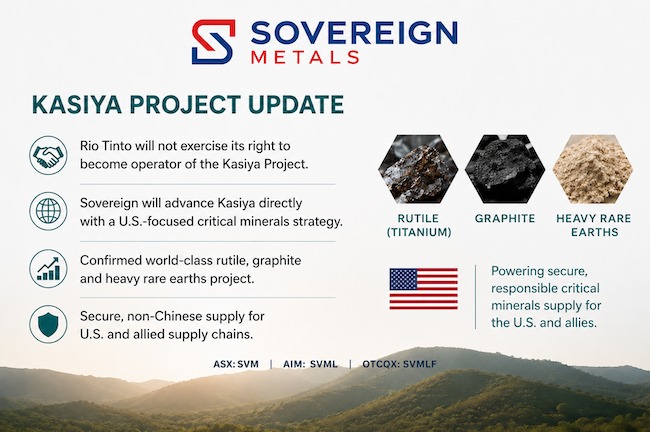 ified Sovereign that it will not exercise its right to elect to become operator of Sovereign’s Kasiya Rutile-Graphite Project under the Investment Agreement
· Rio Tinto has advised the Company, in its formal notice, that its decision reflects its change in corporate strategy regarding its Titanium business
· Accordingly, certain rights that Rio Tinto had in the Investment Agreement have now lapsed, including:
o exclusive marketing rights to market 40% of the annual production of all products
o pre-emptive right over any offer from a third party to acquire an interest in the Project
· Rio’s decision does not reflect any change in the fundamentals, economics or strategic importance of Kasiya as highlighted in the Kasiya DFS, which was completed with technical input from Rio Tinto
· Since the completion of the DFS, Sovereign has had deepening engagement with the U.S. Government, major U.S. companies, and industry stakeholders
· Sovereign can now prioritise a U.S.-focused critical-minerals strategy, positioning Kasiya as a secure, non-Chinese source of titanium feedstock and natural graphite for the U.S. and allied supply chains
· Commercial workstreams will include:
o advancing rutile and graphite offtake discussions toward binding agreements with Mitsui, Traxys and other strategic U.S. and U.S.-allied counterparties
o continued engagement with potential offtake partners and U.S. government stakeholders in relation to the heavy rare earth co-product opportunity
· Kasiya provides exposure to three minerals designated critical by the U.S. – titanium (via natural rutile), graphite and heavy rare earths (via a Heavy Rare Earth Concentrate by-product) – each feeding U.S. and allied supply chains, including Japan, being the dominant supplier of titanium metal to the U.S.
Mr Ben Stoikovich, Chairman, commented:
“As the Sovereign-Rio Tinto collaboration concludes, we would like to acknowledge and thank Rio Tinto for its significant contribution to the advancement of Kasiya.
Since 2023, Rio Tinto has invested over A$60 million in the Project and has provided valuable technical input through its participation on the Sovereign-Rio Tinto Technical Committee. This expertise has contributed to the successful delivery of the unique Pilot Mining and Rehabilitation program, which generated real-world operating and mining data that was incorporated into the tier-1 DFS completed earlier this year.
Sovereign looks forward to Rio Tinto continuing as a supportive shareholder as it builds on this important period of technical and operational progress, with the Company now well positioned to prioritise a U.S.-focused critical minerals strategy, positioning Kasiya as a secure, non-Chinese source of titanium feedstock and natural graphite for the U.S. and allied supply chains.”
Sovereign Metals Limited (ASX:SVM; AIM:SVML; OTCQX: SVMLF) (Sovereign or the Company) confirms that pursuant to the terms of the Investment Agreement between the Company and Rio Tinto Mining and Exploration Limited (Rio Tinto), Rio Tinto has notified Sovereign that it will not exercise its option to elect to become operator of the Kasiya Rutile-Graphite Project (Kasiya or the Project) in Malawi. Accordingly, Sovereign will continue as operator and will advance Kasiya directly.
In its notice to Sovereign, Rio Tinto advised that its decision not to elect operatorship reflects its change in corporate strategy and the strategic review of its Iron and Titanium business. This is consistent with Rio Tinto’s publicly outlined strategy under which it is narrowing its portfolio focus to iron ore, copper, aluminium and lithium. Accordingly, the decision does not reflect any change in the fundamentals, economics or strategic importance of the Project.
As a result of Rio Tinto’s decision not to elect operatorship, certain rights conferred on Rio Tinto under the Investment Agreement, including its operatorship, product marketing rights, consent and pre-emption rights in respect of the Project, cease, and Rio Tinto continues to hold a shareholding of approximately 18.2% in Sovereign. Rio Tinto will continue to hold a right to appoint a nominee director to the board of the Company (for as long as Rio Tinto holds at least a 15% shareholding in the Company) and a right to be notified of future equity issues (for as long as Rio Tinto holds at least a 10% shareholding in the Company).
Sovereign can now advance its commercial workstreams directly.
Sovereign intends to prioritise a US-focused strategy for Kasiya. The Project is positioned to supply natural rutile and natural graphite into supply chains serving the U.S. and allied economies, addressing acute gaps in secure, non-Chinese sources of critical minerals feedstock. Sovereign will deepen its engagement with the U.S. Government and industry stakeholders and focus its offtake and partnership efforts where Kasiya’s strategic value is greatest.
The Company intends to advance its existing rutile and graphite offtake MOUs, including those with its established counterparties, Mitsui & Co., Ltd., and Traxys North America, from non-binding arrangements to binding agreements, subject to negotiation.
Sovereign’s existing Collaboration Agreement with the International Finance Corporation (IFC), a member of the World Bank Group – of which the U.S. Government is the single largest shareholder – positions the Company to advance a development financing strategy for Kasiya alongside a globally recognised development-finance partner. With the Investment Agreement having fallen away, Sovereign is now able to progress its financing workstreams directly and on its own terms. The Company intends to pursue partnerships and financing arrangements for Kasiya, drawing on its engagement with the IFC and with development-finance and export-credit institutions across U.S. and allied economies, consistent with the Project’s role in secure, non-Chinese critical-minerals supply.
Sovereign thanks Rio Tinto for its investment, funding and technical contribution, which have been instrumental in advancing Kasiya to a world-class DFS.
|
Enquiries |
|
|
|
Frank Eagar, Managing Director & CEO South Africa / Malawi +27 21 140 3190
Sapan Ghai, CCO London +44 207 478 3900
|
|
|
|
Nominated Adviser on AIM and Joint Broker |
|
|
|
SP Angel Corporate Finance LLP |
+44 20 3470 0470 |
|
|
Ewan Leggat Charlie Bouverat |
|
|
|
|
|
|
|
Joint Broker |
|
|
|
Stifel |
+44 20 7710 7600 |
|
|
Varun Talwar |
|
|
|
Ashton Clanfield |
|
|
#SVML Sovereign Metals LTD – Lapse of Performance Rights
 Sovereign Metals Limited (ASX:SVM; AIM:SVML; OTCQX:SVMLF) (Sovereign or the Company) advises that 6,190,000 unlisted performance rights that were subject to the “Final Investment Decision Milestone” lapsed on 30 June 2026 without exercise or conversion.
Following the lapse of these unlisted performance rights, the Company has the following securities on issue:
· 655,961,203 fully paid ordinary shares (of no par value); and
· 13,262,500 performance rights subject to the “Construction and Finance Milestone” that have no exercise price and expire on 30 June 2028.
Change of Directors’ Interest Notices in relation to the lapse of unlisted performance rights have been provided below.
|
Enquiries |
|
Dylan Browne Company Secretary +61 8 9322 6322 |
|
Nominated Adviser on AIM and Joint Broker |
|
|
SP Angel Corporate Finance LLP |
+44 20 3470 0470 |
|
Ewan Leggat Charlie Bouverat |
|
|
|
|
|
Joint Broker |
|
|
Stifel |
+44 20 7710 7600 |
|
Varun Talwar |
|
|
Ashton Clanfield |
|
#SVML Sovereign Metals LTD – Change of Director’s Interest Notice
 Julian Stephens sold 1m shares for A$675,000 and now holds 13,157,518 shares
|
Enquiries |
|
Frank Eagar, Managing Director & CEO South Africa / Malawi +27 21 140 3190 Sapan Ghai, CCO London +44 207 478 3900 |
|
Nominated Adviser on AIM and Joint Broker |
|
|
SP Angel Corporate Finance LLP |
+44 20 3470 0470 |
|
Ewan Leggat Charlie Bouverat |
|
|
|
|
|
Joint Broker |
|
|
Stifel |
+44 20 7710 7600 |
|
Varun Talwar |
|
|
Ashton Clanfield |
|
Link here to view the full announcement
#SVML Sovereign Metals LTD – March 2026 Quarterly Report
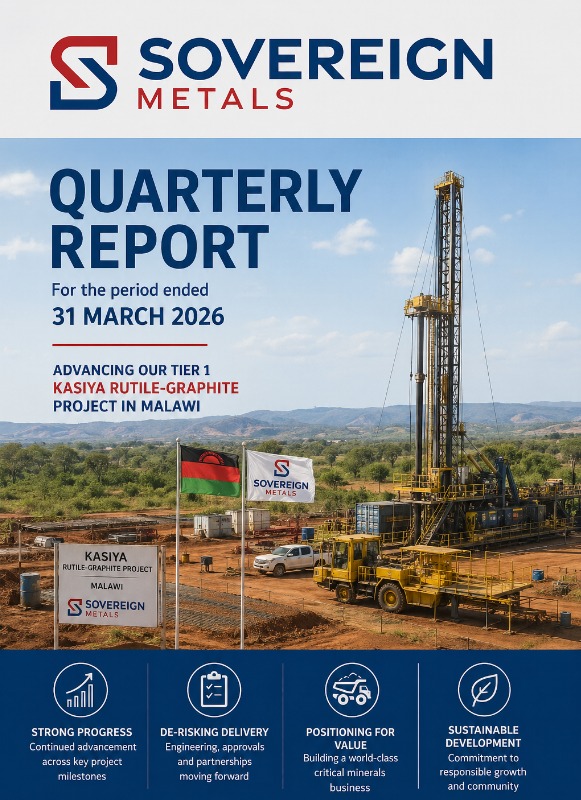 Sovereign Metals Limited (ASX:SVM, AIM:SVML, OTCQX:SVMLF) (Sovereign or the Company) is pleased to provide its quarterly report for the period ended 31 March 2026 including advances made at its Kasiya Rutile-Graphite Project (Kasiya or the Project) in Malawi.
HIGHLIGHTS DURING AND SUBSEQUENT TO THE QUARTER
Kasiya Definitive Feasibility Study Delivers Outstanding Results
• Pre-tax NPV8 of US$2.2 billion on capital expenditure to first production of US$727 million – an NPV to capex ratio of 3.0x
• Steady state annual EBITDA of US$476 million and pre-tax, unlevered free cash flow of US$452 million; total revenue of US$16.2 billion initial 25-year mine life with potential for multi-generational mine life extensions
• Operating cost of just US$450/t product (FOB Nacala) – underpinning strong margin resilience across commodity cycles
• Positioned to become the world’s largest producer of both natural rutile (222ktpa) and natural flake graphite (275ktpa) – two commodities designated as Critical Minerals by the United States and the European Union
• DFS completed under the oversight of the Sovereign-Rio Tinto Technical Committee, with workstreams aligned with IFC Performance Standards; World Bank/IFC Collaboration Agreement in place as potential co-lead mandated lead arranger for project financing
• Data obtained from Pilot Mining Program, completed with technical input from Rio Tinto, provided real-world inputs and validation across key DFS workstreams
• Heavy rare earth potential not included in DFS – evaluation of monazite by-product from rutile tailings stream now underway
Mineral Resource Estimate Significantly Upgraded
• Total Rutile Mineral Resource increased to 2.1 billion tonnes at 0.96% rutile for 20.3Mt contained rutile, with 0.95% TGC for 20.0Mt contained graphite (Measured, Indicated & Inferred)
• Measured and Indicated contained rutile surged 32% to 16.1Mt (1.65 billion tonnes at 0.98% rutile) – a material increase in resource confidence
• First-ever Measured Resource declared – the highest confidence JORC Code category – covering at least the first six years of planned operations
• Resource upgrade delivered the classification standard required for a bankable DFS and a critical milestone on the path to project financing
Offtake Momentum: Mitsui (Rutile) and Traxys (Graphite) MOUs Signed
• Non-binding MOU signed with Mitsui for up to 70,000 tonnes per annum of Kasiya natural rutile concentrate (TiO2 >95%) over an initial four-year supply period from first production, with potential five-year extension – equates to over 50% of Phase 1 rutile production
• Japan is the world’s second-largest producer of titanium sponge after China and supplied over 70% of US titanium sponge imports in H1 2025, underscoring the strategic importance of securing reliable natural rutile feedstock
• Non-binding MOU signed with Traxys North America LLC – one of only three trading houses selected to procure critical minerals for the U.S. Government’s US$12 billion Project Vault strategic reserve – for approximately 40,000 tonnes per annum of Kasiya graphite in Phase 1, increasing to up to 80,000 tonnes per annum as the Project expands
• Traxys MOU contemplates an initial focus on the high-value refractory market, with potential to include flake graphite to serve battery anode supply chains
Strategic Heavy Rare Earths Recovered at Kasiya
• Monazite concentrate containing exceptionally elevated levels of heavy rare earth elements recovered from the rutile tailings stream at Sovereign’s Lilongwe laboratory
• Preliminary analysis confirmed significant valuable heavy rare earth content with an average DyTb ratio of 2.9% and 11.9% Yttrium, and valuable light rare earth content, including 21.8% NdPr ratio – heavy rare earth ratio approximately 7x higher for both DyTb and Yttrium than the five largest global rare earth producing mines, suggesting potential for Kasiya to produce a very high value rare earth product
• Monazite recovered from material that would otherwise be discarded – potential third revenue stream at near-zero incremental cost, with no parallel rare-earth processing circuit required
• DyTb and Yttrium are all subject to Chinese export controls introduced in April 2025 and further tightened against Japan in January 2026 – the elements underpin permanent magnets for defence systems, aerospace thermal barrier coatings, radar and laser systems
Next Steps
Over the quarter ending June 2026 and beyond, Sovereign will:
• Advance post-DFS workstreams, including finalisation of the Environmental and Social Impact Assessment
• Advance offtake discussions and progress towards binding definitive agreements with Mitsui, Traxys and other strategic counterparties
• Undertake further work to characterise the monazite mineralisation at Kasiya, including detailed mineralogical characterisation, assessment of heavy rare earth concentrate recovery rates through the proposed Kasiya flowsheet, and evaluation of potential scale and economics of rare earth production as a by-product
• Continue the Company’s community and social development programs in Malawi
|
Enquiries |
|
|
Frank Eagar, Managing Director & CEO South Africa / Malawi +27 21 140 3190 |
|
|
Sapan Ghai, CCO London +44 207 478 3900 |
|
|
Nominated Adviser on AIM and Joint Broker |
|
|
SP Angel Corporate Finance LLP |
+44 20 3470 0470 |
|
Ewan Leggat Charlie Bouverat |
|
|
|
|
|
Joint Broker |
|
|
Stifel |
+44 20 7710 7600 |
|
Varun Talwar |
|
|
Ashton Clanfield |
|
|
|
Link here to view the full announcement
#SVML Sovereign Metals LTD – Issue of Shares on Conversion of Performance Right
 Sovereign Metals Limited (ASX:SVM; AIM:SVML; OTCQX:SVMLF) (Sovereign or the Company) advises that it has issued 9,022,500 fully paid ordinary shares (Shares) upon the conversion of 9,022,500 unlisted performance rights upon satisfaction of the Bankable Definitive Feasibility Study Milestone held by certain directors, employees and consultants of the Company pursuant to its shareholder approved Employee Equity Incentive Plan for nil consideration. Change of Director’s Interest Notices are provided below.
An application will be made for the Shares to be admitted to trading on AIM (Admission) and it is expected that Admission will become effective on or around 22 April 2026.
Total Voting Rights
For the purposes of the Financial Conduct Authority’s Disclosure Guidance and Transparency Rules (DTRs), following Admission of the Shares, Sovereign will have 655,961,203 Ordinary Shares in issue with voting rights attached. The figure of 655,961,203 may be used by shareholders in the Company as the denominator for the calculations by which they will determine if they are required to notify their interest in, or a change to their interest in the Company, under the ASX Listing Rules or the DTRs.
Following the issue of the conversion of unlisted performance rights, the Company has the following securities on issue:
· 655,961,203 fully paid ordinary shares (of no par value);
· 6,190,000 unlisted performance rights subject to the “Final Investment Decision Milestone” expiring on or before 30 June 2026 (expected to lapse unvested); and
· 13,262,500 performance rights subject to the “Construction and Finance Milestone” that have no exercise price and expire 30 June 2028.
Change of Directors’ Interest Notices are provided below.
|
Enquiries |
|
Dylan Browne Company Secretary +61 8 9322 6322 |
|
Nominated Adviser on AIM and Joint Broker |
|
|
SP Angel Corporate Finance LLP |
+44 20 3470 0470 |
|
Ewan Leggat Charlie Bouverat |
|
|
|
|
|
Joint Broker |
|
|
Stifel |
+44 20 7710 7600 |
|
Varun Talwar |
|
|
Ashton Clanfield |
|
Link here to view the full announcement
#SVML Sovereign Metals LTD – Kasiya Definitive Feasibility Study Results
OUTSTANDING FINANCIAL RETURNS
Steady State annual EBITDA US$476M and Free Cash Flow (pre-tax, unlevered) US$452M
Total revenue of US$16.2Bn over 25-year initial mine life, with potential for mine life extensions
Pre-tax NPV₈ of US$2.2 billion
NPV/Capex ratio of 3.0x – capital expenditure to first production of US$727 million
Operating cost of just US$450/t product (FOB Nacala) – underpinning strong margin resilience across commodity cycles
GLOBAL LEADER ACROSS TWO CRITICAL MINERALS SUPPLY CHAINS
Positioned to become the world’s largest producer of both natural rutile (222ktpa) and natural flake graphite (275ktpa)
Lowest-cost graphite producer globally at or beyond pre-feasibility stage – including China
Titanium and graphite both designated as Critical Minerals by the United States and the European Union, highlighting their strategic importance to Western supply chains
Free-dig orebody requiring no pre-strip, drilling or blasting with a simple low-energy processing flowsheet
Established export infrastructure: hydropower grid, heavy-haul rail, port at Nacala
BANKABLE DEVELOPMENT PATHWAY
DFS completed under the oversight of the Sovereign-Rio Tinto Technical Committee
Data obtained from Pilot Mining Program, completed with technical input from Rio Tinto, provided real-world inputs across key DFS workstreams
DFS incorporates environmental and social workstreams aligned with IFC performance standards; World Bank/IFC Collaboration Agreement in place as potential co-lead mandated lead arranger for project financing
Non-binding offtake MOUs covering over 50% of Stage 1 rutile production (Mitsui) and over 35% of coarse flake graphite sales (Traxys)
HEAVY RARE EARTH POTENTIAL NOT INCLUDED IN DFS – EVALUATION UNDERWAY
Monazite concentrate recovered from rutile processing circuit with exceptionally elevated levels of heavy rare earths Dysprosium, Terbium and Yttrium
Potential third revenue stream at minimal incremental cost – all three elements subject to Chinese export restrictions
Dedicated monazite evaluation program now underway to assess scale, recovery and economic potential
Sovereign Metals Limited (ASX:SVM; AIM:SVML; OTCQX:SVMLF) (Sovereign or the Company) is delighted to announce the results of the Definitive Feasibility Study (DFS or the Study) for its Kasiya Rutile-Graphite Project (Kasiya or the Project) in Malawi. The DFS builds on the outcomes of the Optimised Pre-feasibility Study (OPFS) and on empirical data from the Pilot Mining and Rehabilitation Program (Pilot Mining). The DFS was undertaken in accordance with a scope of work approved by, and with technical input and oversight from, the Sovereign-Rio Tinto Technical Committee and, where applicable, conforms to the World Bank Group’s International Finance Corporation (IFC) Performance Standards to enhance bankability of the Project.
Managing Director and CEO Frank Eagar commented:
“The completion of this DFS marks a defining milestone for Kasiya and for the global titanium and graphite supply chains. To deliver a DFS of this quality, depth and confidence, rarely achieved by a pre-production company, reflects the calibre of partnerships that Sovereign has assembled around this project: Rio Tinto’s technical expertise, alignment with IFC Performance Standards under our Collaboration Agreement, and offtake interest driven by U.S. and Japanese supply chain security priorities. The successful completion of large-scale field trials, combined with the expertise of our experienced owner’s team and the technical support provided by Rio Tinto, reinforces Kasiya’s potential to be a long-life, low-cost, and reliable source of two critical and globally strategic minerals. Kasiya is not simply a mining project – it is a globally strategic asset.“
TABLE 1: Key DFS Metrics (Steady State)
|
OPERATING METRICS |
Units |
Results |
|
Initial Life of Mine (LOM) |
Yrs |
25 |
|
Total Ore Mined |
Mt |
536 |
|
Phase 1 Plant Throughput (Yrs 1-4) |
Mtpa |
12 |
|
Phase 2 Plant Throughput (Yrs 5-25) |
Mtpa |
24 |
|
Annual Rutile Production (95%+ TiO2) |
ktpa |
222 |
|
Annual Graphite Production (96% TGC) |
ktpa |
275 |
|
FINANCIAL PERFORMANCE |
||
|
Total Revenue |
US$M |
16,210 |
|
Annual Revenue |
US$M |
728 |
|
Annual EBITDA |
US$M |
476 |
|
Annual Free Cash Flow (pre-tax, unlevered) |
US$M |
452 |
|
NPV8 (real, pre-tax) |
US$M |
2,204 |
|
IRR (pre-tax) |
% |
23% |
|
OPERATING AND CAPITAL EXPENDITURE |
||
|
Capex to First Production |
US$M |
727 |
|
Total LOM Development Capex |
US$M |
1,239 |
|
Total LOM Sustaining Capex |
US$M |
431 |
|
Operating Costs (FOB Nacala) |
US$/t product |
450 |
Note: Steady State is defined as years of operation during which total run-of-mine is at full capacity of 24 Mtpa (i.e., years 5 to 23). All results are presented on a 100% project basis.
DFS CONFIRMS SOVEREIGN TO REDEFINE TITANIUM METAL AND GRAPHITE SUPPLY CHAINS
Kasiya, located in central Malawi, hosts the world’s largest natural rutile deposit and the second-largest flake graphite deposit. Both titanium and graphite are officially classified as Critical Minerals by the United States and the European Union. At steady-state, Kasiya is forecast to deliver approximately 222 kt of rutile and 275 kt of graphite annually – positioning Sovereign as potentially the world’s largest producer of both natural rutile and natural flake graphite.
Natural Rutile – Addressing Titanium Supply Chain Vulnerability
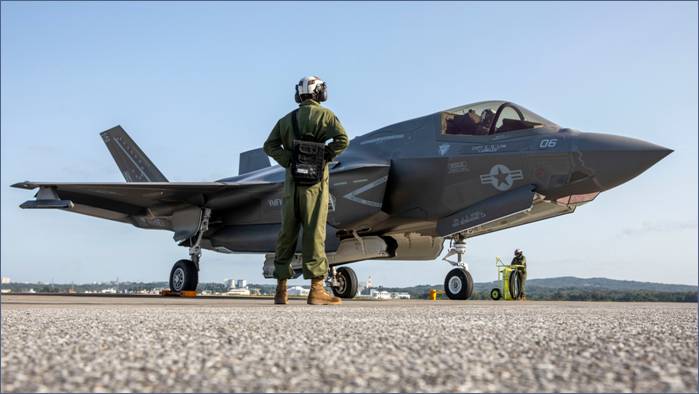
Natural rutile is the purest and highest-grade form of naturally occurring titanium feedstock, with titanium dioxide (TiO₂) content typically exceeding 95%. It is the preferred feedstock for titanium sponge production and high-specification titanium alloy applications in aerospace, defence and medical industries.
According to the United States Geological Survey (USGS), the United States currently produces zero titanium sponge domestically and is 100% import-reliant, with record imports of 44,000 tonnes in 2025. Japan supplies over 70% of the US’s titanium sponge imports, and Japanese producers themselves depend on securing reliable natural rutile feedstock. Meanwhile, Western-qualified titanium sponge production has declined 9% to approximately 81,000 tonnes, while China’s share of global sponge production has risen to 70%.
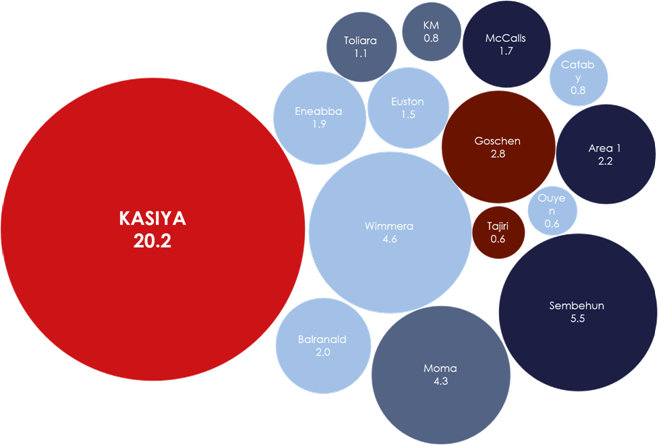
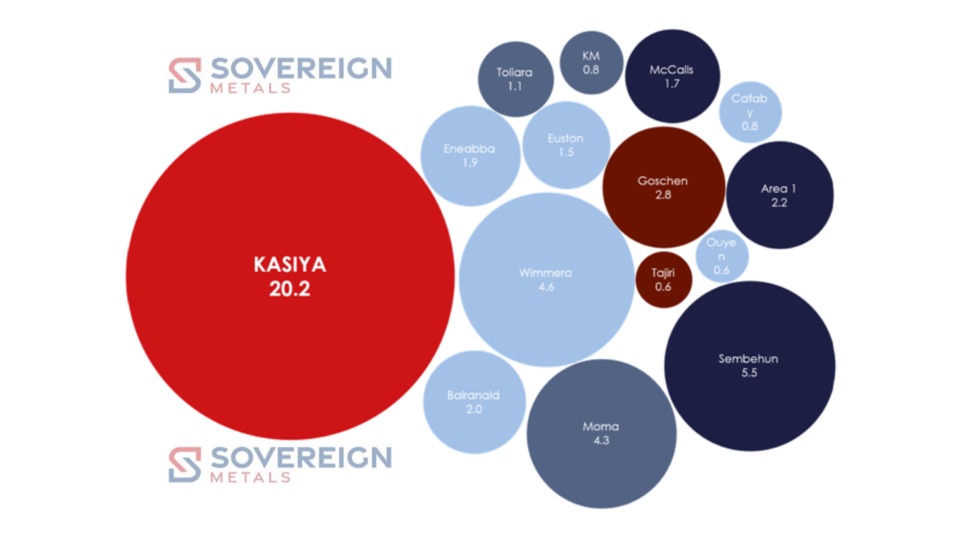
Figure 1: Kasiya contained rutile resource vs. other rutile-bearing titanium deposits (Mt)
(Source: See Appendix 2)
Global primary rutile supply is in structural decline. Rutile reserves at Leonoil Company Limited’s Area 1 Mine are expected to be depleted within the next 2-3 years, and Energy Fuels Inc. has recently ceased operations at its Kwale Mine in Kenya. With no other large-scale primary rutile developments at an advanced stage, Sovereign is positioned to become the only large-scale primary producer of natural rutile globally.
Kasiya’s natural rutile has demonstrated premium chemical characteristics and suitability across all major end-use applications, with high TiO₂ content, low impurity levels, and favourable particle size distribution – positioning it as a preferred high-purity feedstock within a structurally undersupplied market.
Kasiya’s 222ktpa of natural rutile would represent a significant addition to Western-accessible non-pigment rutile supply, directly addressing the structural feedstock deficit facing the US, Japanese and European titanium industries.
Natural Flake Graphite – Lowest-Cost Producer Outside Chinese Control
Graphite is essential to lithium-ion battery anodes, refractories and a range of advanced industrial applications. China currently dominates global natural graphite production and processing, accounting for approximately 77% of worldwide output and an even larger share of battery-grade anode material³. The US has designated graphite as a critical mineral and is actively seeking to diversify supply away from Chinese-controlled sources, including through the US$12 billion Project Vault strategic reserve initiative.
Kasiya’s incremental cost of graphite production is estimated at US$216/t. Based on public disclosures by listed graphite developers with studies at or beyond the pre-feasibility stage, this positions Sovereign as the lowest-cost graphite producer globally, including China (see Appendix 3).
Compared with single-commodity hard-rock graphite operations, Kasiya benefits from a soft, free-dig orebody and a simple processing flowsheet. The majority of operating costs are allocated to the primary rutile stream, enabling the production of high-purity, coarse-flake graphite at materially lower costs. Independent testing has confirmed that Kasiya graphite performs exceptionally well as an anode material for lithium-ion batteries, while also meeting specifications for traditional industrial markets such as refractories.
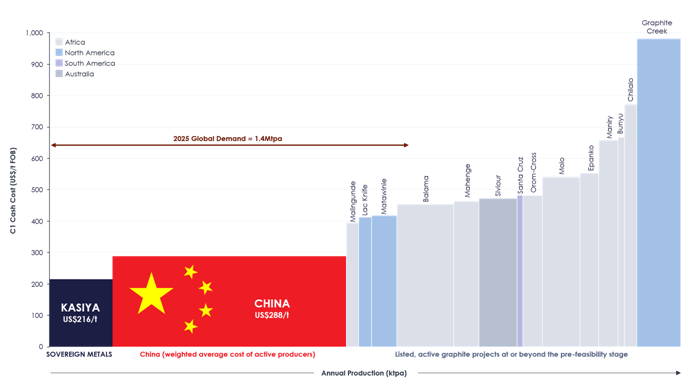
Figure 3: Natural flake graphite C1 cash costs. (Source: See Appendix 3. China cost from Benchmark Minerals Intelligence)
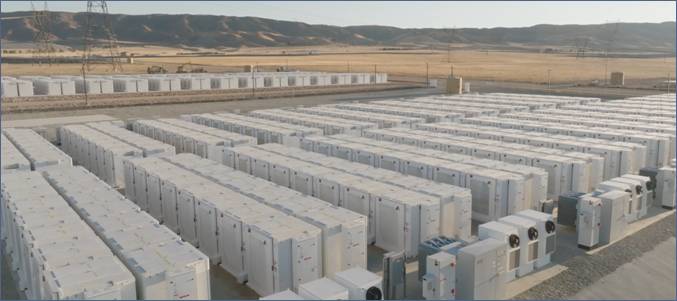
Figure 4: Utility-scale battery energy storage system using graphite anodes – California, USA.
SUMMARY OF KEY DFS WORKSTREAMS
Following input from world-class consultancies, Sovereign’s highly experienced owners’ team, and subject matter experts from Rio Tinto, the DFS has reconfirmed that Kasiya will be a leading future supplier to two distinct strategic critical minerals supply chains and outside of Chinese control – natural rutile for the titanium industry and natural flake graphite.
The DFS outlines a large-scale, long-life operation that delivers substantial volumes of premium-quality natural rutile and graphite while generating significant returns across a range of price scenarios.
The DFS for Kasiya has been prepared in accordance with the JORC Code (2012), with an estimated accuracy range of ±15% for Capital Expenditure (Capex) and ±10% for Operating Costs (Opex).
Dry Mining Method Confirmed
Using real-world data collected from the Pilot Mining, the DFS confirms a dry mechanical mining method using draglines and 100t rigid dump trucks. The soft, free-dig saprolite orebody requires no drilling, blasting, crushing or milling. A two-bench approach (5m top cut, up to 15m bottom cut) keeps the draglines above the water table, eliminating the need for production equipment below groundwater level. This represents a significant de-risking step from the hydro-mining method originally considered in the original Pre-feasibility Study (PFS).
No Conventional Tailings Storage Facility
A major advancement in the DFS is the elimination of the conventional Tailings Storage Facility (TSF) leading to a significant reduction in the mining footprint and providing a flexible, lower-risk tailings management solution. All tailings will be stored via hydraulic co-disposal backfilling of mined-out pits, designed in compliance with the Global Industry Standard on Tailings Management (GISTM), aiming for zero harm to people and the environment. The 50:50 fines-to-sand backfill ratio closely matches the existing soil profile, supporting progressive rehabilitation. This has also reduced the raw water dam wall height from 23m to 20.7m and storage capacity from 16.4 to 11Mm³.
Hydropower-Sourced Grid Electricity
The DFS is based on connection to Malawi’s national hydropower grid via a 132kV overhead line to the Nkhoma substation. Electricity Supply Corporation of Malawi Limited (ESCOM) has confirmed significant grid expansion is underway, including a 400kV Mozambique interconnector (2025) and the 375MW IFC/World Bank-funded Mpatamanga hydropower station (2030). Grid connection delivers substantially lower power costs and a favourable emissions profile.
Processing Flowsheet
Ore will be trucked to the processing plant for scrubbing and screening before entering the Wet Concentration Plant (WCP). The WCP employs a low-energy gravity separation process to produce a Heavy Mineral Concentrate (HMC). The HMC is then fed to the Mineral Separation Plant (MSP), where electrostatic and magnetic separation yield premium-quality rutile (+95% TiO₂), suitable as a direct feedstock for titanium sponge production or use in high-end titanium alloy applications, including aerospace and defence. Graphite-rich concentrate recovered from the spirals is processed in a dedicated flotation plant, producing a high-purity, high-crystallinity, coarse-flake graphite product. Independent testing has confirmed that Kasiya graphite performs exceptionally well as an anode material for lithium-ion batteries and meets specifications for traditional industrial markets such as refractories.
Dual Plant Configuration
The DFS confirms a staged development with two 12Mtpa processing plants – South Plant from Year 1 and North Plant from Year 5 – positioned at the respective resource centres of gravity to minimise haulage distances and costs. The configuration provides operational flexibility and a phased capital profile.
Logistics and Export Infrastructure
Kasiya’s products will be railed directly from a purpose-built dry port at the mine site eastward along the Nacala Logistics Corridor to the container terminal at the Port of Nacala on the Indian Ocean. The existing heavy-haul rail line and deep-water port provide a proven, operational export route – a significant infrastructure advantage over comparable undeveloped projects. Product transport cost is estimated at US$117/t product (FOB Nacala).
Rutile and Graphite Pricing
The DFS adopts a life-of-mine weighted-average realised rutile price of US$1,670/t (real, FOB Nacala), based on an independent TZMI market study. Japanese titanium metal producers OSAKA Titanium Technologies Co., Ltd. (Osaka Titanium) and Toho Titanium Co., Ltd. (Toho Titanium) are expected to drive the growth in rutile demand for titanium manufacturing over the next 10 years. Graphite pricing is based on an independent Benchmark Minerals Intelligence (BMI) price forecast, resulting in a life-of-mine average price of approximately US$1,288/t (FOB Nacala) – effectively in line with the OPFS assumption of US$1,290/t. The graphite basket price is derived from FOB China benchmarks, adjusted for an East Africa premium and weighted by Kasiya’s concentrate flake size distribution.
IFC Performance Standards Integrated into Design
The DFS has been prepared in alignment with IFC Performance Standards, with a comprehensive Environmental and Social Impact Assessment (ESIA) nearing completion and the full suite of environmental and social specialist studies completed. Sovereign’s established on-the-ground social team of 22 core staff and 90-member Community Liaison Team represent a level of social preparedness rarely achieved at DFS stage.
Mining and Rehabilitation Trials – Proven in Practice
Large-scale mining and rehabilitation trials were completed during the DFS period, covering excavation, backfilling, soil remediation and crop establishment. During Pilot Mining, the Company successfully completed dry and hydraulic mining trials, excavating a test pit at Kasiya. The test pit covered the planned area of 120 metres by 110 metres and was excavated to a depth of 20 metres through the weathered ore at Kasiya.
Post mining, the rehabilitated pit has achieved maize yields of 5.2 tonnes per hectare within six months of backfilling – over five times the local community average of approximately 1 tonne per hectare. The Pilot Mining validated the progressive rehabilitation approach and confirmed that mined land can be returned to productive agricultural use within one to two years.
|
Enquiries |
|
|
Frank Eagar, Managing Director & CEO South Africa / Malawi +27 21 140 3190
|
Sapan Ghai, CCO London +44 207 478 3900 |
|
Nominated Adviser on AIM and Joint Broker |
|
|
SP Angel Corporate Finance LLP |
+44 20 3470 0470 |
|
Ewan Leggat Charlie Bouverat |
|
|
|
|
|
Joint Broker |
|
|
Stifel |
+44 20 7710 7600 |
|
Varun Talwar |
|
|
Ashton Clanfield |
|
To view this announcement in full, including the Summary Section of the DFS and all images and figures, please refer to: https://api.investi.com.au/api/announcements/svm/b6f76c34-dfa.pdf.
#SVML Sovereign Metals Limited – Successful Rehabilitation Trials
KEY HIGHLIGHTS
· Critical DFS workstream de-risked – Mine Closure and Rehabilitation Plan based on empirical field data from Sovereign’s successful pilot mining and rehabilitation trial.
· Second year of rehabilitation trials near completion – Extended programme builds on proven first-year results and demonstrates that land can be rehabilitated post mining, with refined rehabilitation methods improving crop yields by 520% over multiple seasons.
· Community partnership deepens – Participating farmers to establish a farming co-operative, a central pillar of Sovereign’s post-closure social transition strategy, to ensure sustainable results well beyond the completion of the trial.
· Supports IFC collaboration – Multi-year rehabilitation outcomes provide irrefutable empirical evidence of alignment with IFC Performance Standards, closure and rehabilitation planning incorporated in the DFS and ESIA.
Sovereign Metals Limited (ASX:SVM; AIM:SVML; OTCQX:SVMLF) (Sovereign or the Company) is pleased to announce that its second year of rehabilitation trials at the Kasiya Rutile-Graphite Project (Kasiya or the Project) is nearing completion during the upcoming harvest season in Malawi. The pilot mining, backfilling, and rehabilitation program is a key workstream and input into the Definitive Feasibility Study (DFS), which is being completed under the oversight of the Sovereign-Rio Tinto Technical Committee.
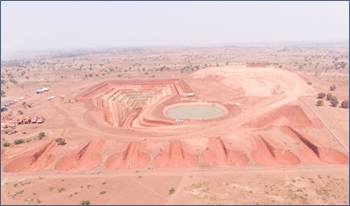
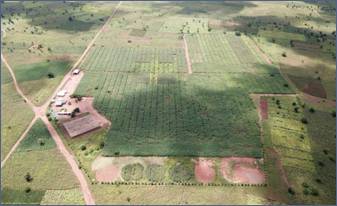
Figures 1 & 2: Pilot mining site post-mining and following rehabilitation.
The rehabilitation trials provide practical, multi-year evidence demonstrating Sovereign’s alignment with international rehabilitation, environmental, and community good-practice standards. Empirical data from the trials has been used to prepare the Mine Closure and Mine Rehabilitation Plans, which are now integrated into the mining, backfilling and post-mining closure planning – critical components for project bankability and alignment with the standards required by development finance institutions.
The rehabilitation programme has also contributed to a significant community development outcome. After two years of close collaboration, the 28 local farmers involved in the trials have formally requested that Sovereign remains at the trial site and support them in establishing a farming co-operative. This represents a strong community endorsement of the program’s value and is a central pillar of Kasiya’s post-closure social transition strategy – demonstrating that the Project can deliver lasting economic benefits to local communities well beyond the mine life.
The outcomes directly complement the recently announced collaboration with the International Finance Corporation (IFC), a member of the World Bank Group, which is supporting integration of IFC Performance Standards into the Project’s DFS and Environmental and Social Impact Assessment (ESIA), and strengthening Kasiya’s pathway to bankable development and international project financing.
Sovereign Metals Managing Director and CEO Frank Eagar commented:
“Sovereign’s primary objective is to deliver sustainable returns for all stakeholders, including shareholders and local communities. Not only will the overwhelming success and empirical data collected through this pilot mining and rehabilitation trial underpin the DFS accuracy, but it also demonstrates that land post mining can be successfully rehabilitated and our ability to improve agricultural productivity. The 5-fold increase in maize yields will enable unprecedented and immediate secondary economic benefits. The emerging co-operative model is a practical example of our commitment in action – transforming mined land into more productive farmland while equipping local communities with the skills and infrastructure to thrive independently.”
PROVEN REHABILITATION RESULTS
The second year of trials builds on the success of the first year, which delivered maize yields of 5.2 tonnes per hectare versus the regional average of 1 tonne per hectare – a fivefold increase that confirmed post-mining land can achieve superior agricultural productivity compared to pre-mining land, which loses crop carrying capacity at 3 to 4% per annum.
Sovereign’s rehabilitation approach is designed to use agricultural inputs while maximising long-term agricultural sustainability. Lime, fertiliser and biochar were applied during the first year of rehabilitation, with only targeted supplementation in the second year where specific deficiencies in basic nutrients were identified. Rehabilitation activities are conducted under a no-tillage, minimal soil disturbance principle. No heavy machinery is permitted on rehabilitated soils; all activities are undertaken by hand to preserve soil structure and the effectiveness of applied ameliorants. This simple, replicable approach is specifically designed to be adopted and maintained by local farming communities beyond mine closure.
DIVERSIFIED CROPPING SYSTEM
The second year of trials has expanded the rehabilitation approach into a diversified multi-cropping system, combining maize with bamboo (Giant Bamboo – Dendrocalamus asper), winter beans, grass fodder and groundnuts. First-year results confirmed that bamboo and maize co-exist with minimal competition, functioning in a symbiotic manner that supports long-term land productivity. Through the intercropping approach, local farmers were able to exceed their usual crop yields, while, in parallel, the Bamboo has been allowed to mature as a long-term carbon and soil remediation solution. The multi-cropping approach provides participating communities with a wider range of food, cash and fodder crops – supporting year-round agricultural viability and the transformation from subsistence to commercial farming on rehabilitated land.
Second-year crop yields are expected to reach the first-year benchmark of 5.2 tonnes per hectare when harvested in mid-2026.
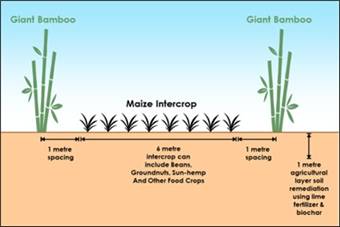
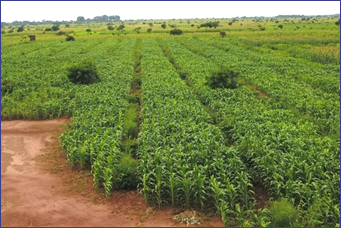
Figures 3 & 4: Bamboo and maize intercropping system & Sovereign’s rehabilitation showing maize intercropped with bamboo (February 2026).
COMMUNITY PARTNERSHIPS
Farmer engagement and participation are central to the long-term success of Kasiya’s rehabilitation strategy. The rehabilitation approach uses simple agronomic methods carried out largely by hand, ensuring that local communities can sustain and build on the improved farming practices beyond mine closure.
Sovereign has worked closely with local farmers over the past two years, who have been integral to the success of the rehabilitation program. This deepening partnership has resulted in participating farmers formally requesting that Sovereign remains involved at the trial site and provide support in establishing a farming co-operative – a strong endorsement of the program’s value to the local communities. The development of community-led farming co-operatives forms a central pillar of Sovereign’s post-closure social transition strategy. The Company plans to continue working with local farmers throughout 2026, with a view to establishing a replicable model that can be scaled across the broader Kasiya project area as mining progresses.
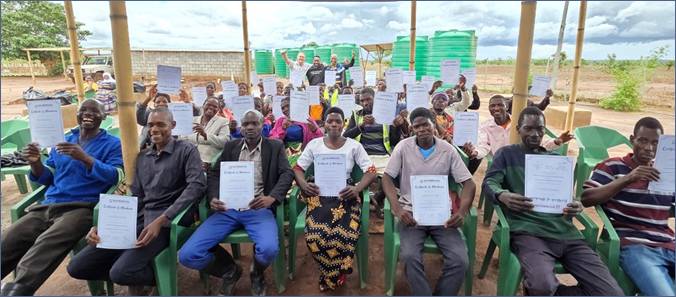
Figure 5: Rehabilitation site farmers with agreements on setting up a farming co-operative.
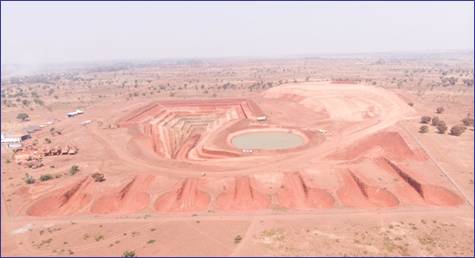
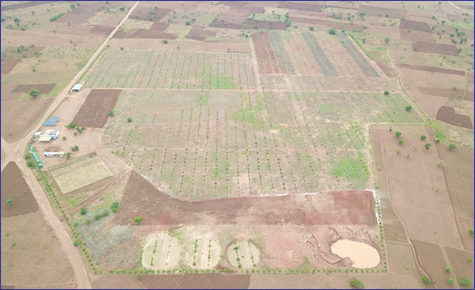
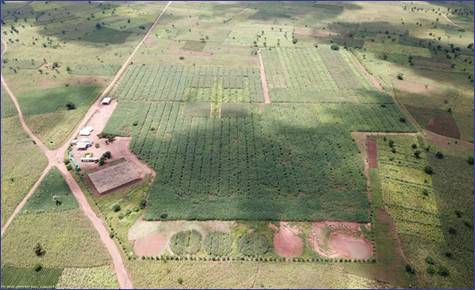
Figures 6-8: Images showing the progression of mining, backfilling and rehabilitation at
Sovereign’s Rehabilitation Trail Site.
|
Enquiries |
|
Frank Eagar, Managing Director & CEO South Africa / Malawi +27 21 140 3190 Sapan Ghai, CCO London +44 207 478 3900 |
|
Nominated Adviser on AIM and Joint Broker |
|
|
SP Angel Corporate Finance LLP |
+44 20 3470 0470 |
|
Ewan Leggat Charlie Bouverat |
|
|
|
|
|
Joint Broker |
|
|
Stifel |
+44 20 7710 7600 |
|
Varun Talwar |
|
|
Ashton Clanfield |
|
#SVML Sovereign Metals Limited – Change of Director’s Interest Notice x4
LAPSE OF PERFORMANCE RIGHTS
Sovereign Metals Limited (ASX:SVM; AIM:SVML; OTCQX:SVMLF) (Sovereign or the Company) advises that 4,992,500 unlisted performance rights that were subject to the “Mining Licence Milestone” lapsed on 31 March 2026 without exercise or conversion.
Following the lapse of these unlisted performance rights, the Company has the following securities on issue:
· 646,938,703 fully paid ordinary shares (of no par value);
· 6,190,000 unlisted performance rights subject to the “Final Investment Decision Milestone” expiring on or before 30 June 2026.
· 9,022,500 unlisted performance rights subject to the “Bankable Definitive Feasibility Study Milestone” expiring on or before 30 June 2026; and
· 13,262,500 performance rights subject to the “Construction and Finance Milestone” that have no exercise price and expire 30 June 2028.
Change of Directors’ Interest Notices in relation to the lapse of unlisted performance rights have been provided below.
|
Enquiries |
|
Dylan Browne Company Secretary +61 8 9322 6322 |
|
Nominated Adviser on AIM and Joint Broker |
|
|
SP Angel Corporate Finance LLP |
+44 20 3470 0470 |
|
Ewan Leggat Charlie Bouverat |
|
|
|
|
|
Joint Broker |
|
|
Stifel |
+44 20 7710 7600 |
|
Varun Talwar |
|
|
Ashton Clanfield |
#SVML Sovereign Metals LTD – Ceasing to be a Substantial Holder
Sovereign Metals Limited (ASX:SVM; AIM:SVML; OTCQX: SVMLF) (Sovereign or the Company) advises that it was notified today, via the filing of a Form 605 with the Australian Securities Exchange (ASX), that Sprott Inc. and each of its controlled bodies (Sprott) have ceased to be a substantial holder (as defined by the Corporations Act 2001) of the Company as of 12 March 2026.
Sprott’s holding in the Company has decreased from 36,482,348 ordinary shares, representing 5.639% of the Company’s issued share capital, to 31,836,714 ordinary shares, representing 4.921% of the Company’s issued share capital, following on market trades undertaken between 14 October 2025 and 12 March 2026.
The Form 605 can be viewed in full via the link below:
https://api.investi.com.au/api/announcements/svm/8e8bdaeb-175.pdf
|
Enquiries |
|
Frank Eagar, Managing Director & CEO South Africa / Malawi +27 21 140 3190
Sapan Ghai, CCO London +44 207 478 3900 |
|
Nominated Adviser on AIM and Joint Broker |
|
|
SP Angel Corporate Finance LLP |
+44 20 3470 0470 |
|
Ewan Leggat Charlie Bouverat |
|
|
|
|
|
Joint Broker |
|
|
Stifel |
+44 20 7710 7600 |
|
Varun Talwar |
|
|
Ashton Clanfield |
|
|
|
|